Yacht Teak Deck Repair or Full Replacement?
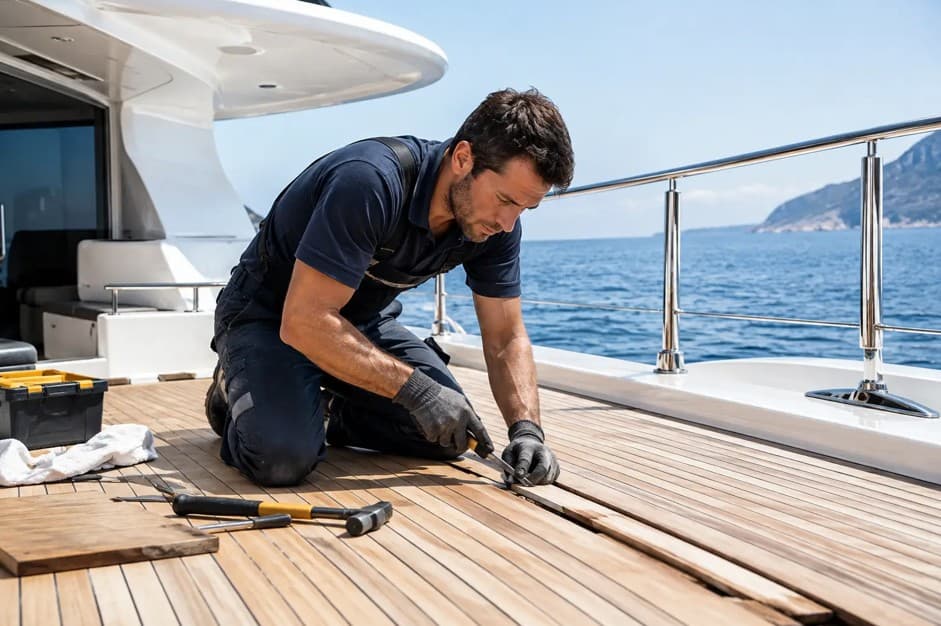
A teak deck can make a yacht feel properly finished, but it is also one of the most exposed and misunderstood parts of the vessel. Effective yacht teak deck repair starts with an honest assessment of the timber, the caulking, the fastening history, and what sits beneath the deck. A few lifted plugs or open seams may be a contained maintenance issue. Soft areas, recurring leaks, or very thin planks can point toward a larger refit decision.
For owners preparing a yacht for a season, a sale, or an extended cruising program, the right question is not simply whether the teak can be made to look new. It is whether the proposed work protects the structure, controls future maintenance, and makes commercial sense for the yacht.
Start With a Condition Survey, Not a Cosmetic Fix
Teak changes color quickly under sun, salt, and regular washdowns. Gray timber is not automatically failed timber. In many cases, it is simply weathered and can be cleaned and protected without aggressive sanding. The more relevant concerns are physical movement, loss of material, failed seams, water ingress, and deterioration below the visible surface.
A proper inspection should cover the full deck, not only the areas that look worn from the dock. Pay close attention around hatches, deck hardware, cockpit seating, transom steps, skylights, windlasses, and stanchion bases. These areas experience concentrated loads and are frequent routes for water to reach the substrate.
Moisture readings and localized test areas can add useful evidence, particularly where a composite or plywood deck lies under the teak. On larger yachts, a technical surveyor or experienced refit contractor can help distinguish between a surface problem and a structural concern. This is especially valuable before purchasing a yacht, when a deck that photographs well may conceal a significant future cost.
The most common warning signs are straightforward:
- Caulking seams that are cracked, low, detached, or repeatedly opening.
- Planks that move underfoot, feel soft, or have lifted at the edge.
- Fastener plugs that are missing, loose, or surrounded by dark staining.
- Noticeably thin teak, particularly after repeated sanding.
- Water staining inside cabins, lockers, or headliners below deck fittings.
None of these signs automatically requires complete replacement. Their pattern, extent, and underlying cause determine the appropriate scope.
When Yacht Teak Deck Repair Is the Right Scope
Targeted repair is often the sensible route when the teak retains adequate thickness, the deck remains securely bonded, and damage is limited to identifiable areas. Re-caulking open seams, replacing isolated planks, renewing plugs, and rebonding localized sections can extend service life while avoiding the disruption of a full deck removal.
Caulking deserves particular attention. It is not decorative filler. The seam compound must accommodate normal timber movement while maintaining a watertight surface. Before new caulking is applied, the old material must be removed to the correct depth, seams cleaned, and the adjoining teak protected from contamination. Rushing this stage can lead to poor adhesion and early seam failure.
Individual plank replacement is practical when matching timber is available and surrounding boards are sound. The repair should respect the original plank layout, margin boards, king planks, and drainage paths. A patch that is technically dry but visually careless can affect the yacht’s presentation, particularly on a well-maintained sailing yacht or a premium motor yacht being prepared for market.
Local repairs are also useful where damage has a clear external cause, such as a dropped object, damaged hatch perimeter, failed fitting sealant, or wear on a high-traffic swim platform. The repair scope should include fixing that cause. Replacing teak without correcting a leaking deck fitting only postpones the next failure.
The Thickness Question Changes Everything
The remaining thickness of the teak is one of the clearest decision points. Every heavy sanding removes valuable material, reduces the depth available for future seam work, and can expose fasteners on traditionally fastened decks. A bright, freshly sanded appearance is not necessarily evidence of a healthy deck.
A contractor should measure thickness at representative points, including the most worn traffic areas and edges near seams. The acceptable minimum depends on the original construction, the fastening system, and the yacht’s operating profile. A small cruising boat used seasonally has different practical expectations from a charter vessel or a yacht that spends much of the year in strong Mediterranean sun.
If the deck is approaching its usable thickness limit, cosmetic sanding is usually poor value. It can make the yacht look better briefly while removing the material needed for a durable repair. In that situation, owners should compare a limited preservation program with a phased or complete replacement plan.
When Replacement Becomes the Better Decision
Full replacement is usually justified when widespread leaks, thin teak, failing adhesion, or extensive substrate damage make local repair repetitive and unreliable. It may also be appropriate where the original fastening pattern has created numerous potential water paths into the deck structure.
This is not a minor undertaking. Removal must be controlled to avoid damaging the substrate, followed by inspection and repair of the underlying deck before a new surface is installed. The replacement material and method should be selected for the vessel’s use, maintenance expectations, aesthetic priorities, and budget.
Natural teak remains valued for its grip, appearance, temperature underfoot, and established place in yacht design. It also requires informed care and may involve material sourcing considerations. Alternative decking systems can reduce routine maintenance, provide consistent color, and suit owners who prioritize operational simplicity. They do not, however, replicate teak exactly, and their appearance, heat behavior, repairability, and resale implications should be considered yacht by yacht.
For a classic yacht, a high-quality teak installation may be central to the vessel’s character and buyer appeal. For a hard-working family cruiser, the commercial case may favor a durable alternative that reduces maintenance demands. There is no universal answer.
Avoid the Repairs That Shorten Deck Life
The most expensive teak deck problems often begin with well-intentioned shortcuts. High-pressure washing can erode softer grain and leave the surface rough. Harsh two-part cleaners can strip natural oils and accelerate weathering if used incorrectly. Frequent sanding, particularly across the grain or with excessive pressure, reduces deck life quickly.
Caulking should not be applied over contaminated seams, and leaking hardware should not be resealed casually without checking the surrounding core or substrate. If the deck has movement, the reason for that movement needs to be established before cosmetic work begins.
Owners should also be cautious about making repair decisions solely from photographs or an estimate based on deck area. Access, edge detailing, hardware removal, substrate condition, timber selection, vessel location, and the need for indoor or covered work can all affect scope and cost. A clear written specification is more useful than a low initial figure with numerous assumptions.
Plan the Work Around the Yacht’s Operating Calendar
Deck projects should be scheduled around more than weather. Consider planned charter use, delivery passages, haul-out dates, marina access, and the time required for materials, curing, and quality control. A localized seam repair can often fit into a focused maintenance window. A full replacement requires more deliberate planning and may be best coordinated with paint, hatch, hardware, or interior leak-remediation work.
For yachts operating across France, Monaco, Spain, Italy, Montenegro, and the wider Mediterranean, port access and contractor availability should be confirmed before committing to dates. Mobile technical support can be coordinated for suitable projects, subject to the yacht’s location, access conditions, and the defined scope of work.
Owners preparing to sell should be equally disciplined. A deck in visible decline can trigger buyer concern well beyond the deck itself, while a documented, appropriately scoped repair can support a more credible presentation. Keep invoices, photographs of underlying repairs, moisture records where relevant, and details of materials used. Good documentation helps a buyer understand what was completed and why.
A Better Standard for Deck Decisions
A teak deck should be assessed as a working system, not as a cosmetic surface. The strongest repair decisions protect the vessel from water intrusion, preserve safe footing, respect the yacht’s design, and avoid spending heavily on work that cannot last.
Master Ocean can help owners define a practical repair scope, coordinate technical input, and plan deck work alongside wider maintenance, refit, survey, or sale preparation. Request a deck assessment before the next washdown, charter period, or brokerage inspection turns a manageable issue into a larger project.