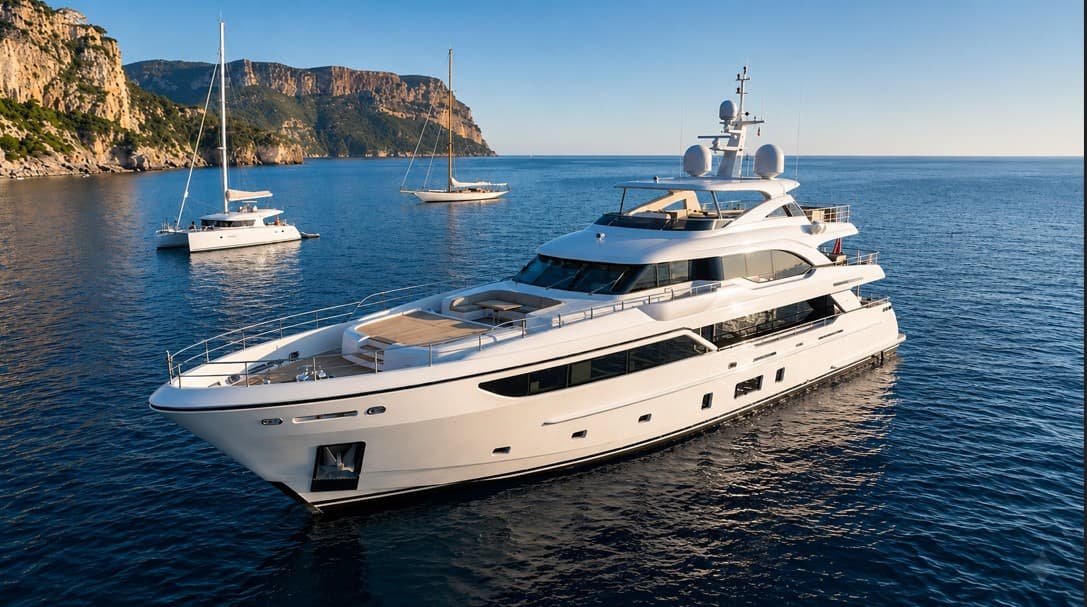
Yachts for Sale: What Serious Buyers Need to Know Before Buying a Yacht
Buying a yacht is rarely just about the vessel itself. For some, it represents cherished family time on the Mediterranean, the absolute freedom to explore pristine coastlines, or a deeply personal, long-term lifestyle decision. For others, it is an exercise in privacy, a platform for corporate entertainment, a tool for charter optimization, or access to a highly customized, mobile maritime asset. Regardless of the underlying motivation, transitioning from browsing digital listings to secure, successful ownership requires navigating complex maritime logistics, technical inspections, structural surveys, and international tax jurisdictions.
Today’s global market spans three distinct ownership categories: practical family and first-ownership boats, premium long-range cruising yachts, and luxury superyachts with highly customized operational structures. Navigating this environment successfully requires a shift from viewing the purchase as a mere emotional acquisition to treating it as a structured investment in mobile real estate. A professional international yacht broker acts as a strategic advisor throughout this entire acquisition lifecycle—helping buyers source the right yacht, verify its true technical condition, negotiate pricing from a position of market data, manage documentation, and reduce unnecessary structural risks. This comprehensive guide outlines the critical steps required to identify, negotiate, and protect your capital when acquiring a vessel in today’s global market.
Understanding the Landscape: Motor, Sailing, and Catamarans
The global market for yachts for sale spans a diverse spectrum of naval architecture, engineering platforms, and intended uses. Selecting the correct vessel begins with an honest assessment of your cruising goals, destination plans, operational budget, and guest profiles.
Motor Yachts for Sale
Motor yachts dominate the global market due to their volume, speed, and ease of operation. Ranging from mid-sized family motor yachts ideal for weekend coastal use to multi-deck displacement vessels designed for transoceanic passages, motor yachts prioritize interior volume and predictable cruising schedules. When considering a motor yacht for sale, the choice between planing hulls for higher speed or displacement hulls for long-range autonomy represents the foundational engineering choice that will dictate your ownership experience, fuel consumption, and crew requirements.
Sailing Yachts for Sale
For purists, a sailing yacht offers an unparalleled connection to the sea, true nautical tradition, and independent cruising capability. Modern sailing yachts for sale combine automated rigging systems, hydraulic winches, and comfortable interiors, making them increasingly viable for small crews or owner-operated setups. Ownership of a sailing vessel requires a deep appreciation for wind logistics, deeper drafts that may limit access to shallower marinas, and the specialized, ongoing maintenance of rigging, sails, and keel structures.
Catamarans for Sale
Multihulls have seen a massive surge in demand across both the medium and premium market segments. Catamarans for sale offer distinct advantages, including exceptional stability both at sea and at anchor, wide beams that deliver unparalleled deck and salon living space, and shallow drafts perfect for navigating secluded Mediterranean bays or shallow island waters. They are highly favored for family yacht ownership and remain remarkably resilient assets within commercial charter programs due to their high passenger capacity and comfort.
Dayboats, Tenders, and First Ownership Boats
The absolute foundation of the recreational boating market relies heavily on practical dayboats, chase boats, luxury tenders, and rigid inflatable boats (RIBs). These smaller motor yachts, PVC boats, and weekend boats form the backbone of regional boating. They prioritize ease of handling, straightforward slip arrangements, and immediate access to the water, allowing first-time buyers to enjoy the maritime lifestyle without the administrative and crew overhead associated with larger luxury platforms.
Psychological Buyer Profiles: Aligning Intent with Reality
A successful acquisition depends on identifying your true operational profile and lifestyle expectations. Different tiers of buyers require entirely different advisory approaches to avoid common market pitfalls.
• First-Time and Mid-Market Buyers: These owners frequently look for practical family motor yachts, dayboats, and weekend boats where the priorities center on usability, manageable upkeep, and straightforward local slip access. The primary risk for this segment is purchasing a vessel that requires more operational attention or maintenance hours than the family can realistically dedicate, leading to frustration and underutilization.
• Premium Cruising Owners: This tier usually seeks larger production yachts, advanced catamarans, or high-specification sailing vessels with extended range capability. These buyers prioritize sea-keeping excellence, independent power generation, engineering reliability, and strong resale liquidity for when they eventually decide to upgrade to a larger platform.
• Luxury and Superyacht Clients: This segment focuses heavily on complete privacy, custom lifestyle configurations, specialized crew quarters optimization, global cruising capabilities, and total discretion during the transaction process.
What Most Buyers Realize Too Late
Many first-time buyers initially prioritize size, striking appearance, or maximum technical specifications within their available budget, only to later discover that usability, marina accessibility, maintenance simplicity, and realistic operating costs ultimately shape long-term ownership satisfaction. A yacht that is too large can restrict your entry into classic, high-demand Mediterranean ports, while a yacht with overly complex, non-standard systems can spend more time waiting for specialized technicians than it does on the water.
New Yacht vs. Pre-Owned Yacht: Market Realities
The choice between commissioning a new construction project or purchasing a pre-owned boat for sale involves balancing time, depreciation, and customization.
A newly built yacht offers complete control over layout, engineering, materials, and the onboard experience, though buyers should be prepared for significantly longer delivery timelines, often ranging from one to several years depending on shipyard capacity. New construction also carries the highest depreciation exposure during the first ownership cycle. Engaging an independent new build yacht advisory service is essential for these projects, ensuring an experienced representative monitors shipyard milestones and reviews technical specifications.
A pre-owned yacht, on the other hand, offers immediate access to the market and often stronger value positioning, particularly when the vessel has transparent maintenance records and a recent refit history. However, buyers must carefully evaluate hidden mechanical exposure, deferred maintenance, and future upgrade requirements. The pre-owned market provides immediate access to the water and significant capital savings, provided the history of the vessel is fully transparent and thoroughly vetted.
Due Diligence: What Serious Buyers Must Verify
The most common mistakes in yacht acquisition stem from emotional decision-making. Protecting your capital requires a rigorous due diligence framework implemented before any funds leave a secure escrow account.
Every pre-owned purchase must be contingent on a satisfactory sea trial and a comprehensive technical inspection by an independent, certified marine surveyor. This survey should cover structural integrity, hull condition, running gear, electrical grids, and safety equipment. The propulsion systems and generators are the most expensive components to repair or replace, making detailed oil analysis and a meticulous review of official service logs non-negotiable. Missing maintenance history or near-limit engine hours must be factored directly into the negotiation as future refit exposure.
A yacht’s financial trail can be more complex than its mechanical systems. Buyers must verify the hull's VAT status within the European Union, cross-border custom declarations, outstanding maritime liens, mortgage cancellations, and the validity of its current registration and flag. Failing to accurately audit the VAT and tax status can result in severe financial penalties and the impounding of the vessel by customs authorities.
Budget Reality: Capital Allocation Beyond the Purchase Price
A classic pitfall in the brokerage market is capital exhaustion—allocating the entirety of an available budget to the initial purchase price. A seasoned international yacht broker will always advise clients to buy within a threshold that leaves ample capital for ongoing operations.
As a standard market reality, the annual cost of owning a yacht ranges between ten to fifteen percent of its initial purchase price. These ongoing expenses encompass:
• Marina Fees: Premium slips in high-demand destinations command significant seasonal or annual premiums.
• Insurance: Premium hull and machinery coverage, along with comprehensive crew liability protection, requires specialized underwriting.
• Crew Capital: For larger premium and luxury vessels, professional captains, engineers, and deckhands are vital to preserving the asset's value.
• Technical Management & Detailing: Regular haul-outs, antifouling treatments, routine mechanical servicing, and professional yacht detailing are essential to prevent rapid environmental degradation.
• Refit Reserve: Every vessel requires a dedicated capital reserve for eventual upholstery updates, electronics upgrades, and major mechanical overhauls.
Buying a practical cruising yacht or smaller motor yacht that fits comfortably within your operational budget guarantees a rewarding ownership experience rather than administrative fatigue.
Why Timing Matters: Inventory Cycles and Market Inefficiencies
Understanding market cycles is essential to maximizing value. The international brokerage market operates on clear seasonal rhythms, where the end of the Mediterranean season often presents distinct windows of opportunity. At this time, motivated sellers seek to avoid the carrying costs of winterization, storage, and maintenance, allowing buyers to negotiate from a position of strength compared to the highly competitive pre-season rush.
Furthermore, serious buyers look ahead to their exit strategy from day one. Resale liquidity is driven by brand reputation, maintenance history, and layout practicality. Respected builders with global service networks generally maintain higher resale liquidity, while catamarans and motor yachts configured with highly requested charter layouts retain their value better because they can generate offsetting revenue.
Why Certain Yachts Stay Unsold for Years
Overpriced yachts, weak maintenance history, incomplete documentation, and deferred refits often explain why certain vessels remain on the market for years despite attractive photography. When a seller refuses to address hidden technical issues or insists on a price that reflects emotional attachment rather than market realities, the vessel stagnates, making buyers wary of underlying structural or legal problems.
Questions Every Serious Yacht Buyer Should Ask
To ensure total transparency during the discovery phase, buyers should instruct their broker to get definitive answers to the following operational questions:
1. What is the true motivation behind the sale of this vessel, and how long has it been actively listed?
2. Are the maintenance, service, and engineering logs complete and available for an independent audit?
3. Has the vessel undergone major structural refits, hull repairs, or engine overhauls, and are they backed by transferable shipyard warranties?
4. What is the precise corporate ownership structure, and is the vessel's VAT status fully documented and certified?
5. What upcoming class surveys, flag renewals, or major equipment replacements will be required within the next 12 to 24 months?
6. Does the vessel have a verifiable commercial charter history, and how has that usage affected its overall material condition?
7. What upgrades or modifications will be immediately required to adapt the vessel to my intended cruising destinations?
Charter Mindset: Should Your Yacht Generate Revenue?
A yacht should rarely be viewed as a traditional investment asset. However, under the right ownership structure, charter participation and careful operational planning can significantly offset annual running costs. Fleet participation allows owners to generate charter revenue during weeks the vessel would otherwise sit idle in a marina, optimizing the asset's utility.
Selective charter weeks can balance owner use with commercial availability without causing excessive wear and tear on the vessel. When combined with strategic tax structuring, professional yacht management, and a clear resale strategy, owners can significantly lower the net cost of their maritime lifestyle. The goal of a smart yacht investment is not speculative profit, but rather ownership optimization, cost mitigation, and asset preservation.
The Hidden Market: Off-Market Yachts and Confidential Deals
The public online market represents only a portion of the actual global inventory. Many of the most desirable vessels—whether due to their pristine condition, customized specifications, or competitive pricing—are traded as off-market yachts.
High-net-worth individuals, corporate entities, and private family offices frequently demand absolute discretion when disposing of or acquiring major assets. Publicly listing a premium yacht can disrupt charter schedules, invite unqualified inquiries, and compromise privacy.
Consequently, these transactions are handled under strict Non-Disclosure Agreements (NDAs) through confidential yacht deals. Accessing this hidden inventory requires deep integration within the premium Mediterranean brokerage network, particularly through key maritime hubs such as the Monaco brokerage market. Firms like Master Ocean maintain direct channels to these off-market opportunities, connecting serious buyers with exclusive vessels that will never appear on public listing portals.
International Transactions and Financial Flexibility
Purchasing a vessel across borders introduces significant structural variations. Modern yacht sales frequently involve multi-jurisdictional complexities—for instance, a UK-flagged vessel owned by a Delaware LLC, physically located in Spain, being purchased by a European client. Managing secure escrow accounts, clearing standard Know Your Customer (KYC) and Anti-Money Laundering (AML) verifications, and executing internationally recognized maritime contracts require specialized professional oversight.
In selected international transactions, some sellers may also accept cryptocurrency settlements, including Bitcoin and USDT, subject to legal verification, escrow structuring, and full KYC/AML compliance. This financial flexibility allows for streamlined cross-border transfers while ensuring total legal compliance and asset security for both the buyer and the seller.
The Mediterranean Buying Perspective: Destination and Usage
Where you intend to use your yacht shapes the technical requirements of the vessel itself. A yacht optimized for weekend coastal use along the French Riviera, Monaco, or the Italian coast requires a different setup than a vessel intended for long-range family cruising across the Balearics, Greece, or the Caribbean.
The Mediterranean market demands excellent climate control systems, substantial water-making capabilities, and specialized anchoring configurations suited for deep bays. Furthermore, regional regulations vary considerably between France, Italy, and Spain regarding charter licenses and local taxation. An experienced broker ensures your vessel is fully compliant with the maritime laws of your chosen homeport, saving you from unexpected port state control delays.
Beyond the Purchase: Full Yacht Ownership Support
The relationship with an elite brokerage firm does not conclude when the bill of sale is signed and the keys are delivered. True asset protection requires a lifelong yachting partnership. For Master Ocean, supporting an owner means providing a comprehensive ecosystem of post-sale services tailored to the vessel's operational scale.
For mid-sized family catamarans and motor yachts, this support may center on seasonal yacht detailing, localized winterization, and coordinating routine engine servicing. For premium hulls and luxury vessels, the requirements expand into comprehensive yacht management and dedicated yacht technical management. This involves regulatory compliance, safety audits, crew payroll administration, and regular hull maintenance.
When a vessel requires modernization, coordinating with specialized yacht refit services ensures that structural modifications, electronics upgrades, and interior cosmetic overhauls are performed by reputable shipyards, protecting the vessel's eventual resale value.
Conclusion
Acquiring the right yacht is an intricate process where operational awareness, technical diligence, and legal precision converge. Whether your search begins with a practical family boat, a premium cruising yacht, a sailing yacht, a catamaran, a luxury motor yacht, or a confidential off-market superyacht opportunity, the right acquisition starts with informed guidance, technical transparency, and access to the right global network.
Master Ocean provides discreet international brokerage, technical guidance, and full ownership support worldwide. By partnering with a team deeply integrated into major maritime hubs from Monaco to the broader Mediterranean network, you protect your capital, mitigate legal liabilities, and gain seamless access to premium opportunities worldwide.