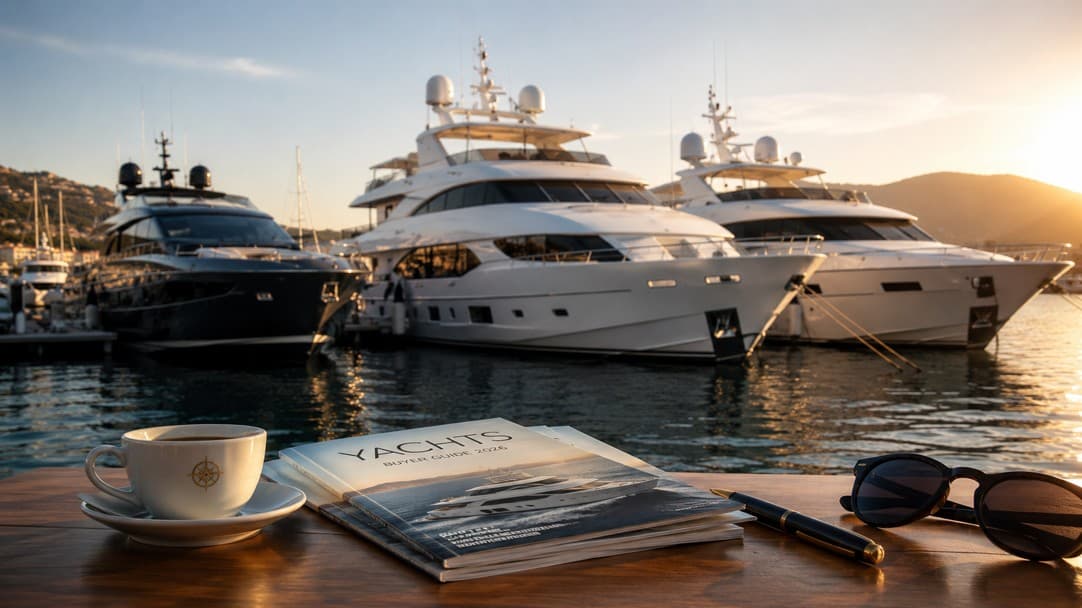
Yachts for Sale: Complete Buyer Guide 2026 | Buy the Right Yacht
Buying a yacht in 2026 requires far more than choosing an aesthetically beautiful vessel. From high-performance motor yachts and advanced catamarans to traditional sailing yachts and custom luxury superyachts, the right choice depends on a clear understanding of budget, cruising lifestyle, day-to-day management, and long-term asset value. Many buyers find themselves trapped in costly mismatches because they allow emotion, exterior design, or sheer volume to dictate their purchase. True lifestyle satisfaction demands strategy, technical insight, and meticulous long-term planning.
Acquiring a yacht is ultimately a commitment to an unparalleled lifestyle—a declaration of personal freedom, privacy, and curated adventure. However, navigating the global maritime market requires a level of commercial intelligence that matches the emotional appeal of the open sea. Without an experienced, structured approach to management, maintenance, and eventual resale liquidity, the dream of stepping on board can quickly transform into a significant administrative and financial burden.
Understanding the Yacht Market in 2026
The global yacht market has matured significantly, driven by a new wave of highly educated buyers who prioritize technical transparency above marketing rhetoric. Today’s clients no longer rely solely on glossy brochures or shipyard promises. They demand access to detailed maintenance histories, verifiable engine diagnostics, structural integrity data, and clear insights into future resale demand.
At the same time, top-tier shipyards worldwide continue to experience substantial order backlogs, resulting in multi-year waiting times for new custom construction. This supply dynamic has driven a massive surge in the off-market yacht sector. Many of the finest vessels are bought and sold entirely behind closed doors, never reaching public listing platforms. Navigating this nuanced landscape successfully requires understanding exactly where a vessel sits within the market, which is strategically categorized into Mid-Market, Premium, and Luxury segments. Through international brokerage networks and private owner relationships, companies like Master Ocean frequently see these premium opportunities change hands long before public listing platforms even become aware of their availability.
Choosing the Right Ownership Segment
To make an informed purchase, a buyer must first identify which market tier matches their financial risk tolerance, personal lifestyle priorities, and running structure. The global market is not uniform. Applying the logic of a smaller family boat to a heavy displacement vessel is a recipe for operational failure.
The Mid-Market Ownership Segment: Intelligent, Quality-Driven Choices
The Mid-Market segment appeals to practical owners seeking intelligent, quality-driven experiences without unnecessary management complexity. Often chosen by families, first-time buyers, and lifestyle clients, this category focuses on usability, comfort, and efficient enjoyment of time on the water. Vessels in this tier—ranging from premium day boats and compact catamarans to production motor yachts—emphasize smart design and straightforward mechanical systems.
The psychology of the Mid-Market buyer centers on autonomy, flexibility, and immediate access to the water. These owners often prefer navigating their vessels with minimal crew support, keeping the experience intimate and focused on spontaneous coastal relaxation. Storage requirements, crew accommodation space, and complex mechanical layouts are secondary to reliable engines, comfortable social areas, and ease of handling in tight marinas.
From a charter perspective, this tier remains predominantly focused on private lifestyle enjoyment. While some catamarans in this size range enter local charter fleets, most owners prefer keeping the vessel exclusively for personal family use. Financially, this segment offers predictable running costs, making it highly attractive to corporate executives and professionals who want to enjoy the marine lifestyle without establishing a dedicated family office or complex corporate holding structure just to manage the asset.
The Premium Segment: Performance, Comfort, and Prestige
The Premium segment is designed for successful entrepreneurs, seasoned yacht owners, and clients who demand elevated build quality, sophisticated architectural layouts, and superior guest entertainment capabilities. These vessels feature upgraded marine engineering, custom finishings, and advanced stabilization systems that significantly enhance onboard comfort during open-sea crossings. The premium buyer typically focuses on maximizing the Mediterranean cruising lifestyle, hosting high-profile corporate or social gatherings, and maintaining the operational flexibility to place the vessel into the selective charter market to optimize running costs.
In this tier, buyer psychology shifts from pure utility to a desire for prestige, advanced performance, and extended onboard living. Owners expect higher customizability, refined interior woods, sophisticated electronics, and dedicated crew quarters that allow for a professional separation between guests and staff.
The charter strategy here is often a highly sophisticated mix of personal use and commercial mitigation. Owners frequently leverage the strong market demand for premium vessels by offering them for select charter weeks, seamlessly offsetting seasonal expenses. This segment historically retains strong resale liquidity due to the enduring reputation of its core shipyards, making it a favored choice for experienced owners upgrading from smaller platforms who understand that initial build quality dictates future market value.
The Luxury Segment: Complete Control Without Compromise
The Luxury segment encompasses custom-built superyachts, fully crewed operations, and unlimited global capability. This is the domain of Ultra-High-Net-Worth individuals, corporate entities, and family offices where privacy is the ultimate currency. Yachts in this segment are tailored entirely to the owner's specifications, featuring custom interior design, advanced security infrastructure, and transatlantic ranges.
For many Ultra-High-Net-Worth owners, a yacht is not merely an asset. It becomes a private extension of home—a secure environment where business conversations happen discreetly, families gather away from public attention, and time becomes significantly more personal.
The driving philosophy in the luxury tier is privacy first. While some superyachts are registered commercially to benefit from specific tax structures or to keep the crew sharp through charter operations, the overriding objective remains the absolute comfort and anonymity of the principal owner.
Day-to-day management realities in this segment are highly formal, requiring full-time captains, engineers, chefs, and interior staff, all managed by a dedicated third-party yacht management firm to ensure compliance with strict international maritime codes. Because public marketing can compromise the security and privacy of high-profile owners, transactions in this tier are handled with strict discretion. Accessing this market relies almost entirely on sourcing confidential, off-market yacht opportunities under NDA through deeply entrenched brokerage networks.
Which Type of Yacht Should You Buy?
The ideal vessel depends entirely on how an owner intends to spend their time on the water. Each architectural category offers distinct profiles, hull efficiencies, interior configurations, and geographic capabilities.
Motor Yachts
Motor yachts represent the classic standard for speed, luxury cruising, and expansive guest entertainment. For many owners, a motor yacht is not simply transportation between destinations. It becomes a floating private residence—a place where family summers unfold, business relationships deepen, and privacy becomes increasingly valuable. They are perfectly optimized for the traditional Mediterranean lifestyle, allowing owners to enjoy a quiet breakfast in the port of Monaco, anchor for lunch off the beaches of Saint-Tropez, and host a formal dinner in Cannes by evening. With extensive flybridges, beach clubs, and sophisticated stabilization systems, their design philosophy prioritizes socializing, comfort, and effortless coastal navigation.
Sailing Yachts
For purists seeking an authentic relationship with the sea, sailing yachts offer an unmatched sense of romance, technical engagement, and environmental efficiency. Modern sailing vessels feature highly advanced automated rigging and captive winch systems that allow for short-handed operation. This segment appeals heavily to owners who view the journey as the destination and value long-range, blue-water cruising capabilities.
Catamarans
Multihulls have experienced a significant surge in market share due to their exceptional natural stability, expansive living spaces, and family comfort. By utilizing two hulls connected by a wide bridge deck, catamarans deliver the social square footage of a much larger motor yacht while maintaining a shallower draft. This makes them highly versatile for navigating the pristine, shallow waters of the Bahamas or the Balearics, while simultaneously offering immense, consistent charter potential.
Day Boats and Tenders
Designed for coastal day-tripping, island hopping, and serving as luxury support craft, this category caters to clients who want immediate, uncomplicated access to the water. These vessels are perfect for navigating the hidden coves of Ibiza, running between superyachts and exclusive shorefront restaurants, or serving as high-speed commuter transport without the management overhead of a larger crewed vessel.
Explorer Yachts
Built for long-distance self-sufficiency and true global exploration, explorer yachts feature rugged displacement hulls, massive fuel capacities, and often ice-class steel construction. They appeal to an elite class of adventure-minded owners who intend to move beyond traditional yachting hubs to cruise remote regions like Alaska, Antarctica, or the South Pacific without sacrificing five-star luxury.
Luxury Yachts and Superyachts
This elite segment represents the pinnacle of private maritime luxury, complete confidentiality, and bespoke global cruising. Superyachts operate essentially as self-sustaining floating estates. Managing these assets requires a dedicated, full-time professional crew, strict compliance with international maritime conventions, and an ongoing partnership with a sophisticated yacht management firm.
New Yacht vs. Used Yachts for Sale: Strategic Trade-offs
Choosing between a new yacht and a pre-owned vessel is rarely a straightforward financial decision. A new yacht offers personalization, modern engineering, and shipyard warranties, while a well-maintained pre-owned yacht often delivers stronger value and immediate enjoyment. The better option depends entirely on your overall strategy, timing, and ownership expectations.
Ordering a new build allows a buyer to collaborate with world-class designers to customize every interior veneer, stateroom layout, and AV system. It guarantees that the vessel leaves the shipyard with the latest environmental propulsion systems, zero engine hours, and comprehensive hull warranties that offer peace of mind during the initial years of the running experience. However, the trade-off comes in time and depreciation. Premier shipyards frequently have multi-year waiting lists, meaning the buyer must wait to enjoy their asset while absorbing the sharpest drop on the depreciation curve the moment the yacht hits the water.
Conversely, acquiring a pre-owned yacht removes the construction timeline completely, allowing the new owner to step on board almost immediately and save precious cruising seasons. The financial advantage is also clear, as the initial owner has already absorbed the heaviest period of asset depreciation, allowing the second owner to enter the market at a much more stable valuation. The risk, however, lies in the technical unknown. If a used vessel has not been kept under rigorous, documented yacht management, the new buyer may inherit a substantial maintenance backlog that requires immediate, expensive remediation. Outdated marine electronics, worn teak decking, and nearing major engine overhaul intervals can quickly erode the initial savings of a pre-owned purchase.
The Real Cost of Yacht Ownership
Running structures vary significantly depending on yacht size, crew composition, cruising region, and lifestyle expectations. Owners should approach yacht acquisition with the understanding that annual expenses extend far beyond the initial purchase price. The capital required to maintain a vessel to pristine yachting standards involves a complex web of recurring outlays that must be budgeted with professional accuracy.
Home port mooring fees represent a major line item. In destinations such as Monaco, Antibes, Cannes, Ibiza, and Sardinia, Master Ocean frequently sees buyers underestimate berth availability and cost during peak season. Slip space is highly limited and seasonal price spikes are common. Crew salaries, health insurances, uniforms, and ongoing rotations form the financial backbone of larger vessel operations, as retaining top-tier maritime talent is essential for preserving the asset's condition.
Furthermore, comprehensive hull and machinery insurance policies, routine mechanical servicing, fuel consumption, hull painting, and regular shipyard haul-outs must be factored into the equation. Detailing, interior provisioning, and technical management fees represent additional layers of necessary expenditure. Seasonal winterization and preparation work are critical; neglecting these areas does not save money, but rather accelerates the depreciation of the asset, compromises its safety at sea, and severely harms its eventual resale value. Establishing a realistic, transparent running budget prior to making a formal offer on any vessel is a mandatory step in responsible asset acquisition.
Maximizing Future Resale Value
One of the most overlooked elements of yacht acquisition is future resale positioning. Certain shipyards, layouts, propulsion systems, and maintenance histories preserve market value significantly better than others. A yacht purchased correctly is not only more enjoyable to own, but often substantially easier to sell when lifestyle priorities evolve.
When choosing between vessels on the market, buyers must look closely at hull numbers, shipyard lineage, and engineering choices. For instance, highly customized or unconventional interior layouts may appeal to an individual's specific taste but can drastically reduce the pool of qualified buyers on the secondary market.
Preserving value also dictates that all mechanical upgrades and major refits are executed by authorized service centers with meticulous paperwork. A fully traceable service history from a reputable shipyard acts as a premium guarantee during future surveys, ensuring your capital remains protected when it comes time to transition to a new vessel.
Hidden Regulatory and Technical Expenses
Beyond standard operational budgets, there are several regulatory and technical hidden costs that can severely damage the yachting experience if overlooked during the closing process. Value Added Tax compliance and importation protocols within jurisdictions like the European Union are incredibly intricate. An error in structuring a yacht's tax status, or failing to understand the nuances of commercial versus private registration, can result in severe financial penalties, retroactive tax assessments, or the physical detention of the vessel by customs authorities in ports across Europe.
Flag state selection and registration are equally critical, as the chosen flag dictates tax liabilities, safety compliance codes, and the specific qualifications required of your crew. On the technical side, buyers frequently underestimate the cost of addressing deferred maintenance. Discovering that a yacht requires a complete generator replacement, an overhaul of complex hydraulic stabilizer systems, or a full replacement of aging teak decks can add hundreds of thousands of euros to the initial cost of ownership. If these liabilities are not accurately identified during the pre-purchase phase, they can quickly turn a perceived market bargain into a compounding financial liability.
Technical Due Diligence, Inspections, and Legal Risks
Acquiring a maritime asset without exhaustive technical due diligence is an unacceptable risk that can lead to catastrophic financial consequences. A comprehensive pre-purchase survey executed by an accredited, independent marine surveyor is the single most vital safeguard in any transaction. This process goes far beyond a simple visual walk-through. It requires a formal haul-out to inspect the underwater hull for structural delamination, osmotic blistering, or crystalline degradation of the running gear. Surveyors will perform ultrasonic thickness testing on steel and aluminum hulls, conduct detailed fluid analysis of the main engines and gearboxes to check for internal metal wear, and test generators under full load.
Simultaneously, a deep dive into the vessel's engineering history is required. Prospective buyers must review the complete logs for stabilizers, bow thrusters, watermakers, and air conditioning chillers. Megayacht electronics and navigation software must be verified for current compliance with international maritime standards. Equally important is the legal due diligence conducted by your brokerage team and maritime legal counsel. They must carefully review the vessel’s complete documentation history to verify that the yacht possesses a clean, unencumbered title, uninterrupted shipyard build records, proper VAT certification, and absolute proof that it is entirely free of outstanding maritime liens, crew wage disputes, or unresolved tax debts that could legally transfer to the new owner upon closing.
Noteworthy Yacht Builders
Identifying shipyards that possess strong market reputations is essential for safeguarding long-term asset value and ensuring predictable resale performance.
In the motor yacht sector, Italian builders like Azimut and Ferretti lead the market in pioneering contemporary exterior design, maximizing open social spaces, and mastering the interior luxury required for casual Mediterranean cruising. Conversely, British shipyards such as Sunseeker and Princess are globally celebrated for their deep-V hull engineering, exceptional sea-keeping capabilities in rough waters, and timeless architectural layouts. For the practical buyer focused on spatial efficiency, Prestige offers highly intelligent layouts and reliable engineering optimized for family cruising.
Within the multihull market, Sunreef has redefined the sector by building fully custom, eco-conscious luxury catamarans that deliver superyacht-level volumes and ultra-premium finishes. For production catamarans, Lagoon and Fountaine Pajot remain the global benchmarks, offering highly reliable, stable platforms that excel in both private family use and international charter operations. For those who prefer the grace of wind propulsion, Beneteau and Jeanneau stand as the historical titans of production sailing, producing highly dependable, beautifully balanced vessels engineered for effortless blue-water cruising.
Personal Use vs. Charter Investment Strategy
Deciding whether to maintain a yacht exclusively for private family use or to position it within the global charter market is a key strategic decision that requires realistic financial modeling. Utilizing a mixed-use strategy can be highly effective. By releasing the vessel to the charter market during peak seasonal weeks when the owner is not on board, the generated revenue can significantly offset the yacht's annual running costs and reduce the net cost of ownership.
However, maintaining a realistic commercial perspective is essential, and buyers must avoid falling for unrealistic promises of high return on investment. Yacht ownership should almost never be approached as a traditional profit-generating investment vehicle. Instead, an elite charter program should be viewed as a sophisticated cost-mitigation tool. It serves to keep the professional crew highly active, ensures that all onboard systems are regularly run under load—which prevents mechanical degradation from sitting idle—and maintains the vessel’s active profile and relevance within the international brokerage community, which supports its eventual resale liquidity.
The Private Market: Off-Market Yachts Under NDA
In the upper echelons of the luxury superyacht market, discretion is often treated as the highest priority. High-profile individuals, royal families, entertainment figures, and corporate offices routinely avoid placing their assets on the public market to prevent unnecessary exposure, protect personal privacy, and eliminate unqualified inquiries. Publicly listing a multi-million-euro asset can attract media scrutiny and casual onlookers, which premium owners prefer to avoid entirely.
Because of this, an immense percentage of premium yacht transactions occur completely off-market under strict non-disclosure agreements. In these private arrangements, the vessel’s identity, location, and true asking price are shared only with fully vetted, qualified buyers who have demonstrated the financial capability to complete the transaction. Sourcing and acquiring these exceptional vessels requires a brokerage partner with deep, personal access to private family offices, shipyard executives, and maritime legal firms. These transactions rely entirely on trust, reputation, and direct, confidential matchmaking, allowing buyers to secure rare, pristine vessels that never appear on standard public listing websites. Master Ocean leverages these exact quiet networks to pair buyers with yachts whose owners prefer absolute confidentiality over public fanfare.
Mediterranean Geography and Cruising Realities
Geography plays a critical, often underestimated role in dictating the appropriate yacht configuration for an owner. In primary Mediterranean destinations such as Monaco, Cannes, Antibes, Saint-Tropez, Ibiza, Sardinia, and the Amalfi Coast, buyer priorities must adapt to local infrastructure and natural conditions. For instance, an owner planning to spend their summers navigating the historic, tightly packed ports of the Italian Riviera or the Amalfi Coast must carefully consider the vessel's beam and draft, as large berths are exceptionally scarce and require advanced booking months in advance.
Conversely, those cruising the expansive, open waters of the Balearics around Ibiza and Mallorca can prioritize larger catamarans or flybridge motor yachts with expansive outdoor decks, as anchoring in secluded bays is a primary element of the experience. The climate and sea states of specific regions also dictate whether an owner should prioritize heavy displacement hulls for open-sea comfort or high-speed planing hulls for quick island-hopping. Understanding the synergy between your target cruising grounds and the technical limitations of your vessel is a cornerstone of professional yacht brokerage advice.
Critical Mistakes First-Time Buyers Must Avoid
Analyzing the mistakes of past buyers is the fastest way to ensure your own long-term success in the maritime market. One of the most common mistakes among first-time buyers is purchasing too much yacht too early. A vessel that looks impressive and magnificent while docked at a boat show can quickly become a heavy management burden once the realities of crew management, docking logistics, insurance requirements, and maintenance schedules emerge. Equally common is purchasing emotionally—prioritizing beautiful interior design, custom furniture, or advanced entertainment systems while completely overlooking engine hours, structural soundness, or the historical reputation of the shipyard.
Another costly mistake is underestimating the true scope of annual operational budgets, leading to deferred maintenance that destroys the vessel's value. Buyers also frequently fail to secure a guaranteed mooring option in their intended home port prior to closing the transaction, only to discover that suitable berths are completely unavailable for the season. Finally, attempting to bypass an independent technical survey or choosing a vessel based purely on a low initial purchase price, rather than its verified physical condition, almost always results in compounding emergency refit costs that far outweigh the initial savings.
Questions Every Serious Buyer Should Ask Before Acquisition
To safeguard an investment of this magnitude, an aspiring yacht owner must move past surface-level aesthetics and address the core logistics of long-term yacht ownership. The first inquiry must focus on the primary intended use of the yacht. Defining whether the asset will serve as a private sanctuary for extended family cruising or a highly active platform for corporate entertainment directly dictates the layout, stateroom configuration, and crew size required.
A buyer must also evaluate the geographic reality of their cruising ambitions. Asking where the vessel will be based, and understanding the draft and beam limitations of those specific regions, prevents the frustration of buying a beautiful yacht that cannot physically access your favorite Mediterranean bays or preferred local slips. Furthermore, a realistic assessment of the true annual running structure is mandatory. A serious buyer needs to look at the anticipated costs of insurance, crew retention, mechanical maintenance, and winter storage before the purchase contract is finalized, ensuring the ongoing financial commitment matches their expectations.
Finally, technical and legal transparency must be secured prior to the transfer of funds. Buyers should demand clarity on the vessel's current tax status, verifying whether European VAT has been fully paid or if a complex importation structure is required. Inquiring about the precise status of the main engines, the hours logged on the generators, and the age of the onboard stabilization systems protects the buyer from immediate, unexpected refit expenses. By addressing these running, financial, and legal realities through structured brokerage guidance, an owner can transition into the yachting lifestyle with absolute confidence.
Why Work with a Professional Yacht Broker?
Navigating the global maritime market independently exposes a buyer to immense legal, financial, and technical vulnerabilities that can easily be avoided. A professional yacht broker acts as your dedicated fiduciary advocate, protecting your capital, time, and long-term peace of mind throughout the entire lifecycle of the transaction. Beyond simply identifying available inventory, an experienced broker orchestrates the technical due diligence, coordinates independent surveyors, and negotiates with maritime lawyers to draft protective, custom purchase contracts that shield the buyer from hidden liabilities.
From advising on tailored yacht financing and leasing structures to guiding you through corporate flag registration, crew placement, and post-sale yacht management, a premier brokerage firm coordinates every detail seamlessly. Most importantly, an internationally connected broker provides direct access to the highly restricted world of confidential off-market inventory, uncovering hidden opportunities that will never be found on standard internet databases.
Conclusion
The most successful yacht purchases are rarely impulsive decisions. They come from aligning ambition with practical ownership realities, cruising goals, and long-term lifestyle expectations. Whether seeking a family cruiser, a Mediterranean entertainer, or a confidential superyacht acquisition under NDA, the right decision begins with informed guidance and experienced brokerage intelligence.
Master Ocean provides comprehensive, globally integrated advisory services across all facets of yacht sales, charter management, and technical support. With a dedicated presence in the world's most vital maritime hubs—including Monaco, France, Spain, Italy, the UAE, and the USA—our team ensures your interest is protected across the Mid-Market, Premium, and Luxury segments. Connect with a senior advisor at Master Ocean to discuss your cruising strategy and gain access to our exclusive public and off-market global inventory.