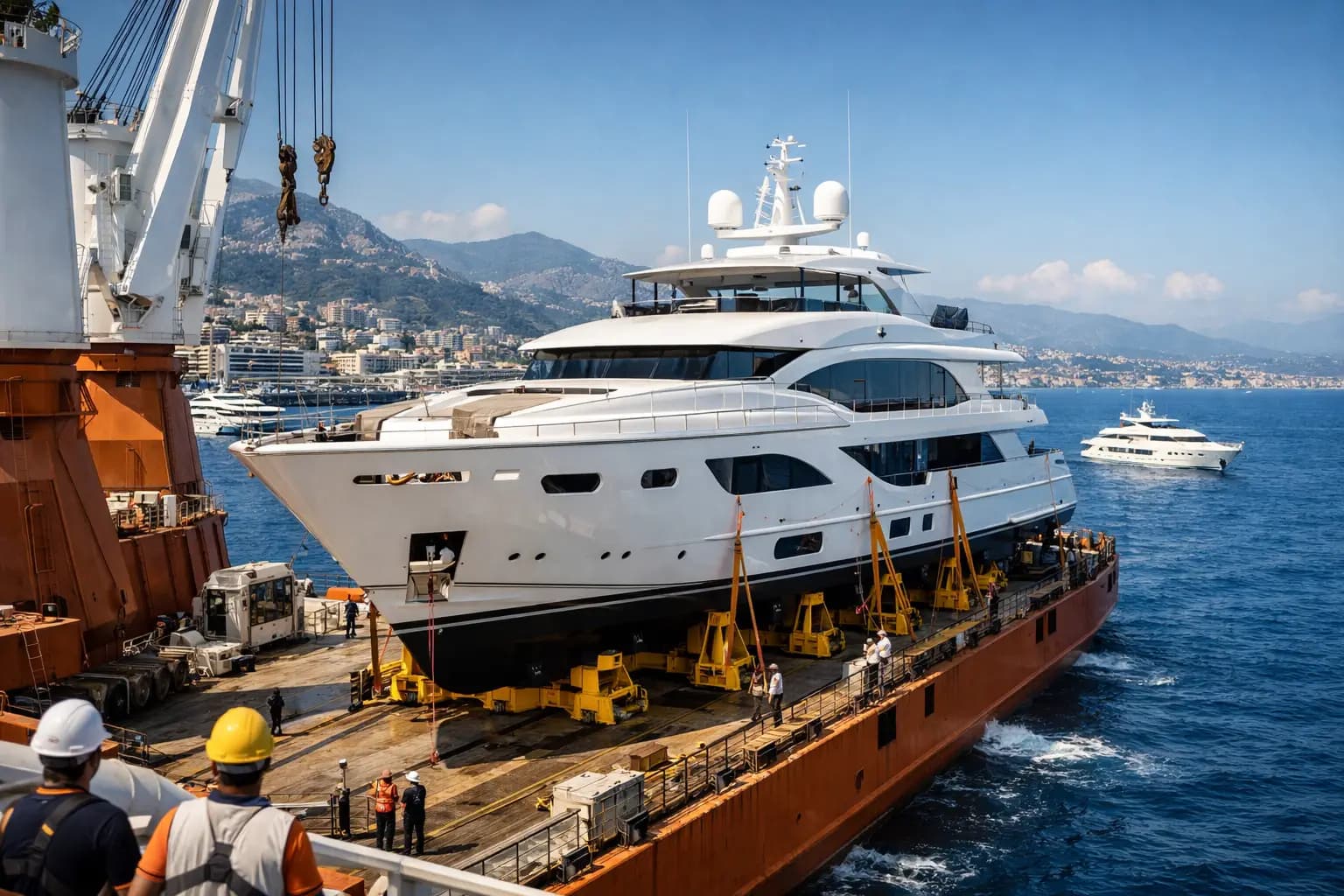
A newly purchased yacht in the Mediterranean, a charter program launching in the Caribbean, a refit slot confirmed in Italy, or a seasonal move to South Florida - yacht transport often becomes urgent long before it feels simple. For owners, brokers, and operators, the real question is not whether a vessel can be moved. It is how to move it without creating avoidable risk, delay, or expense.
Yacht transport sits at the intersection of logistics, vessel protection, customs coordination, and commercial timing. When handled well, it preserves condition, keeps operations on schedule, and supports the yacht’s long-term value. When handled poorly, even a straightforward relocation can turn into a chain of missed windows, added costs, and preventable wear.
What yacht transport actually involves
At a high level, yacht transport means relocating a vessel from one port, region, or continent to another by the most suitable method for its size, design, timeline, and intended use. That sounds simple, but the right solution varies significantly between a 40-foot day cruiser, a sailing catamaran, and a large motor yacht with sensitive exterior finishes and complex onboard systems.
In some cases, the yacht is carried on a specialized transport ship. In others, it may move by road for a shorter domestic route, or relocate under its own power with crew onboard. Each option has advantages, but each also changes the insurance profile, preparation requirements, scheduling flexibility, and exposure to wear.
For high-value vessels, transport planning is rarely just about moving from point A to point B. It is about safeguarding market value, protecting mechanical integrity, and coordinating every related detail around the move.
Choosing the right yacht transport method
The best transport method depends on distance, draft, beam, air draft, yacht type, and the owner’s priorities. Speed matters in some situations. In others, minimizing use hours on engines and systems matters more.
Transport by ship
For international relocations, ship-based yacht transport is often the preferred option. The yacht is loaded onto a dedicated carrier, secured according to marine transport standards, and delivered to the destination port without adding navigation hours to the vessel itself.
This approach is especially attractive for luxury yachts, performance vessels, and boats moving across the Atlantic or between major cruising regions. It reduces exposure to offshore passage risk, preserves machinery from long-distance operational wear, and can simplify seasonal repositioning between markets such as the Mediterranean and the Caribbean.
The trade-off is schedule dependence. Carrier routes operate around fixed windows, and loading dates may shift based on port operations, weather, or consolidated cargo planning. Owners who need absolute flexibility may find that frustrating, but for many vessels the protection benefits outweigh the constraint.
Road transport
Road transport is typically used for smaller yachts, sport boats, RIBs, tenders, and select catamarans where dimensions allow legal overland movement. It can be highly efficient for regional transfers, shipyard delivery, or moving a vessel from inland facilities to the coast.
Here, dimensions become critical. Beam, height, total loaded weight, escort requirements, and route permits can all affect feasibility and timing. A yacht that appears easy to move on paper may require disassembly, special cradle support, or complex route planning once the actual measurements are confirmed.
Delivery by sea
Some yachts are best relocated under their own power with a professional captain and crew. This can make sense for shorter passages, commissioning voyages, or situations where the owner wants the yacht delivered ready for immediate use.
Still, delivery by sea is not always the most economical choice once fuel, crew costs, weather routing, marina stops, insurance conditions, and system wear are fully considered. It can be the right solution, but it should be chosen for the right reasons, not simply because the yacht is capable of making the trip.
Why preparation matters as much as transit
A large portion of yacht transport risk sits in the days before loading. Proper preparation protects both the yacht and the transport schedule.
This starts with a detailed condition review. Existing cosmetic marks, hull condition, electronics status, machinery readings, and loose inventory should all be documented before movement begins. For premium vessels, photo and video records are more than administrative habits. They establish clarity if claims, questions, or handover issues arise later.
Mechanical preparation also matters. Depending on the transport method, the yacht may require fuel reduction, battery isolation, fluid checks, mast removal, antenna lowering, canvas removal, or custom cradle support. Stabilizers, navigation equipment, exterior furniture, and fragile fittings should be evaluated individually rather than treated as routine deck gear.
Owners often underestimate the impact of minor unsecured items. A tender cushion, loose table, detachable sunshade, or decorative finish can suffer damage during lifting or transit if not addressed in advance. On high-spec yachts, these small details can become disproportionately expensive.
Insurance, customs, and documentation
Yacht transport is not only a marine operation. It is also a documentation exercise, and mistakes here can be costly.
Insurance should be reviewed before any booking is finalized. Standard yacht policies do not always cover every transport scenario in the same way. Owners need to confirm whether the move is covered under the existing policy, whether additional transit insurance is required, and whether there are any conditions tied to approved carriers, survey reports, or loading supervision.
Customs and tax considerations also vary by route. Temporary admission status, VAT position, import documentation, registration papers, proof of ownership, and port formalities may all need attention depending on where the yacht is departing and arriving. This is particularly relevant when repositioning vessels between Europe, the USA, and the Middle East.
A strong transport partner will coordinate this process early, not after the vessel is already committed to a shipping window. Administrative delays can be just as disruptive as technical ones.
Timing is a strategic decision
Many owners approach yacht transport as a reactive task. In practice, the best outcomes usually come from strategic timing.
Seasonal demand affects carrier space, marina access, crew availability, and port congestion. A yacht moving ahead of a winter charter season or arriving before a major event calendar in Monaco or Miami should be planned with generous lead time. Waiting until the yacht must move usually reduces choice and raises pressure.
There is also a commercial angle. For brokered sales, transport timing can influence delivery commitments and buyer confidence. For charter operations, it can affect revenue windows. For refit projects, a delayed arrival can mean losing a shipyard slot that took months to secure.
This is why transport should be treated as part of ownership strategy, not just marine administration.
What owners should look for in a yacht transport partner
Not every logistics provider is equipped for premium yacht movements. Experience with high-value vessels, strong port coordination, and a clear understanding of marine handling standards matter more than broad shipping language.
A capable partner should be able to assess the vessel properly, explain the transport options with trade-offs, manage loading and discharge coordination, review paperwork requirements, and communicate clearly throughout the process. Owners should not have to chase updates or interpret vague operational language while a valuable asset is in transit.
It also helps to work with a company that understands the wider yachting lifecycle. A transport move is often connected to brokerage delivery, charter deployment, refit planning, registration matters, or owner use. When those elements are handled in a coordinated way, the process becomes more controlled and far less fragmented.
For clients managing complex vessel operations across multiple regions, this full-service perspective is often where real value appears. It is one reason companies such as Master Ocean position yacht transport within a broader marine support model rather than as a standalone shipping transaction.
Yacht transport and long-term vessel value
Well-executed transport protects more than a delivery date. It protects presentation, service history, and future marketability.
A yacht that arrives cleanly, with documented handling, preserved systems, and no avoidable cosmetic or structural issues is easier to place into charter, easier to present for sale, and easier to maintain to a premium standard. By contrast, rushed movement can create hidden costs that surface later through repairs, downtime, or negotiation pressure during resale.
That is why experienced owners tend to view yacht transport as a professional discipline, not a commodity purchase. The price matters, of course, but so do the method, the planning quality, and the people responsible for execution.
The most successful transport arrangements feel calm because the complexity was handled before the yacht ever moved. That is usually the right benchmark. If your vessel is crossing regions, seasons, or markets, the smartest next step is to treat transport as part of the yacht’s overall management story - with the same level of care you would expect in any other high-value decision.