Yacht Buying Guide
Yacht Survey: What Buyers Need to Know
MaMaster Ocean Team
•
A polished listing, strong sea trial, and attractive specifications can move a yacht to the top of a buyer’s shortlist very quickly. But a yacht survey is where enthusiasm meets evidence. For buyers, sellers, lenders, and insurers, it is one of the few moments in the transaction where the vessel is examined without marketing language around it. On high-value yachts, that distinction matters.
A survey does not exist to derail a deal. It exists to clarify condition, expose hidden costs, and create a more informed negotiation. Whether the yacht is intended for private use, charter activity, or portfolio investment, the survey often determines how smoothly the transaction proceeds.
What a yacht survey actually does
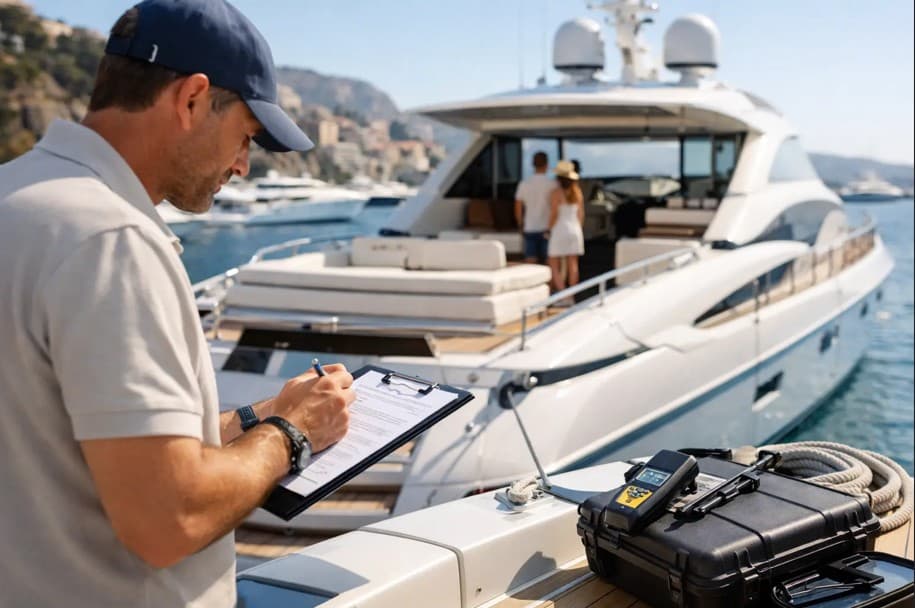
A yacht survey is a professional inspection of a vessel’s structure, systems, safety equipment, and overall condition. The scope depends on the type of survey requested, but the purpose is consistent: to give an independent view of the yacht’s present state and identify material findings that could affect value, safety, insurability, or future operations.
- For a buyer, this means more than checking whether the yacht looks well kept. A vessel may present beautifully while still carrying deferred maintenance below deck, moisture in core sections, electrical deficiencies, engine concerns, or compliance issues that are not obvious during a casual inspection. A proper survey translates those risks into practical terms.
- For a seller, a survey can also be useful. Pre-sale surveys often help owners address issues before listing or before serious negotiation begins. That can shorten deal timelines and reduce the chance of price disruption late in the process.
When a yacht survey is usually required
In many transactions, a yacht survey is not optional in practice even if it is technically negotiable.
- Lenders often require one before financing.
- Insurers may request a current survey before binding coverage, especially for older vessels or yachts with a complex maintenance history.
- Buyers of premium motor yachts, sailing yachts, catamarans, and superyachts usually insist on one because the financial exposure is too high to rely on visual impressions alone.
The survey is typically scheduled after an offer is accepted and before final closing. That timing gives the buyer enough contractual protection to investigate the yacht thoroughly while giving the seller confidence that the process is connected to a serious transaction.
There are situations where the scope needs to be broader. A yacht entering charter service, undergoing registration changes, or moving into a different jurisdiction may need additional inspection standards. In those cases, the survey is not just about purchase confidence. It becomes part of the yacht’s operational readiness.
Types of yacht survey buyers should understand
Not every yacht survey serves the same purpose. Confusion starts when parties assume one report can satisfy every need.
- Pre-purchase survey: The most detailed and the most important for buyers. It focuses on the yacht’s condition at the point of sale and often includes a haul-out and sea trial. This is the survey that most directly supports negotiation and purchase decisions.
- Insurance survey: Usually narrower. Its main purpose is to help an insurer assess risk and confirm that the yacht meets acceptable standards for coverage. It may not go as deeply into valuation and transaction-specific concerns as a pre-purchase inspection.
- Condition and valuation survey: Often used for financing, insurance renewal, estate planning, or ownership records. It provides a general assessment of condition along with an estimated market value, but it may not replace a full pre-purchase review.
- Specialized technical surveys: Needed for larger yachts and commercially operated vessels. These can involve machinery analysis, class-related review, tonnage issues, compliance verification, or refit assessments. In more complex acquisitions, a single surveyor may not be enough. A coordinated team can be the better choice.
What a yacht survey typically covers
A comprehensive yacht survey usually begins with the hull and structural elements. The surveyor examines visible surfaces, signs of impact or repair, moisture readings where appropriate, deck condition, windows, fittings, and areas vulnerable to water intrusion or stress fatigue.
Machinery and propulsion are another major focus. Engines, generators, transmissions, steering, exhaust systems, fuel systems, and related mechanical components are reviewed for condition, installation quality, maintenance evidence, and signs of wear. On larger yachts, engine diagnostics and oil analysis may be recommended in addition to visual inspection.
Electrical systems deserve close attention because defects there can become expensive very quickly. Surveyors generally review shore power connections, battery installations, charging systems, panels, wiring condition, and bonding or grounding concerns where accessible. They also inspect plumbing, bilge areas, tankage, navigation equipment, safety gear, and onboard systems such as air conditioning, watermakers, stabilizers, thrusters, and electronics. On sailing yachts, rigging and sail-related systems may require separate specialist review depending on age, size, and use profile.
A haul-out is often where important issues come to light. Bottom condition, propellers, shafts, running gear, rudders, through-hulls, and signs of corrosion or damage are much easier to assess out of the water. Sea trials then show how the yacht performs under operating conditions and whether systems behave as expected underway.
What a survey report can reveal
Some findings are routine and manageable. A report may flag expired safety equipment, service intervals that are coming due, cosmetic defects, or minor electrical housekeeping. These issues do not necessarily threaten the deal, but they do help establish near-term ownership costs.
Other findings are more consequential. Structural moisture, delamination, major engine concerns, corrosion in critical areas, generator failure, unstable electrical installations, evidence of grounding, or poorly executed repairs can materially change the value equation. At that point, the buyer has to decide whether to renegotiate, require repairs, place funds in escrow, or walk away.
This is where experienced transaction management matters. A survey report is not simply a pass-or-fail document. It is a decision tool. Some deficiencies are serious but fixable within an acceptable ownership plan. Others suggest a pattern of neglect that no attractive asking price can justify.
How buyers should choose a surveyor
Credentials matter, but so does relevance. A surveyor with the right marine background for the specific vessel type is usually more valuable than one with generic experience alone. A modern performance sailing yacht, an explorer yacht, and a luxury motor yacht do not present the same inspection priorities.
Independence is essential. The surveyor should work for the client commissioning the report, without pressure from the broker, yard, or seller. Professional affiliations and reputation help, but practical familiarity with the yacht’s construction style, onboard systems, and intended use can be just as important.
It also helps to set expectations before the inspection begins. Buyers should understand what is included, whether sea trial attendance is recommended, whether engine survey specialists are separate, and how findings will be categorized. A well-run survey process is methodical, not improvised.
How a yacht survey affects pricing and negotiation
One of the most common misconceptions is that every survey finding should produce a direct price reduction. In reality, negotiations are more nuanced.
- If the report identifies normal wear consistent with age and hours, the market may have already priced that in.
- If it uncovers undisclosed defects, overdue structural work, or major machinery liabilities, then the conversation changes. The buyer may seek a credit, request repairs prior to closing, or revise the purchase structure entirely.
The strongest negotiations are grounded in proportion. A serious finding should be assessed not only by repair cost, but by downtime, yard access, operational risk, and impact on future resale. A yacht that needs six weeks in a shipyard during peak seasonal use may carry a larger real cost than the invoice alone suggests.
For sellers, transparency usually works better than resistance. When legitimate deficiencies are acknowledged and managed professionally, transactions tend to stay on track.
The survey is only part of due diligence
A yacht survey is central, but it should not be confused with total due diligence. Title status, registration records, tax exposure, ownership structure, maintenance logs, class documents where applicable, and service history all matter as well. That is especially true in cross-border transactions and premium yacht markets where legal, operational, and technical issues intersect.
A strong acquisition process connects the survey report to the wider ownership picture. This is where full-service coordination becomes valuable, particularly when the transaction involves complex logistics, management planning, or international delivery.
At Master Ocean, this broader view is part of how serious yacht transactions are handled. The survey is important, but what clients ultimately need is clear judgment around what the findings mean for ownership. A well-executed yacht survey does more than point out defects. It protects confidence. When the right yacht is supported by the right evidence, buyers move forward with clarity, sellers protect credibility, and the transaction begins on a far stronger footing.