Yacht Shipping Cost to Europe: Budget $47,000–$50,000 for a 40 foot
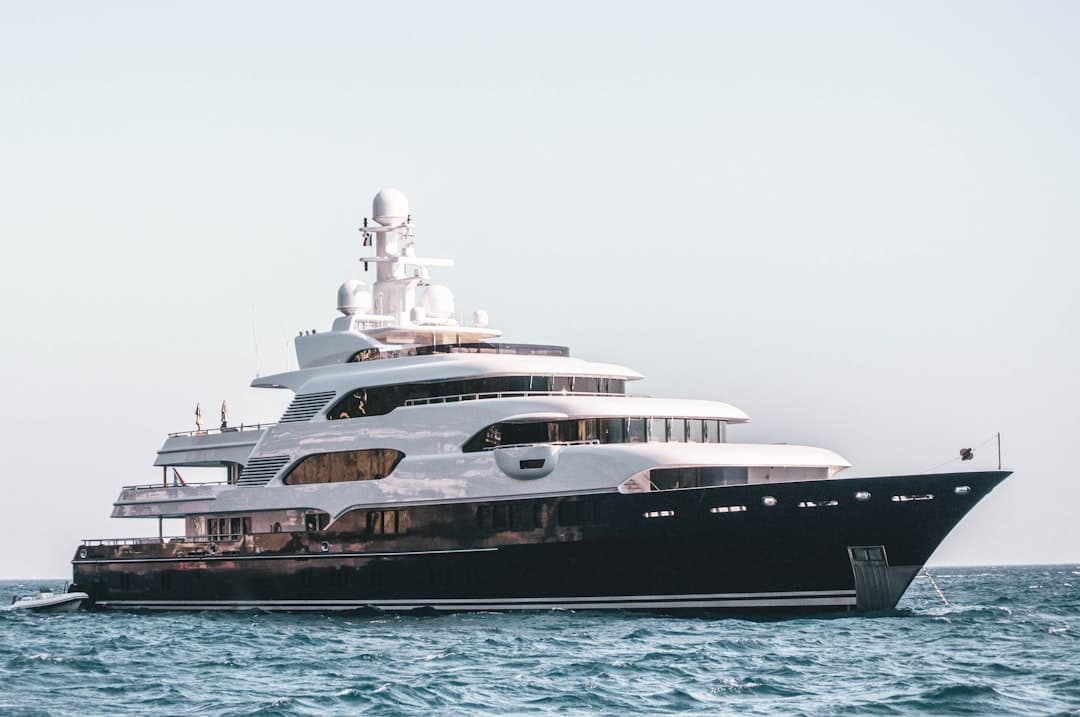
A 40 to 60 foot yacht shipped internationally typically runs $15,000 to $75,000 depending on transport method, with megayachts on semi-submersible vessels climbing into six figures. The biggest swing factors are the transport method you choose, your vessel’s length and beam, and how accessible the departure and arrival ports are. Get those three right before you request a quote.
TL;DR:
Transport method significantly impacts costs, with crew delivery being cheapest for seaworthy vessels on reasonable routes and semi-submersibles the most expensive.
Pricing for a 40 to 60 foot yacht ranges from $15,000 to $75,000 for RoRo, but can climb into six figures for larger vessels or specialized methods like semi-submersibles.
Hull width, height, weight, and port accessibility are crucial factors that can increase costs dramatically due to permits, escorts, and crane needs.
Owners should budget an additional 25 to 35 percent above the freight estimate to cover port handling, insurance, and hidden fees.
Booking 8 to 12 weeks ahead for RoRo or liner services, and 3 to 4 months for crane-intensive methods, helps avoid delays and secures better rates.
How Much Does Yacht Shipping Cost by Size and Method?
The method you pick moves the price more than any other single decision. Crew delivery is cheapest but only works for seaworthy vessels on reasonable routes. RoRo (roll-on, roll-off) sits in the middle. LoLo (lift-on, lift-off), flat rack, and semi-submersible transport cost the most because they require cranes, cradles, and specialized vessel space.
For a domestic or short coastal move, a 20 to 30 foot boat can ship for a few thousand dollars up to the low tens of thousands. Cross-ocean shipments change that math fast: a 30 to 40 foot yacht moving from the US to Europe commonly falls in the $40,000 to $75,000 range depending on the method and route. Intra-Mediterranean moves (say, Genoa to Palma) tend to run lower because ports are closer together and RoRo service is more frequent.
Yacht Size (LOA) | RoRo/Liner | LoLo/Flat Rack | Semi-Submersible |
|---|---|---|---|
30–40 ft | $15,000 to $75,000 | $40,000 to $75,000 | $75,000+ |
40–60 ft | $15,000 to $75,000 | $40,000 to $75,000 | six figures |
RoRo pricing scales gently with length; LoLo and semi-submersible pricing scale much faster once beam or draft becomes a limiting factor.
A 40 footer and a 60 footer on RoRo can land within $20,000 to $30,000 of each other, but on a semi-submersible the gap widens sharply.
These are indicative figures from industry pricing tables, not fixed rates. Actual quotes vary by carrier, sailing schedule, and current fuel surcharges.
What Factors Actually Drive the Price Up or Down?
Length gets the attention, but beam and height often decide the real bill. A yacht with a wide beam or a tall superstructure may not fit standard RoRo ramps or below-deck stowage, which pushes it into pricier LoLo or flat rack categories regardless of hull length.
Route and port access matter almost as much. Shipping into a major hub like Rotterdam or Genoa costs less than delivery to a smaller regional port, where limited crane availability and lower shipping frequency both add premiums. Beam over roughly 12 feet often triggers permit and escort requirements for any road segment, and each jurisdiction charges separately for pilot vehicles and permits.
Here’s what typically moves the needle on a quote:
Length and beam: wider or taller yachts jump transport categories, not just price tiers within one category.
Weight: heavier vessels need higher-capacity cranes, which cost more to mobilize.
Port accessibility: remote or low-traffic ports add handling premiums and longer wait times.
Permits and escorts: overwidth road transport can add several thousand dollars in permit and pilot vehicle fees alone.
Crane and cradle needs: a custom cradle build for an unusual hull shape can add real money before the yacht even leaves the dock.
Pro Tip: Ask every quote for the crane capacity assumed for your yacht’s weight. Undersized crane estimates are one of the most common sources of last-minute cost surprises on delivery day.
Which Transport Method Should You Choose?
Each method fits a different combination of vessel type, budget, and risk tolerance.
Professional delivery (crewing) works when your yacht is seaworthy and the route is reasonable, such as US East Coast to the Caribbean or across the Mediterranean. It’s often the cheapest option per mile, but it adds engine hours and mechanical wear that you should factor into maintenance budgets, not just the delivery invoice.
Road transport only applies to smaller vessels that fit legal width limits without excessive permitting. Once beam exceeds standard highway thresholds, escort vehicles and multi-state or multi-country permits stack up fast, sometimes adding thousands per route segment.
RoRo is the workhorse for most yachts under roughly 60 feet that can be driven onto a ramp under their own power. Transit times on major routes run two to four weeks, and it qualifies as one of the more economical options for standard hull shapes.
LoLo and flat rack shipping lifts the yacht by crane onto a cradle secured to the deck. It’s necessary once a vessel is too wide, too tall, or structurally unsuited for RoRo ramps.
Semi-submersible vessels are the top tier, reserved for megayachts or vessels needing maximum protection from weather and handling risk. The vessel partially submerges, floats the yacht on, then re-surfaces.
Method | Best For | Relative Cost | Key Tradeoff |
|---|---|---|---|
Crew delivery | Seaworthy yachts, shorter routes | Lowest | Adds engine hours and wear |
RoRo | Yachts under ~60 ft, standard hulls | Low to moderate | Limited by ramp dimensions |
LoLo / flat rack | Wide beam, tall superstructure | Moderate to high | Crane and cradle costs |
Semi-submersible | Megayachts, high-value vessels | Highest | Maximum protection, maximum price |
A simple rule: if your beam exceeds what a standard RoRo ramp handles, you’re shopping flat rack or semi-submersible whether you want to or not.
What Hidden Fees Should You Budget For?
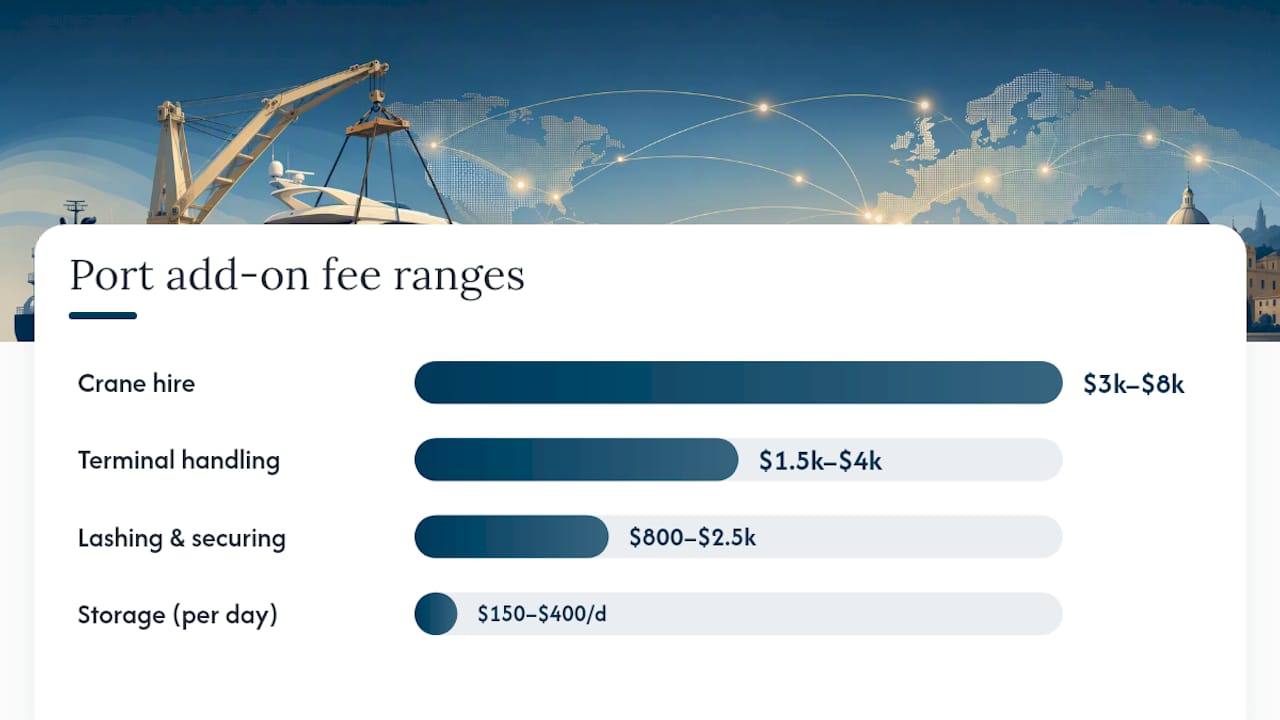
Freight is only part of the invoice. Port handling alone can rival the shipping cost on a mid-size yacht, and owners frequently underestimate this line item when building a first budget.
Expect these add-ons on top of the base transport fee:
Crane hire: roughly $3,000 to $8,000 depending on yacht weight and port.
Terminal handling charges (THC): typically $1,500 to $4,000 per port.
Lashing and securing: around $800 to $2,500.
Storage or demurrage: $150 to $400 per day if pickup is delayed past the free period.
Customs brokerage and temporary import bonds: fees vary by country but almost always apply for non-permanent imports into the EU.
Marine insurance: all-risk transit coverage often runs a small percentage of the yacht’s insured value, with war-risk riders priced separately on top.
Request a written breakdown of every one of these line items before comparing two quotes side by side. A “low” quote missing THC and lashing isn’t actually lower.
When Should You Book to Avoid Delays and Save Money?
Booking windows vary by method, but earlier is always cheaper and safer than scrambling.
Book RoRo or liner service 8 to 12 weeks ahead for standard routes; peak-season Mediterranean and transatlantic sailings fill faster.
Book LoLo, flat rack, or semi-submersible transport 3 to 4 months ahead, since crane and cradle scheduling requires lead time.
Watch shoulder-season sailings. Booking outside peak summer months can save 15 to 25 percent compared with high-season rates.
Ask about consolidated sailings. Carriers that group multiple yachts onto one voyage split fixed vessel costs across more owners, lowering each individual bill.
Finalize documentation, mast removal or cradle prep, fluid draining, and insurance placement at least two weeks before pickup to avoid demurrage charges from a missed loading window.
What Does a Yacht Delivery Coordinator Actually Handle?
A broker or delivery coordinator earns their fee by absorbing the paperwork and logistics that turn a simple shipment into a two-month headache. That means chasing customs clearance across jurisdictions, sourcing the right cradle for an unusual hull, arranging loadmasters at the origin and destination port, and lining up insurance coverage that actually matches the transit risk.
Master Ocean’s delivery coordination services handle these pieces directly for owners, including:
Customs documentation and temporary import bond arrangements
Cradle sourcing and crane/lift coordination at both ports
Loadmaster liaison for lashing and securing
Insurance placement guidance for all-risk and war-risk coverage
Owners who book through a consolidated sailing or a broker with negotiated carrier rates routinely land better pricing than booking a single yacht direct with a carrier.
What’s a Realistic Rule of Thumb for Budgeting?
Take whatever your base freight quote says and add 25 to 35 percent as contingency. That covers port handling, insurance, and the fee nobody quotes you until the invoice arrives.
Say a 40 foot yacht gets a $35,000 RoRo quote from Fort Lauderdale to Genoa. Add roughly $6,000 for crane and terminal handling, $1,200 for lashing, and 1 to 1.5 percent of the yacht’s insured value for all-risk marine coverage. On a $500,000 yacht, that’s another $5,000 to $7,500. Your real budget lands closer to $47,000 to $50,000, not the $35,000 headline number. Plan against the higher figure from day one.
Get a Straight Answer on Your Yacht Shipping Quote
Piecing together freight quotes, customs paperwork, and cradle logistics on your own is where most owners lose money, not on the shipping line itself. The delivery process coordination for owners moving a yacht to or from Europe includes customs clearance, cradle and crane coordination, and insurance placement to help ensure nothing is missed between quote and pickup.
Before requesting a quote, have your LOA, beam, weight, preferred shipping window, and desired transport method ready. Those five details are what turn a vague estimate into an accurate one. If you’re weighing whether to ship an existing yacht or buy closer to your destination, Master-ocean’s yacht brokerage and consulting team can walk through both paths with you. Reach out through Master-ocean’s yacht delivery services page to start a quote request for your route.