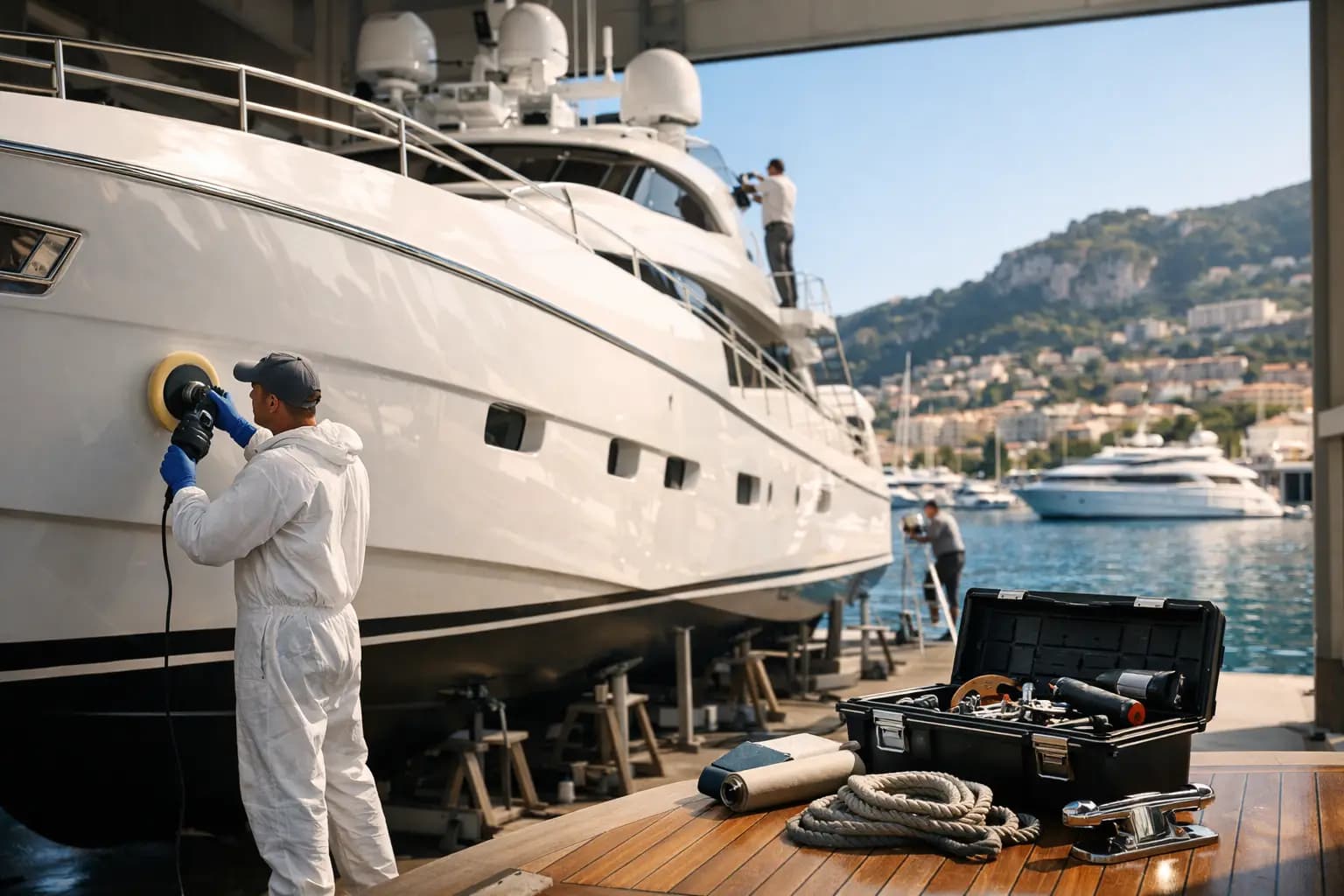
A yacht that still turns heads at anchor can still be overdue for serious work below deck. That is the reality many owners face. The most effective yacht refit services are not about cosmetic change alone - they protect asset value, improve reliability, support compliance, and bring the yacht back in line with how it is actually used.
For some owners, that means updating guest spaces to meet a higher charter standard. For others, it means replacing aging systems before they become operational liabilities. In both cases, the refit decision is strategic. It affects downtime, resale position, crew efficiency, and the overall ownership experience.
What yacht refit services really include
Yacht refit services can range from a focused technical package to a full interior and exterior transformation. The right scope depends on the yacht’s age, class, operational profile, and future plans. A privately used motor yacht preparing for sale has different priorities than a charter yacht entering a busy Mediterranean season or an explorer yacht getting ready for extended cruising.
Most refits fall into three broad categories. The first is technical refit work, which may include propulsion systems, generators, stabilization, HVAC, electrical infrastructure, navigation electronics, plumbing, and safety equipment. The second is aesthetic and hospitality-focused work, such as interior redesign, new furnishings, lighting upgrades, deck finishes, exterior paint, and detailing. The third is compliance-driven work, where class requirements, flag updates, insurance expectations, or commercial standards make upgrades necessary rather than optional.
A quality refit partner sees how these categories overlap. Replacing a generator may also affect sound insulation, guest comfort, and future maintenance planning. An interior refresh may expose legacy wiring that should be addressed while access is available. Good refit coordination is not only about getting jobs done. It is about seeing the consequences of each decision before the yard schedule starts moving.
When yacht refit services make the most sense
Many owners wait for a problem to force action. That usually creates a more expensive project with tighter timelines and fewer choices. The smarter approach is to refit when the yacht’s condition, market position, or usage profile signals that change is due.
Age is an obvious factor, but it is not the only one. A well-maintained yacht may still need a refit because buyer expectations have shifted. Interior styling dates faster than hull performance. AV systems, lighting, connectivity, and cabin comfort can make a yacht feel current or behind the market, even when mechanical systems remain sound.
Charter performance is another trigger. If a yacht is missing bookings in a competitive destination such as Monaco, Ibiza, or Miami, guest-facing upgrades can have a measurable commercial effect. Better outdoor dining layouts, refreshed cabins, improved climate control, and quieter machinery spaces may influence charter appeal more than owners expect.
There is also a practical ownership reason to refit. Crews operate more effectively on yachts where systems are modern, accessible, and reliable. That matters on every vessel, but especially on yachts with active itineraries, guest turnover, or event use. Reduced technical friction improves the onboard experience without needing to advertise it.
The strongest refit projects start before the shipyard
A successful refit is planned long before the yacht enters the yard. This is where many projects either protect value or begin to lose it. Owners often focus on the visible outcome, but timing, specification control, and technical due diligence determine whether the final result feels polished or compromised.
The first question is not what to change. It is why the refit is being done at all. Preparing for resale, improving charter revenues, extending ownership, meeting regulatory requirements, or aligning the yacht with a new owner’s taste all lead to different decisions. Without that commercial and operational clarity, projects tend to grow in scope without improving the result.
A proper pre-refit review usually covers condition surveys, system assessments, budget tolerance, desired completion date, yard selection, and procurement strategy. It should also address what not to touch. Some components can be monitored and deferred. Others should be replaced while the yacht is already opened up. The discipline to distinguish between those two is where experienced oversight pays for itself.
Where owners gain value - and where they overspend
Not every refit line item delivers the same return. Some investments strengthen resale and operational confidence almost immediately. Others are deeply personal and may matter only to the current owner.
Technical integrity nearly always supports value. Buyers and surveyors respond well to documented upgrades in engines, electrical systems, stabilizers, HVAC, and safety equipment. These areas reduce uncertainty. They also signal that ownership has been proactive rather than reactive.
Exterior presentation is another high-impact area. Paint quality, teak condition, hardware finish, glass, and deck aesthetics shape first impressions before any sea trial begins. On luxury yachts, presentation is not superficial. It influences how the entire vessel is judged.
Interior work is more nuanced. A tasteful refresh often performs better than an overly personalized redesign. Soft goods, lighting, flooring, and bathroom updates can modernize a yacht quickly, but highly specific finishes may narrow buyer appeal. The best interiors feel current, elevated, and broadly desirable.
Technology is where trade-offs become more obvious. Updated connectivity, AV integration, monitoring systems, and bridge electronics can be excellent investments. But over-specifying systems that do not match the yacht’s use case can add complexity without improving ownership. A yacht used for short coastal cruising does not need every long-range upgrade available. A world-cruising vessel might.
Choosing the right yard and project team
The shipyard matters, but the broader refit team matters just as much. Owners need capable specialists, transparent management, and someone responsible for seeing the entire picture from technical scope to final detailing.
The right yard is not always the largest or most publicized. It is the one suited to the yacht’s type, project complexity, timing, and finish expectations. Some yards are stronger on paint and structural work. Others excel in engineering, interiors, or class-related projects. Availability, subcontractor quality, and communication standards should carry as much weight as location.
Project management is where premium refit outcomes are usually won. Without disciplined coordination, owners face scope creep, delayed decisions, procurement issues, and inconsistent workmanship across trades. A strong refit manager controls schedules, approvals, technical sequencing, and reporting. Just as importantly, they protect the owner from being pulled into every minor issue while still keeping visibility high.
For globally active owners, centralized support is especially valuable. A company such as Master Ocean can coordinate refit strategy alongside yacht management, technical services, and ownership planning, which helps reduce fragmentation across brokers, yards, contractors, and operational teams.
How long a refit takes depends on more than size
Owners often ask for a timeline as if length overall will provide the answer. It rarely does. A 30-meter yacht with straightforward cosmetics can move faster than a smaller yacht with outdated systems, long-lead equipment, and class-related modifications.
The real drivers are scope definition, equipment lead times, yard access, hidden defects, and approval speed. Once demolition starts, surprises often appear. Corrosion behind panels, obsolete parts, or undocumented previous work can alter both schedule and cost. That does not mean a project is failing. It means the pre-planning was either realistic enough to expect contingencies or it was not.
This is why the best refit budgets include controlled contingency rather than optimistic assumptions. Premium owners do not need the lowest estimate. They need accurate forecasting, clear reporting, and decisions framed in terms of value, risk, and timing.
Yacht refit services and resale positioning
A refit should not be viewed only as an expense against ownership. In many cases, it is part of market positioning. A yacht entering brokerage with updated systems, strong maintenance history, fresh presentation, and coherent documentation often attracts more serious interest and faces fewer objections during due diligence.
That does not mean every owner should launch a major refit before listing. Sometimes light cosmetic work, deferred maintenance resolution, and technical organization are enough. In other cases, failing to address obvious deficiencies weakens negotiating power far more than the refit cost itself.
The key is alignment. Refit scope should match the yacht’s market tier, age bracket, and likely buyer profile. Overspending above market expectations can be just as inefficient as doing too little.
A well-executed refit sends a message that is difficult to fake. It tells buyers, charter clients, and crew that the yacht has been managed with discipline, not just enjoyed with enthusiasm.
The right time to discuss yacht refit services is before the yacht starts asking for them too loudly. When planning is careful and standards stay high, a refit does more than renew the vessel - it preserves confidence in every mile ahead.