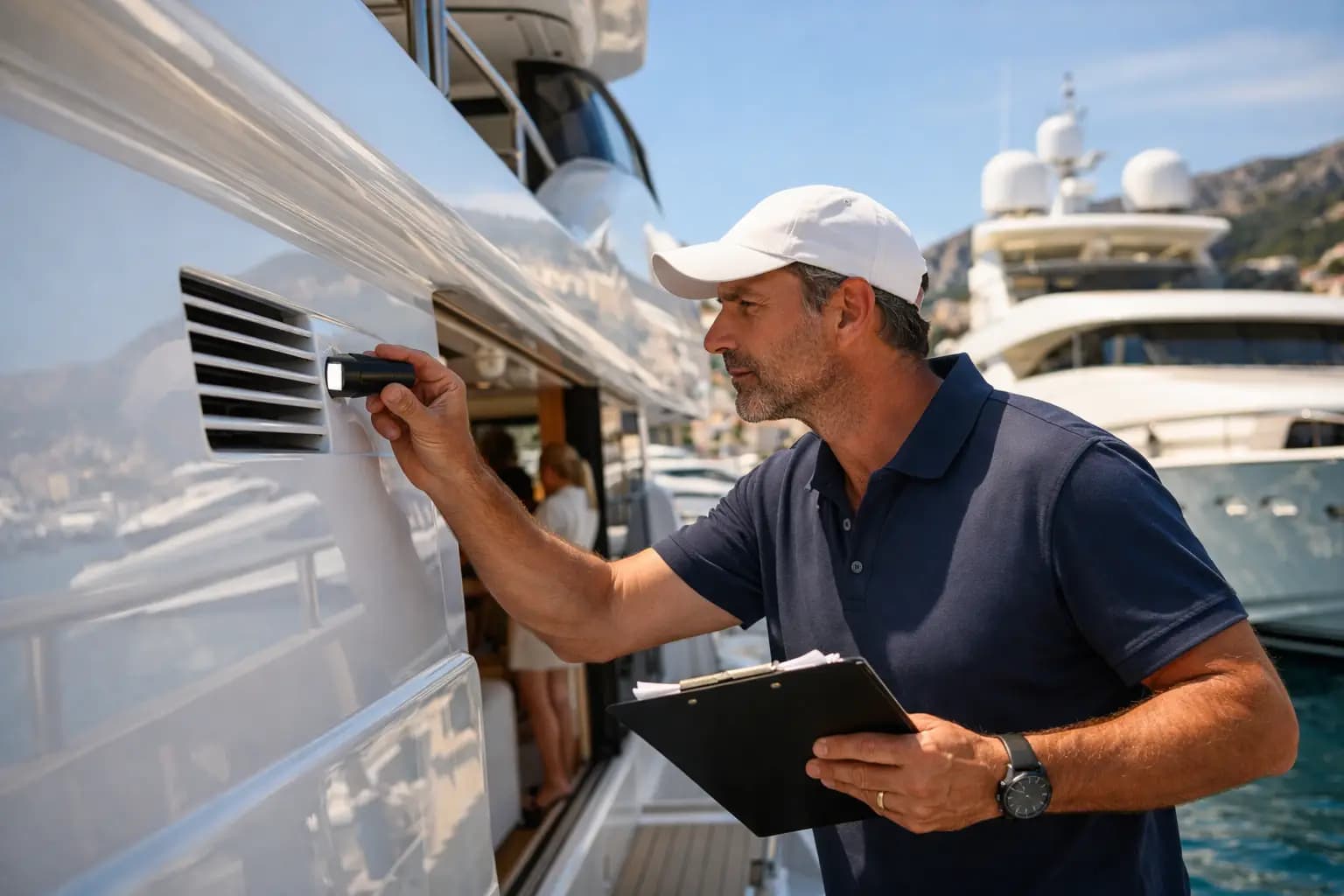
A polished exterior can sell a yacht in minutes. A proper yacht inspection can save a buyer, owner, or investor from months of avoidable cost, downtime, and negotiation friction.
In the luxury market, condition is never a detail. It is part of the asset itself. Whether you are acquiring a motor yacht in the Mediterranean, preparing a superyacht for charter, or reviewing a vessel before a major refit, inspection is where appearance gives way to facts. The right inspection does more than identify defects. It clarifies value, confirms compliance, and sets expectations before money and reputation are on the line.
Why yacht inspection matters more at the top end
On a high-value vessel, small issues rarely stay small. A minor moisture reading around a deck fitting may point to a localized seal failure, or it may suggest water intrusion that has been ignored through multiple seasons. Cosmetic fatigue in the interior may be just that, or it may reflect heavier charter use than the logbooks suggest. A yacht inspection gives context, and context is what separates a routine decision from an expensive assumption.
For buyers, the inspection process supports price validation and deal confidence. For owners, it protects long-term value and helps prioritize maintenance with discipline rather than guesswork. For charter operators and management teams, it supports reliability, presentation, and guest safety. In every case, inspection is not merely technical. It is operational and financial.
That said, not every inspection serves the same purpose. A pre-purchase review is more exhaustive than a routine condition check. An insurance inspection may focus on risk and compliance. A charter-readiness inspection often places greater emphasis on guest-facing systems, aesthetics, and service standards. The scope should always match the decision being made.
What a yacht inspection usually covers
A professional yacht inspection typically begins with the hull, superstructure, and deck. Surveyors and technical specialists look for structural concerns, impact history, signs of osmosis where applicable, gelcoat or paint condition, corrosion, hardware security, sealant integrity, and evidence of deferred maintenance. On larger yachts, the visual standard matters, but so does how the finish has been maintained over time.
Mechanical spaces tell a different story. Main engines, generators, stabilizers, thrusters, pumps, fuel systems, and exhaust components are reviewed for wear, leakage, vibration concerns, service history, and installation quality. In many transactions, this area reveals the most meaningful difference between a yacht that has been maintained properly and one that has simply been kept presentable.
Electrical systems also deserve close attention. Shore power integration, battery banks, inverters, switchboards, navigation electronics, lighting circuits, alarms, and emergency systems all affect safety and usability. Modern yachts carry increasingly complex electrical loads, especially those with advanced AV, hotel systems, and automation. A vessel may look turnkey while still carrying hidden electrical vulnerabilities.
Interior inspection is about more than finish quality. Surveyors and technical teams review HVAC performance, plumbing, black and gray water systems, appliances, humidity-related damage, joinery movement, and signs of leaks around windows, hatches, and heads. In premium charter and owner-use programs, interior consistency matters because guests notice details quickly and owners expect flawless presentation.
Yacht inspection before purchase
For a serious buyer, a yacht inspection should never be treated as a formality. It is one of the few moments in the acquisition process when opinions give way to verifiable evidence.
A proper pre-purchase inspection often includes an out-of-water review, sea trial, document review, and specialist input where needed. Sea trial results are particularly revealing because they show how systems behave under load. Engine temperatures, acceleration, steering response, vibration, noise, and stabilizer performance can all look acceptable at the dock and tell a different story underway.
Documentation matters just as much as machinery. Flag records, class status where relevant, maintenance logs, refit invoices, equipment certifications, and ownership paperwork help confirm whether the yacht has been operated with discipline. A pristine vessel with weak documentation should prompt caution. A yacht with honest cosmetic wear and excellent technical records may be the stronger opportunity.
There is also the question of age versus expectation. A five-year-old yacht with inconsistent service history can present more risk than a ten-year-old yacht managed to a high standard. Buyers who focus only on model year often miss the more important issue, which is quality of stewardship.
The limits of inspection and why experience still matters
Even an excellent yacht inspection has boundaries. Inspectors do not dismantle every system, and some faults only appear under specific weather, loading, or operational conditions. That is why the most useful inspections combine formal survey work with experienced interpretation.
For example, moisture readings may indicate an area to monitor rather than a structural failure. An engine showing acceptable performance may still need a major service based on hours, age, and manufacturer intervals. A broker, technical manager, or marine consultant with strong market experience can help distinguish between a manageable finding and a genuine deal issue.
This is also where trade-offs become real. A buyer may accept upcoming cosmetic work in exchange for a better purchase position. An owner preparing for charter may prioritize guest-visible improvements ahead of a non-critical upgrade in an engineering space. Inspection findings are only as valuable as the decisions they inform.
Yacht inspection for current owners
Owners often think about inspection when selling, but the better time is before problems become visible to the market. A structured yacht inspection during ownership helps preserve resale value and keeps maintenance planning aligned with reality.
This is particularly relevant after intensive seasonal use, before major cruising plans, or ahead of high-profile events and charter periods. In destinations where yacht presentation standards are exceptionally high, such as Monaco, Cannes, or Miami, minor defects can undermine the overall impression of an otherwise excellent vessel. More importantly, small technical issues caught early are generally easier to schedule and less disruptive to resolve.
An owner-led inspection also improves budgeting. Rather than reacting to failures, management teams can stage works intelligently, coordinate yard periods more efficiently, and avoid stacking urgent repairs into peak usage windows. For vessels in charter rotation, that can mean the difference between uninterrupted revenue and cancelled dates.
How to approach yacht inspection the right way
The best approach begins with the purpose. If the yacht is being purchased, the inspection should be transaction-driven and independent. If the yacht is being prepared for sale, the process should identify issues a buyer will almost certainly discover later. If the yacht is already under ownership, the inspection should support operational planning and asset preservation.
It also helps to involve the right specialists early. A general marine surveyor may be appropriate for broad assessment, but larger or more technical yachts often require additional engine surveyors, electronics experts, rig specialists for sailing yachts, or paint inspectors for premium finishes. One report rarely answers every question on a complex vessel.
Timing matters as well. Rushed inspections create blind spots. If a haul-out, sea trial, or records review cannot be arranged properly, it may be better to delay the decision than accept an incomplete picture. On high-value yachts, speed is desirable, but clarity is more valuable.
Finally, inspection findings should be organized into three categories: safety-critical items, operational items, and cosmetic or discretionary items. This keeps negotiations and maintenance decisions grounded. Not every recommendation requires immediate action, but every recommendation should be understood in context.
What sophisticated clients should expect
A credible yacht inspection process should produce more than a checklist. It should provide a clear view of present condition, foreseeable cost exposure, and the standard of management the yacht has received. Sophisticated clients do not need alarmism. They need accurate reporting, sensible prioritization, and discretion.
That is especially true in a global market where a vessel may move between jurisdictions, charter programs, shipyards, and operating styles over its lifespan. Inspection brings continuity to that complexity. It helps owners protect a lifestyle asset like a business asset, which is often exactly what a yacht becomes.
For clients working across brokerage, charter, and yacht management, the value of an informed inspection is even greater. It supports cleaner transactions, stronger operational planning, and more confident ownership decisions. That is why experienced firms such as Master Ocean treat inspection not as an isolated technical event, but as part of a broader standard of yacht stewardship.
A beautiful yacht should inspire confidence the moment you step aboard. A thoughtful inspection is what makes that confidence real.