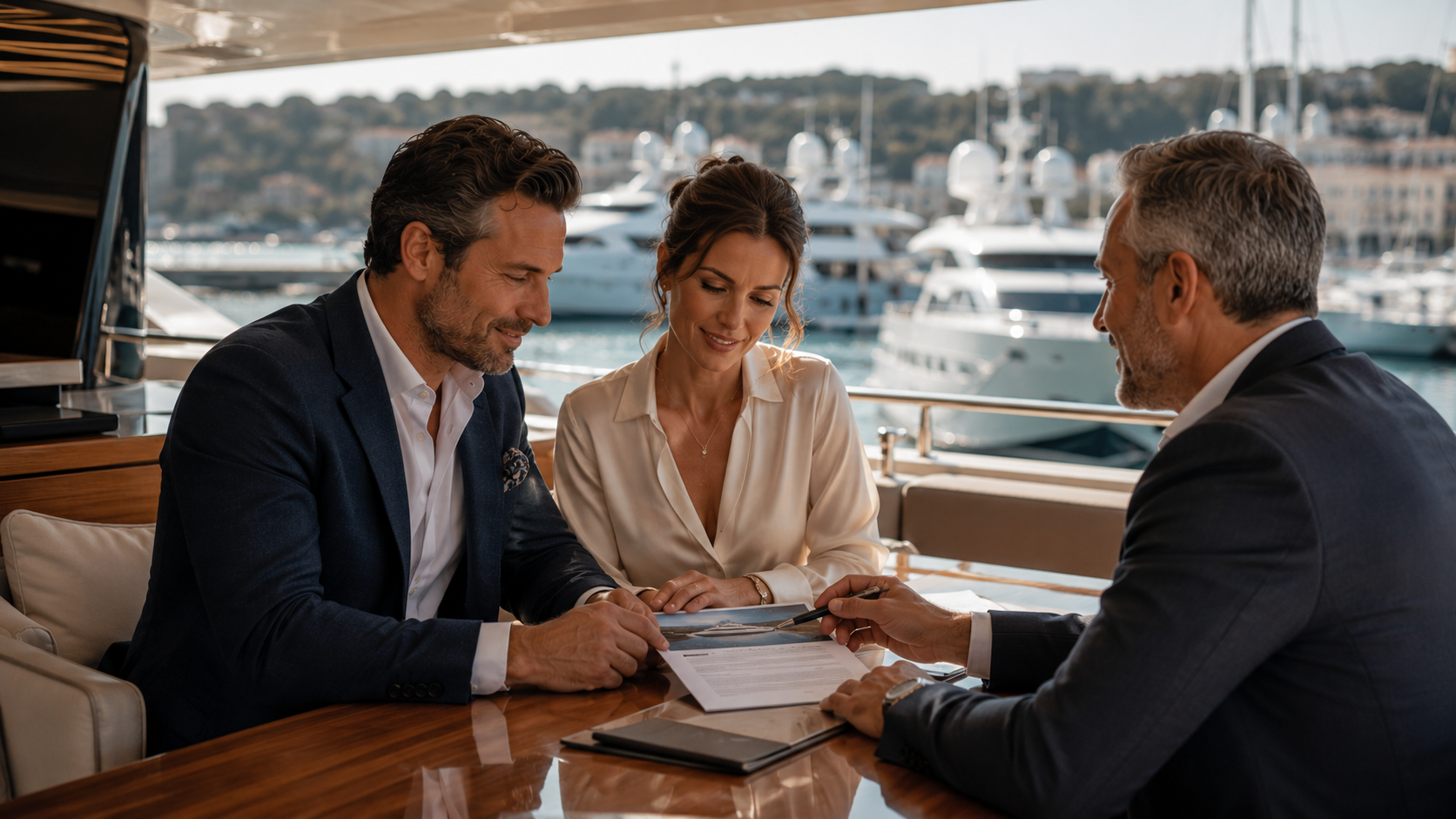
Why Yacht Insurance Is Essential: Protecting Your Yacht, Investment and Peace of Mind
Yacht ownership is the ultimate expression of maritime freedom, offering unparalleled access to the world’s most pristine oceans and exclusive destinations. However, with this freedom comes significant responsibility. Modern yachts are sophisticated, high-value assets equipped with complex engineering, luxury interiors, and advanced technology. The financial value of these vessels is substantial, and the maritime environment introduces inherent risks that cannot always be controlled, regardless of how experienced the captain or how diligent the crew may be.
Securing comprehensive yacht insurance should always be a priority before a vessel's first voyage. While some owners view insurance merely as a legal or marina requirement, true marine protection is fundamentally about financial security. It bridges the gap between regulatory compliance and the comprehensive safeguarding of an owner's capital, liability, and peace of mind.
Why Yacht Insurance Matters
Understanding the scope of risks involved in yachting highlights exactly why insurance is an indispensable component of responsible ownership. Comprehensive marine insurance provides protection across a multitude of scenarios. Whether navigating crowded straits or docking in tight marinas, protection against collisions with other vessels, submerged objects, or docks is paramount. Vessels also face severe internal risks; fire protection is crucial as electrical faults, engine room fires, or galley incidents can cause devastating structural and interior damage. Furthermore, storm and extreme weather damage from hurricanes, typhoons, and sudden squalls can overwhelm even the most robust vessels, while a single lightning strike can instantly destroy sophisticated navigation electronics, communication systems, and electrical grids.
Owners must also consider the risk of flooding from hull breaches or failed through-hull fittings. While stealing a superyacht is rare, theft and vandalism targeting tenders, water toys, and high-value equipment are prevalent global issues. The physical safety of the vessel is also vulnerable during routine operations, making coverage for marina accidents and dry dock accidents essential during haul-out, launch, and shipyard periods. Depending on the policy, sudden mechanical failures and electrical failures leading to cascading technological issues can also be covered.
Beyond the physical vessel, insurance addresses heavy legal and moral obligations. Crew liability ensures the owner's duty of care regarding medical expenses and injury compensation for their employed professionals, while passenger liability protects the owner if guests are injured on board. In the event of environmental pollution, such as accidental fuel spills, insurance covers severe fines and mandatory cleanup operations. If the worst occurs, policies cover astronomical salvage costs and provide crucial legal defense against third-party claims for damage to marina infrastructure or outside individuals. Ultimately, this comprehensive financial protection guarantees peace of mind, allowing owners to enjoy the yachting experience without underlying anxiety.
Real-World Example: Consider a luxury motor yacht moored in a Mediterranean marina during a sudden, unforecasted storm. High winds cause an adjacent, improperly secured vessel to break its lines and drift into the yacht, causing significant hull damage and destroying a custom tender. In this scenario, comprehensive yacht insurance covers the repair of the hull, the replacement of the tender, and manages the complex subrogation process against the at-fault vessel's owner, entirely shielding the innocent party from the financial impact.
Is Yacht Insurance Mandatory?
The legal requirements for yacht insurance vary significantly depending on the country, the flag state of the vessel, the specific marina, and whether the yacht is used for private cruising or commercial charter. While international maritime law does not mandate a universal insurance standard for private yachts, local jurisdictions and private entities enforce strict requirements.
When navigating through Europe, regulations are generally strict, especially concerning third-party liability. In France and Monaco, proof of comprehensive insurance with high liability minimums is heavily enforced by authorities and marinas before granting a berth. Similarly, Spain, Italy, and Croatia demand mandatory liability insurance for motorized vessels, with documentation meticulously checked by the Coast Guard and during customs clearance. Greece and Turkey also dictate specific minimum coverage amounts for bodily injury, property damage, marine pollution, and transit logs. As a major yachting hub and flag state, Malta requires rigorous insurance documentation for both registration and berthing.
In the United Kingdom, while not strictly mandated by national law for private open-water use, all marinas and harbor authorities require public liability insurance. Across the United States, requirements vary by state, but virtually all marinas and financing institutions demand comprehensive coverage. In the Caribbean, proof of insurance is essential for customs clearance in many island nations and is universally required by premium marinas. Strict maritime regulations in the United Arab Emirates require comprehensive liability and hull insurance for registration and operation. Down under, marinas in Australia and New Zealand strictly enforce liability requirements, and environmental protection agencies impose heavy penalties for uninsured pollution incidents.
Beyond national laws, marina operators worldwide must protect their infrastructure and other clients from uninsured vessels. A yacht without a valid certificate of insurance will almost certainly be denied entry, fuel dock access, and haul-out services.
Why Yacht Insurance Is Different from Standard Boat Insurance
Treating a superyacht or luxury vessel like a standard recreational boat is a critical error in risk management. The differences in insurance structures are profound. Superyachts are insured differently because they require specialized, bespoke policies written by dedicated marine underwriters, which are often syndicated due to the exceptionally high values involved. Unlike standard boats insured primarily on their cash value, yachts involve complex international maritime law, dynamic navigation limits, and extensive crew obligations. The presence of a professional crew necessitates employer's liability, workers' compensation, and health insurance provisions. Furthermore, yachts carry high-value equipment like submersibles, fine art, and advanced communication arrays that often exceed the total value of standard recreational boats. Consequently, yacht policies are heavily negotiated, customized contracts designed to manage massive third-party liability exposures that standard policies simply cannot absorb.
Factors That Influence Yacht Insurance
Insurance underwriting is a complex process of risk assessment where underwriters evaluate numerous variables to determine the appropriate coverage terms. The physical characteristics of the vessel are primary considerations, including yacht length, yacht age, and current yacht condition as evaluated through professional marine surveys. The market value of the vessel sets the baseline for the policy. Legal and geographical factors heavily influence terms; the flag state and country of registration impact the legal framework, while the designated cruising area determines exposure to regional threats like hurricanes or heavy traffic.
Operational profiles are equally critical. Whether the vessel is designated for private or commercial use significantly alters the risk due to guest turnover. Underwriters closely scrutinize captain qualifications, crew experience, and the owner's previous claims history. Technical details such as the type of propulsion, the navigation season, and the presence of advanced security equipment are factored into the premium. Finally, the marina location and storage method during downtime play a crucial role in assessing the yacht's annual operating profile.
Types of Yacht Insurance
Marine insurance is a suite of distinct coverages designed to protect against varied maritime risks. The foundation is Hull and Machinery Insurance, which comprehensively covers physical damage to the vessel, superstructure, fixed equipment, engines, and complex mechanical systems. To protect against lawsuits, Third Party Liability Insurance (often referred to as Marine Liability or P&I) covers financial claims for damage or injury caused to others. These core elements are frequently bundled into a single Comprehensive Yacht Insurance package.
Specialized operations require targeted policies. Crew Insurance covers legal obligations regarding medical expenses and repatriation, while Passenger Liability protects against guest injuries. For vessels generating revenue, Charter or Commercial Yacht Insurance alters the legal duty of care to accommodate paying guests. Ancillary assets are protected through dedicated Tender and Water Toys Insurance, alongside Personal Belongings coverage. During transitions, owners rely on Transit and Transport Insurance for overland moves or heavy-lift cargo shipping, Builder's Risk for new constructions, and Refit Insurance during major shipyard overhauls. Modern policies also include crucial emergency provisions such as Pollution Liability, Legal Expenses Cover, Salvage Assistance, and increasingly, Cyber Risk Insurance to protect digital navigation systems.
What Can Yacht Insurance Cover
A robust marine policy encompasses almost every physical and operational aspect of the vessel. Regarding physical and mechanical assets, coverage includes the main structural body, superstructure, deck equipment, main propulsion systems, generators, and running gear. The central nervous system of the bridge is also protected, covering all navigation electronics, radar, GPS, AIS, autopilot, and satellite communication systems. Inside the vessel, insurance protects the interior finishes, custom furniture, scheduled artwork, and both personal and guest belongings alongside specialized crew equipment.
The yacht's operational inventory is fully covered, including the primary tender, jet skis, seabobs, diving equipment, and water toys. Critical logistics and systems, such as solar panels, battery arrays, and security systems, fall under the policy's umbrella. Furthermore, the policy steps in during critical phases, offering protection during shipyard periods, transport, launching, and haul-out. In catastrophic scenarios, the policy provides vital emergency funding for emergency towing, professional salvage, pollution cleanup, legal defense, and compensating third-party damages.
What Is Usually Not Covered
Transparency regarding policy exclusions is a hallmark of professional marine risk management. Yacht insurance is designed to cover sudden, accidental, and unforeseen events, not the inevitable deterioration of the asset. Policies universally exclude normal wear, corrosion, and gradual deterioration such as osmosis or blistering. Damage resulting from poor maintenance or uncorrected manufacturer defects is generally denied. Furthermore, any intentional damage, involvement in illegal activities, or operating the vessel outside agreed policy limits and prohibited navigation regions will void coverage.
Engaging in commercial use without declaration, such as running an uninsured charter, instantly nullifies the policy. While general crew errors are covered, gross crew negligence or operating under the influence may jeopardize a claim. Finally, catastrophic geopolitical events such as war risks, piracy, and navigating into sanctioned territories are excluded unless explicitly negotiated and added via specialized endorsements.
Which Yachts Should Be Insured
Every vessel that enters the water requires insurance, tailored specifically to its design and purpose. Motor Yachts and Luxury Motor Yachts require coverage for high-speed operation, complex systems, and exquisite interiors. Sailing Yachts and Performance Sailing Yachts need specialized underwriting for expensive rigging, carbon fiber components, and racing risks. Multihulls like Catamarans and Power Catamarans must account for their wide beams and specific berthing challenges. Explorer Yachts operating in remote regions require global navigation limits and ice-class provisions, while massive Superyachts and Mega Yachts require intricate, multi-layered syndicated policies functioning similarly to commercial shipping insurance.
Historical Classic Yachts rely on agreed-value policies with specialized surveyors. Smaller recreational vessels, including Sport Boats, Fishing Boats, Center Console Boats, Cabin Cruisers, and Day Cruisers, require robust coastal and liability coverage. Auxiliary vessels such as Tenders, RIB Boats, and custom Luxury Tenders must be explicitly scheduled. Finally, any vessel used for business, including Commercial Charter Yachts and Corporate Event Yachts, requires stringent commercial liability protection, just as New Build Yachts and Refit Projects require specialized shipyard coverage.
Private vs Commercial Yacht Insurance
The intended use of the yacht drastically alters its risk profile and legal standing. Under private ownership, the yacht is used exclusively for the pleasure of the owner, family, and non-paying guests, making the insurance straightforward and focused on asset protection. However, the moment a yacht accepts paying guests for a charter operation, it becomes a commercial vessel, exponentially increasing liability exposure. Corporate ownership and vessels managed by professional management companies require policies that accurately reflect these complex operational structures. Commercial vessels must adhere to strict crew requirements under the Maritime Labour Convention, demand much higher commercial and passenger liability limits, and often carry income protection provisions to cover loss of charter revenue if the yacht is damaged.
Mediterranean vs Caribbean vs Worldwide Cruising
The geographic location of the yacht dictates the underwriting parameters, as each region presents unique environmental and logistical challenges. Cruising the Mediterranean involves navigating high-density areas, tight marinas, and strict European legal requirements across France, Spain, Italy, and Greece, making protection against marina collisions and third-party property damage the primary focus. Conversely, Caribbean cruising is defined almost entirely by the threat of Named Storms and hurricanes. Policies here contain strict seasonal navigation limits, demanding that vessels relocate or adhere to highly detailed, pre-approved hurricane preparedness plans. For vessels undertaking Worldwide itineraries—including Atlantic Crossings, the Pacific, or the Middle East—underwriters must assess global navigation limits, conduct piracy risk assessments, and establish protocols for complex logistics regarding remote salvage and repair.
Advantages of Yacht Insurance
Beyond simple financial reimbursement, a well-structured marine policy offers profound strategic benefits. It fundamentally protects the owner's investment and reduces financial exposure by shielding personal wealth from catastrophic maritime lawsuits. It instills international cruising confidence, allowing captains to clear customs globally without legal delays. The policy provides robust protection for owners, guests, and crew, ensuring access to world-class medical support and fulfilling vital legal duties.
During a crisis, owners benefit from immediate support during emergencies, access to elite salvage experts, and funded legal defense. Administratively, a strong policy guarantees better marina access and opens up better financing opportunities, as banks will not secure loans without it. Ultimately, maintaining continuous, premium coverage results in greater buyer confidence and improved resale appeal, while ensuring the asset remains protected during vulnerable phases like refits and transportation.
Possible Limitations
Yacht owners must read their policies carefully, as marine insurance is bespoke and contains specific operational boundaries. Because every policy differs, owners must strictly adhere to their designated navigation limits and seasonal restrictions, particularly regarding storm exclusions which void coverage if a yacht is left in a hurricane path without an approved plan. Owners carry strict maintenance obligations and must ensure their vessel is seaworthy.
Any undeclared commercial activity will void a private policy. Underwriters frequently enforce survey requirements and mandate that all high-value items undergo strict equipment declarations. Coverage often hinges on specific crew qualifications and adherence to flag requirements. Finally, owners must be aware of their agreed deductibles, respect strict claim procedures regarding notification timelines, and understand that waiting periods prevent purchasing storm coverage when a hurricane is already approaching.
Common Situations Where Insurance Helps
Marine incidents escalate quickly, and insurance is designed to respond aggressively to real-world scenarios. In the event of a collision with a reef or dock, hull coverage handles fiberglass repair and haul-out costs. If a fire breaks out due to an electrical short, the policy covers extensive structural repairs and crew accommodation. During engine room flooding from a failed seacock, insurance covers salvage pumping and complete engine overhauls. If a navigation error leads to grounding, the policy funds professional towing to free the vessel safely.
Insurance also steps in during severe weather, replacing rigging damaged in a storm or entirely replacing bridge electronics destroyed by lightning. If a custom tender is stolen or electronics are stolen during winter storage, the policy provides immediate replacement funds. Liability protections are equally critical: they cover hospital bills and evacuation if there is a guest injury on deck or a crew injury handling lines. Policies cover the massive fines and boom deployments required after a fuel spill. During yard periods, insurance covers damage from a travel lift accident, a shipyard accident involving contractor negligence, or transit damage while on a cargo ship. From a catastrophic hurricane total loss to a localized generator failure, comprehensive insurance provides the necessary capital to recover.
Insurance During Yacht Charter, Delivery, and Transport
Operating outside standard private cruising requires specific coverage adaptations. During Yacht Charter, the legal duty of care shifts dramatically. While APA (Advance Provisioning Allowance) covers minor guest breakages, commercial passenger liability insurance is absolutely vital to protect the owner from lawsuits arising from guest injuries during luxury events or corporate charters.
During Yacht Delivery, the transition of risk is absolute. Moving a newly purchased yacht requires insurance to instantly transition from the builder to the new owner the moment of acceptance, and the subsequent delivery voyage requires specific navigational approvals from underwriters. Similarly, During Yacht Transport, whether the vessel is moving over land via truck, shipping as containerized cargo, or floating onto a heavy-lift submersible vessel, owners must secure distinct logistical cargo coverage to protect against loading crane failures and oceanic weather.
Insurance During Purchase, Refit, and Financing
Prudent buyers arrange insurance long before the final handshake. During a Yacht Purchase, buyers must ensure coverage is bound for aggressive sea trials, out-of-water surveys, and the exact minute of ownership transfer to satisfy flag state registration and escrow requirements. Once owned, During Refit and Shipyard Periods, the yacht is highly vulnerable to risks that do not exist on the water, such as fires from contractor hot work, paint overspray, and travel lift accidents, requiring specialized refit endorsements.
This meticulous protection is largely driven by the relationship between Yacht Insurance and Financing. No financial institution will risk capital on an uninsured maritime asset. Banks dictate maximum deductibles, require strict navigation limits, and frequently mandate a "Breach of Warranty" endorsement to guarantee their collateral is secure against physical loss, even if the owner technically breaches the policy.
Environmental Responsibility and Modern Technology
Modern yachting demands stringent environmental stewardship. Insurance addresses this reality by providing Pollution Liability to manage the catastrophic financial fallout of fuel spills, hydraulic oil leaks, and damage to protected marine reefs. These policies cover the immediate deployment of cleanup operations and pay the severe environmental fines dictated by MARPOL and international treaties.
To mitigate these risks, underwriters heavily favor yachts utilizing Modern Technology. The integration of AIS, precise GPS, and satellite tracking greatly reduces collision and grounding risks. Advanced remote monitoring, CCTV, optical fire detection, and engine telemetry allow crews to address mechanical stress before a catastrophic failure occurs. Furthermore, as yachts become increasingly digitized, cybersecurity endorsements are vital to protect against the hacking of critical navigation systems.
Choosing the Right Insurance Provider
Selecting the correct underwriting partner is as critical as the policy itself. Yacht owners should seek providers with deep experience in marine insurance, rather than general property insurers who may occasionally underwrite boats. A dedicated marine provider inherently understands the nuances of yacht operations, complex maritime law, and global navigation.
Key factors to evaluate include their capacity for international claims support and worldwide assistance, ensuring that if an incident occurs in a remote location, the insurer has the logistical infrastructure to respond immediately. Financial stability is paramount, as settling a constructive total loss on a superyacht requires massive, guaranteed capital reserves. Additionally, top-tier providers maintain an extensive marine survey network to quickly deploy impartial experts for damage assessment, alongside 24/7 emergency assistance to guide captains through active crisis management.
Questions to Ask Before Purchasing Yacht Insurance
Before binding coverage, owners and captains should seek absolute clarity on the policy's mechanics. Essential questions to ask your broker or underwriter include:
• What is explicitly covered, and more importantly, what is excluded?
• Does the policy allow for worldwide cruising, or are there strict navigation limits?
• Is named storm coverage included, and what are the specific requirements to keep it valid?
• Are the primary tender and water toys included under the main policy, or do they require separate scheduling?
• Is the professional crew fully included for medical and liability claims?
• Is commercial charter included, or is the policy strictly for private use?
How to Reduce Insurance Risk and Handle Claims
Owners and captains can actively improve their risk profile and secure better premiums through proactive management. Employing a highly qualified crew, maintaining immaculate documentation, and adhering to strict preventive maintenance schedules are paramount. Regularly conducting independent condition surveys, keeping navigation and fire detection systems modernized, and utilizing weather routing for ocean crossings demonstrate diligent ownership to underwriters.
If an incident does occur, navigating the Claims Process requires a methodical approach. The paramount priority is always crew and guest safety. Once secure, the captain must notify local authorities and immediately contact the insurance broker. The insurer will dispatch an independent marine surveyor to assess the damage. By providing comprehensive ship's logs, photographs, and statements, the repair bids can be quickly approved by the surveyor, leading to a prompt financial settlement minus the agreed deductible. To facilitate this process, underwriters require specific Documents, including the Certificate of Registry, proof of ownership, a recent marine survey, meticulous maintenance records, and up-to-date crew licenses.
Why Insurance Should Be Reviewed Every Year
A yacht's operational profile is rarely static, making annual policy reviews a critical component of risk management. Whenever a yacht refit is completed or new navigation equipment is installed, the vessel's agreed value must be updated to prevent underinsurance. Operational shifts, such as cruising area changes (for instance, moving from the Mediterranean to the Caribbean), require immediate navigation limit adjustments. Furthermore, crew changes, the addition of a new tender, or general market value changes must be accurately reflected in the policy to ensure seamless, uninterrupted coverage.
Common Insurance Mistakes Made by New Yacht Owners
Entering the world of yachting involves a steep learning curve, and new owners frequently misjudge maritime risk. A primary error is assuming standard recreational boat policies apply to luxury yachts, leaving massive liability gaps. New owners often forget to specifically schedule high-value art, custom tenders, or expensive water toys. Another frequent oversight is failing to understand the strict geographical boundaries of navigation limits or the mandatory requirements of hurricane action plans.
Crucially, many new owners make the mistake of shopping for marine policies based primarily on cost. The lowest premium does not necessarily provide the most appropriate protection. Yacht owners should evaluate coverage limits, exclusions, claims support, navigation areas and emergency assistance rather than making a decision based solely on price. Cheap insurance often contains hidden exclusions and utilizes inferior repair networks, which can cost exponentially more during a claim.
General Mistakes Yacht Owners Should Avoid
Beyond the initial learning curve, experienced owners must also avoid common administrative pitfalls. Failing to update the yacht's agreed value after a refit or forgetting to declare engine modifications can instantly void coverage. Using a private policy for a commercial charter is a direct breach of contract. Owners must respect navigation limits, promptly report any incidents to avoid prejudicing the surveyor's investigation, and remember to regularly review the policy as the yacht's risk profile naturally evolves over time.
Yacht Insurance Checklist Before Every Season
Prudent captains and owners run through a strict checklist before slipping the lines. Ensure flag state registration is current and the original insurance certificate is on board. The planned itinerary must be checked against policy geographical limits. All crew medical certificates and licenses must be valid, and emergency broker contacts updated. Finally, all fire equipment, EPIRBs, and life rafts must be certified, engine preventive maintenance completed, and all ship's logs digitally backed up.
Yacht Insurance Glossary
Understanding marine terminology empowers owners to interpret their policies accurately. The Hull refers to the physical vessel, while the Deductible is the out-of-pocket expense paid before insurance responds. Liability dictates the legal responsibility for third-party damages, and Salvage refers to the legally complex rescue of a stricken vessel. Policies are typically written for an Agreed Value (a fixed payout in the event of a total loss) rather than Actual Cash Value (which factors in depreciation). A Constructive Total Loss occurs when repair costs exceed the insured value, whereas a Partial Loss is repairable. The Navigation Limits define the authorized cruising grounds, and any Exclusion is a specific scenario the policy explicitly will not cover.
Frequently Asked Questions
Do I need insurance?
While international waters lack universal mandates, entering any civilized port, securing a premium marina berth, or obtaining marine financing requires comprehensive insurance. Furthermore, the immense financial risk of operating an uninsured luxury asset makes coverage fundamentally indispensable.
Can I insure an older yacht?
Yes, older vessels can be fully insured, though underwriters will require meticulous, out-of-water structural condition and valuation surveys to prove they are seaworthy before binding coverage. Depreciation clauses may also apply to certain aging components.
Can I insure a charter yacht?
Absolutely. Commercial Yacht Insurance is specifically engineered to cover the heightened legal liabilities, crew requirements, and passenger risks inherently associated with commercial charter operations.
What happens after an accident?
The immediate focus must be human safety and mitigating further physical damage. Once secure, local authorities are notified, followed immediately by the insurance broker, who coordinates an independent marine surveyor to inspect the damage and authorize the repair process.
Can I cruise internationally?
Yes, but you must negotiate worldwide or specific regional navigation limits into your policy beforehand. Crossing oceans often requires submitting a detailed float plan, weather routing strategy, and crew resumes to the underwriter for explicit approval.
Does insurance cover tenders?
Tenders are not always automatically covered. They must be explicitly declared and scheduled on the primary yacht's hull policy, or insured under a separate, standalone policy, particularly if they are high-performance or luxury models.
Does insurance cover storms?
Yes, provided the captain adheres strictly to the policy's Named Storm provisions. These clauses often dictate exactly where the yacht can be located during hurricane season and require a pre-approved, actionable hurricane preparation plan.
Do I need separate liability insurance?
General liability (Protection and Indemnity) is usually bundled into a standard Comprehensive Yacht Insurance policy. However, massive superyachts or heavy commercial operations may secure liability through specialized P&I clubs.
Can I insure a yacht under construction or refit?
Yes. Builder's Risk Insurance covers the vessel from the laying of the keel until final delivery. Similarly, Refit Insurance is critical during shipyard periods to cover unique risks like hot-work fires and contractor negligence.
Does insurance cover piracy?
Standard marine policies usually exclude piracy and acts of war. If navigating through high-risk waters, owners must secure a specific War Risk and Piracy endorsement, which often mandates carrying armed maritime security teams.
Can charter yachts use private insurance?
No. Accepting paying guests while operating on a private recreational policy constitutes undeclared commercial use and will immediately and entirely void the coverage in the event of a claim.
Why Experienced Yacht Owners Never Cruise Without Insurance
For the seasoned yachtsman, marine insurance is never viewed as an administrative burden or a mere marina requirement. It is universally recognized as a fundamental pillar of professional vessel management. Operating a yacht involves navigating unpredictable environments, managing complex engineering systems, and overseeing the safety of human lives. Experienced owners approach insurance with the same rigor they apply to technical maintenance, hiring a qualified crew, and adhering to international maritime regulations. They understand that a comprehensive policy does not just cover the fiberglass and the engines; it acts as a corporate shield, a facilitator for global exploration, and a guarantor of financial stability. It is the invisible safety net that allows the true joy of yachting—the freedom of the open ocean—to be experienced without hesitation.
How Master Ocean Can Help
Navigating the complexities of international maritime law, liability structures, and specialized coverage requires expert guidance. Master Ocean assists clients through its network of trusted international marine insurance partners, ensuring owners secure policies precisely tailored to their vessel's operational profile. Beyond insurance coordination, Master Ocean provides comprehensive support across the entire spectrum of yacht ownership. From documentation assistance and yacht purchase support to flag registration guidance and commercial management, the focus is on holistic asset protection. Whether requiring charter insurance guidance, refit coordination, international cruising assistance, or strategic risk management advice, Master Ocean ensures that every maritime endeavor is backed by trusted international marine insurance partners and professional maritime expertise.
Conclusion
Yacht Insurance is far more than a contractual agreement to repair a damaged vessel. It is an essential strategy for preserving capital, ensuring compliance, and managing maritime liability. A well-structured policy protects the owner's financial stability, safeguards the family and guests on board, and fulfills the duty of care owed to the professional crew. It secures business operations for charter yachts and guarantees the freedom of international cruising. Ultimately, comprehensive marine protection secures the most valuable asset of all: peace of mind. By removing the financial anxiety associated with the unpredictable nature of the sea, owners are free to fully immerse themselves in the luxury, adventure, and unparalleled lifestyle that yachting provides. Before casting off, it is imperative to consult with experienced marine professionals to ensure your coverage is as robust and capable as the vessel you command.