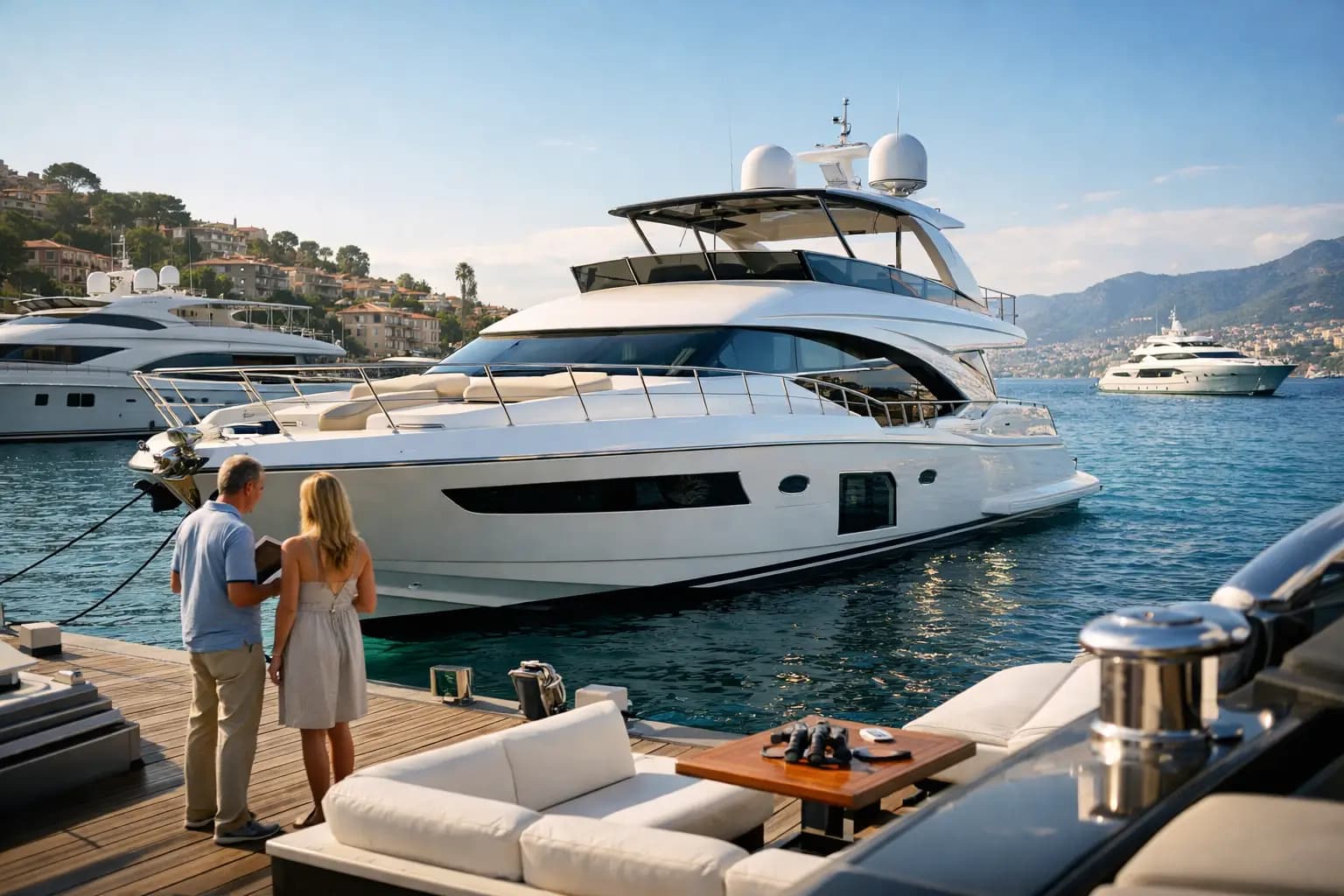
A yacht rarely feels right on paper alone. The layout may be impressive, the specifications may read well, and the photography may suggest an easy decision. Yet serious buyers know the real question is whether the vessel suits the way they intend to cruise, entertain, operate, and own. That is why the market for used yachts for sale remains so compelling - it offers access to proven yachts, real-world ownership history, and a broader range of opportunities than many new-build searches can provide.
For experienced buyers, the appeal is not simply price. It is timing, availability, pedigree, and practicality. A well-selected pre-owned yacht can deliver the profile, range, and onboard comfort a client wants without the lead times and uncertainty that often come with new construction. At the same time, buying pre-owned requires sharper judgment. Condition varies. Refit quality matters. Documentation matters. And the difference between a smart acquisition and an expensive distraction is usually found in the details.
Why used yachts for sale continue to attract serious buyers
The strongest pre-owned opportunities tend to combine immediate availability with a level of market transparency that many buyers appreciate. You can review maintenance records, assess how the yacht has aged, and often see evidence of upgrades that would otherwise become your responsibility after delivery. That creates a more informed buying environment, especially for clients who value operational clarity as much as lifestyle appeal.
There is also a wider field of design choices. In the used market, buyers are not limited to current production trends. They can compare classic motor yachts, modern flybridge models, long-range explorer yachts, sailing yachts, catamarans, and performance-driven sport vessels across multiple builders and eras. For some, that means finding a yacht with a more generous interior volume than newer equivalents. For others, it means securing a respected hull from a builder with a strong reputation for seakeeping and engineering.
This is also where realistic trade-offs enter the conversation. A newer yacht may offer updated technology and fresher cosmetics, but an older vessel from a top shipyard may provide stronger construction, better proportions, or a more refined cruising platform. There is no universal formula. The right decision depends on how you prioritize aesthetics, operational simplicity, resale outlook, and intended use.
How to evaluate used yachts for sale beyond the listing
A polished listing can open the conversation, but it should never close it. Serious evaluation starts with the ownership story. Has the yacht been privately used or operated in charter? Was it maintained proactively or only as needed? Has it been under professional management? Those answers often reveal more than the asking price.
Service history is one of the clearest indicators of value. A yacht that has received regular engine service, system inspections, cosmetic upkeep, and timely replacements is usually a safer prospect than one that appears visually attractive but lacks documented care. In the upper end of the market, disciplined management often protects not only condition but also resale confidence.
Refits deserve careful scrutiny as well. A refit can elevate a yacht significantly, but only if the work was properly specified and professionally executed. Updated interiors, navigation systems, AV packages, teak decks, generators, stabilizers, or air conditioning can strengthen the yacht’s appeal. Still, buyers should confirm when the work was done, who carried it out, and whether the upgrades addressed long-term reliability or simply improved presentation for sale.
Then there is usage fit. A yacht designed for coastal entertaining may not suit an owner planning extended Mediterranean cruising or seasonal Caribbean use. A sleek open yacht may be ideal for day and weekend programs, while a tri-deck motor yacht or explorer platform may better serve longer voyages, guest accommodation, and crew support. The best acquisition is rarely the one with the most features. It is the one that aligns most closely with how the owner will actually use it.
The factors that shape value
Price matters, but value is broader. Buyers should look at age, builder reputation, maintenance standard, equipment level, VAT or tax position where relevant, berth arrangements if applicable, and the likely cost of bringing the yacht to their preferred standard after closing. Two yachts with similar asking prices can represent very different ownership commitments over the first year.
Market positioning matters too. Some sellers are testing the market, while others are motivated by timing, fleet changes, or ownership transitions. A yacht that has been priced with discipline and supported by clean documentation may ultimately represent a better acquisition than a seemingly attractive listing that raises questions during due diligence.
Survey findings can also reshape perceived value. Cosmetic imperfections are one thing. Structural concerns, deferred machinery work, moisture intrusion, electrical issues, or outdated compliance items are another. Sophisticated buyers understand that a lower purchase price can quickly lose its appeal if the post-purchase technical program is larger than expected.
What buyers should inspect closely
The hull and deck are obvious starting points, but premium yacht purchases require a more complete view. Engine hours should be considered in context rather than isolation. Moderate use with proper servicing can be preferable to long periods of inactivity. Mechanical systems, generators, watermakers, stabilizers, hydraulics, and onboard electronics should all be reviewed with the same seriousness as the interior finish.
Interior condition tells its own story. Wear patterns, odors, headliner condition, cabinetry movement, moisture signs, and the standard of guest areas versus crew areas can quickly reveal how the yacht has been operated. On larger yachts, crew organization and technical spaces are especially informative. Clean, well-managed engine rooms and orderly systems often reflect disciplined ownership.
Sea trials remain essential. A yacht may look impeccable at the dock and still perform poorly underway. Noise levels, vibration, visibility from the helm, maneuverability, stabilizer response, and general onboard comfort all deserve firsthand evaluation. For buyers considering a yacht for entertaining, privacy flow, deck circulation, and guest movement between interior and exterior spaces matter just as much as raw performance.
Brokerage support is not a formality
In a transaction of this scale, representation should do more than present listings. Buyers benefit from brokerage guidance that filters options, identifies mismatches early, coordinates surveys, reviews documentation, and helps interpret findings in commercial terms. That is especially valuable in cross-border transactions, where flag, registration, taxation, transport logistics, and legal structure can affect the process.
The strongest advisors bring market perspective as well as access. They know which yachts are genuinely worth pursuing, which ones are likely to require meaningful post-sale investment, and where negotiation room may exist. For clients balancing private use, charter potential, management requirements, or future resale strategy, that perspective can materially improve the outcome.
A full-service brokerage environment becomes even more relevant after purchase. Delivery coordination, insurance support, technical follow-up, crew placement, management setup, and refit planning all influence how quickly the yacht becomes an asset rather than an administrative burden. For international buyers moving between the Mediterranean, the UAE, the Caribbean, or the US market, continuity of support is often as valuable as the yacht itself.
Timing the market without chasing perfection
Many buyers wait for the ideal yacht at the ideal price in the ideal location. That approach sounds disciplined, but it can become counterproductive. The best yachts often move because they are properly maintained, clearly represented, and realistically priced. Waiting for a perfect scenario may mean losing a vessel that was objectively a strong fit.
A more effective approach is to define the non-negotiables first. That may be builder, size range, guest capacity, cruising profile, crew configuration, or style category. Once those are clear, the search becomes more precise and faster to act on. Everything else, from decor updates to minor equipment preferences, can be weighed against the strength of the underlying platform.
This is where an experienced brand such as Master Ocean can add real value - not by pushing urgency, but by bringing clarity to a market where presentation often outpaces substance. Buyers do not need more listings. They need sharper selection, informed due diligence, and support that extends beyond the transaction.
The right yacht is rarely the flashiest one on the market. It is the one that fits your ownership goals, carries its history well, and still feels convincing after the survey, sea trial, and hard questions. When that combination appears, confidence usually follows.