Used Yachts for Sale in France With Confidence
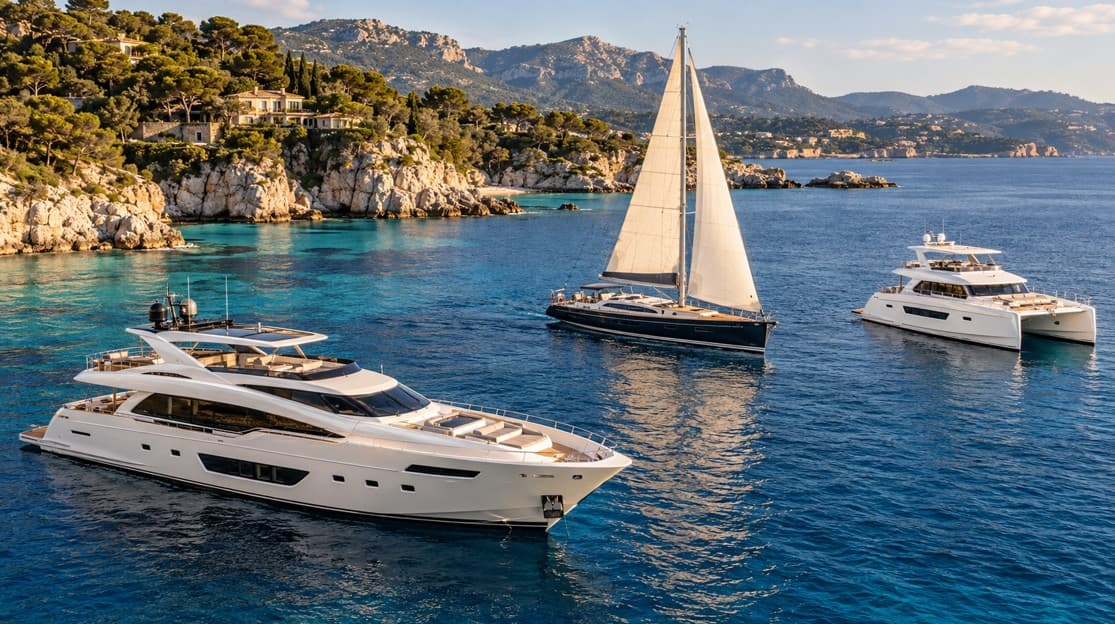
A well-kept 45-foot cruiser in Antibes, a bluewater sailing yacht in La Ciotat, and a family motor yacht near Cannes may appear comparable online. In practice, their maintenance records, VAT position, berth options, flag, and recent technical work can create very different ownership decisions. Buyers considering used yachts for sale in France should look beyond age, length, and asking price to assess the complete transaction and the life of the yacht after closing.
France remains one of the Mediterranean’s most active pre-owned yacht markets. Its inventory ranges from practical day boats and sailing yachts to high-performance sport cruisers, catamarans, and large motor yachts. The choice is wide, but the strongest purchase is rarely the vessel that simply looks best on the first viewing. It is the yacht whose condition, documentation, operating profile, and future service plan align with how you intend to use her.
Why Buy a Used Yacht in France?
The French market offers a concentration of established marinas, experienced shipyards, surveyors, maintenance providers, and international brokers. For a buyer, this makes it easier to inspect several suitable yachts within a focused itinerary and to compare their condition in a market where Mediterranean use is well understood.
The French Riviera is particularly relevant for premium motor yachts, tenders, and performance vessels, while the coast around Marseille, La Ciotat, and Toulon often provides access to sailing yachts, catamarans, and technically capable refit infrastructure. This is not a rule. A yacht’s history matters more than her postcode. Yet location can affect the availability of sea trials, survey access, delivery planning, and future berthing.
A used yacht can also represent a more immediate route to ownership than a new-build project. The yacht already exists, its handling characteristics can be tested, and its operating costs can be evaluated against real records rather than projections. The trade-off is that deferred maintenance, equipment obsolescence, and incomplete documentation must be identified before commitment.
Define the Yacht Before You Review Listings
The most efficient buyers begin with a clear brief. Decide whether the yacht is primarily for weekend use, extended family cruising, owner operation, charter activity where appropriate, or a combination of private use and professional crew. A 40-foot express cruiser, a sailing catamaran, and a 30-meter motor yacht each bring fundamentally different crew, maintenance, insurance, and berth requirements.
Your intended cruising area should shape the search. A yacht based in the South of France may be ideal for coastal cruising between France, Monaco, Italy, Corsica, and Spain. If you expect to cross regularly to the Balearics or use the yacht for longer seasonal passages, range, stabilization, tankage, tender arrangements, and onboard storage become more significant.
Budget should also include more than the acquisition price. Allow for transaction costs, insurance, registration or flag administration, berth arrangements, annual maintenance, winter work, crew if required, and an initial reserve for upgrades identified during due diligence. A yacht that appears attractively priced can become expensive if major machinery, teak decking, safety equipment, electronics, or upholstery are approaching renewal.
How to Assess Used Yachts for Sale in France
A viewing should be structured, not rushed. Start with the yacht’s general presentation, but move quickly to the areas that reveal how she has been operated. Look at engine spaces, bilges, lockers, service logs, electrical panels, deck fittings, tender gear, and the condition of equipment that is easy to overlook in photographs.
Ask when the engines, generators, stabilizers, air conditioning, navigation systems, batteries, and safety equipment were last serviced. For sailing yachts, review rig inspections, sail inventory, standing rigging age, keel and rudder history, and any evidence of moisture or deck-core issues. For motor yachts, pay particular attention to propulsion hours, cooling systems, exhaust components, fuel systems, and evidence of vibration or corrosion.
A clean engine room is encouraging, but it is not proof of technical condition. Equally, a yacht that shows honest signs of regular use is not automatically a poor prospect. The question is whether maintenance has been consistent, documented, and proportionate to the vessel’s age and operating profile.
Survey and Sea Trial Are Separate Decisions
An independent marine survey remains one of the most valuable parts of the buying process. The scope should suit the yacht and the risks involved. A thorough pre-purchase survey commonly includes an out-of-water hull inspection, moisture readings where relevant, structural checks, machinery assessment, and review of onboard systems. Specialist engine, rig, or ultrasonic inspections may be sensible for certain yachts.
The sea trial is equally important. It allows the buyer and technical team to observe starting behavior, operating temperatures, vibration, steering response, maneuverability, electronics, and equipment under load. Plan it carefully. A short run in calm water may not expose every issue, but it can still reveal important operational concerns.
Survey findings should not automatically end a transaction. They provide a basis for informed negotiation, repair conditions, retention arrangements, or a decision to walk away. The significance of each finding depends on cost, safety, timing, and the buyer’s appetite for a refit project.
Documentation That Deserves Close Attention
A credible transaction requires a clean documentary trail. The exact requirements vary by flag, ownership structure, and yacht type, so qualified legal and tax advice should be obtained where needed. From a commercial standpoint, buyers should expect to review ownership records, registration documents, evidence of authority to sell, maintenance history, and supporting invoices where available.
VAT status requires particular care for yachts operating in Europe. Do not rely on an informal statement in a listing or verbal assurance during a viewing. Request documentary support and have the position reviewed by appropriate specialists before exchange and closing.
A well-organized transaction folder should normally include:
- Current registration and ownership documentation
- A clear chain of title and seller authority
- Service, maintenance, and refit records
- Equipment inventories and warranties where transferable
- Evidence supporting VAT and customs status, where relevant
For larger yachts, crew employment arrangements, commercial coding, classification history, charter records, and management agreements may also require review. The more complex the yacht, the more valuable it becomes to coordinate legal, technical, operational, and brokerage work through a single disciplined process.
Price, Negotiation, and the Cost of Readiness
The asking price is an opening reference, not a complete value assessment. Compare similar yachts by build quality, age, hours, specification, refit history, maintenance standard, location, and realistic availability of berthing. A yacht with a recent machinery overhaul and documented refit may justify a stronger price than a similar model requiring immediate technical expenditure.
Negotiation works best when it is evidence-led. Survey findings, incomplete records, market comparables, and timing can all be relevant. However, an overly aggressive approach can be counterproductive when a seller has maintained the yacht carefully and another qualified buyer is waiting. The aim is not simply to reduce the price. It is to reach a purchase structure that reflects condition, risk, and the work required to place the yacht into your preferred operating standard.
Berthing should be discussed early. A berth is not necessarily included with a yacht, and any transfer, lease, or marina arrangement must be confirmed independently. This matters particularly in high-demand locations around Cannes, Antibes, Saint-Tropez, and Monaco, where availability and terms can materially influence the practicality of ownership.
Plan the First Season Before You Close
The most successful acquisitions have a post-closing plan. Arrange insurance, delivery, onboarding, safety checks, servicing, cleaning, and any priority upgrades before the first busy cruising period. If the yacht will be managed professionally, establish reporting expectations, spending authority, maintenance schedules, and captain or crew responsibilities from the outset.
For buyers based outside France, delivery and ongoing coordination deserve special attention. A yacht may need to move to another Mediterranean base, undergo a short refit, or be prepared for family use immediately after handover. Master Ocean can coordinate acquisition support alongside surveys, technical services, delivery planning, management, refit, and ongoing ownership requirements, helping keep the process commercially clear from first inspection to first departure.
Request a Yacht With a Clear Acquisition Brief
If you are evaluating the French market, begin with a concise brief covering your budget, preferred yacht type, intended use, target cruising area, ownership timeline, and whether you are open to a yacht needing upgrades. Request a Yacht through Master Ocean to discuss suitable options, arrange viewings, and build an acquisition process around the level of technical and transaction support you require.
The right yacht should feel compelling at the helm, but the decision should remain grounded in evidence. When condition, paperwork, operating costs, and future support are considered together, a used yacht in France can become a well-prepared platform for years of Mediterranean cruising.