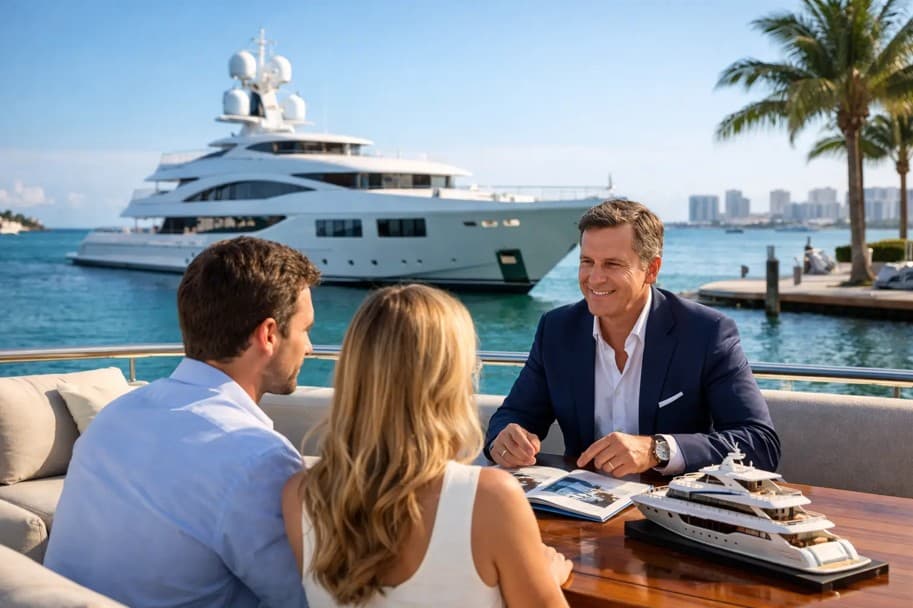
The difference between a rewarding yacht purchase and an exhausting one often comes down to one decision - the yacht dealer you choose. Not simply because a dealer presents inventory, but because the right one shapes every part of the transaction: market access, technical guidance, negotiation strategy, paperwork, logistics, and after-sale support.
For buyers operating in the luxury and upper mid-market space, this is rarely a casual purchase. A yacht can be a lifestyle asset, a charter platform, a business tool, or a long-term investment in private mobility and leisure. That means the dealer relationship should feel less like a retail transaction and more like working with a trusted maritime advisor.
What a yacht dealer should actually do
A strong yacht dealer does much more than show listings and arrange viewings. At a high level, the role is to connect buyer intent with the right vessel while protecting the client from avoidable risk. That includes understanding how a yacht will be used, where it will operate, who will manage it, and what ownership costs will follow after delivery.
In practice, a quality dealer should help define the brief before recommending options. A client looking for Mediterranean family cruising has very different priorities from an owner considering long-range exploration, corporate entertainment, or charter income. Size, builder pedigree, crew requirements, range, draft, layout, flagging considerations, and maintenance profile all affect whether a yacht is genuinely suitable.
The best dealers also understand that access matters as much as inventory. Many attractive yachts are not marketed aggressively to the public, and some of the strongest opportunities come through brokerage relationships, dealer networks, shipyard contacts, and private owner channels. That is where professional reach becomes valuable.
How to evaluate a yacht dealer before you engage
Reputation matters, but reputation alone is not enough. A polished image can signal strong positioning, yet what matters more is whether the dealer has a clear process and the operational depth to support a high-value transaction from first conversation to final handover.
Start by looking at how they present vessels and services. Serious yacht dealers usually provide more than surface-level marketing language. They can explain builder history, model strengths, known market patterns, resale outlook, and technical considerations without sounding vague or overly promotional. If every yacht is described as perfect, the advice is probably not objective enough.
Communication is another early indicator. Buyers at this level expect responsiveness, discretion, and precision. If a dealer is slow when answering basic questions, imprecise with specifications, or inconsistent about availability, those issues rarely improve once negotiations become more complex.
It is also worth asking how the dealer supports the transaction beyond the sale agreement. Can they coordinate surveys, sea trials, legal documentation, registration support, insurance introductions, transport logistics, crew placement, management setup, or refit planning? Not every buyer needs all of those services, but premium clients benefit from a dealer that can manage the wider ownership picture.
Yacht dealer vs broker: why the distinction matters
The terms are often used interchangeably, but the difference can affect your experience. A yacht dealer may represent specific brands, carry direct inventory, or work as a structured sales organization with broader market access. A broker typically represents buyers or sellers in individual transactions across the market.
Neither model is automatically better. It depends on your goals. If you are focused on a new-build or a particular manufacturer, a dealer relationship may offer better access to allocations, specifications, and factory-level insight. If you want broad comparison across brands and pre-owned options, brokerage expertise may be more useful.
In many luxury transactions, the strongest partner is one that can operate across both worlds: understanding dealership channels, brokerage supply, off-market opportunities, and ownership services after acquisition. For global clients, that flexibility often saves time and expands options.
Questions to ask a yacht dealer before moving forward
A serious conversation with a yacht dealer should go well beyond asking for price and length. The more valuable questions test whether the dealer understands your intended use and whether they can defend their recommendation with specifics.
Ask why a given yacht suits your profile better than comparable options. Ask about the vessel's ownership history, maintenance records, class status if applicable, refit timeline, engine hours, and known upcoming costs. Ask what the realistic operating budget looks like, not the optimistic one. Ask how liquid that yacht type is likely to be if you decide to sell in three to five years.
You should also ask who will handle each stage of the process. Some organizations are strong at lead generation but weak at execution. Others excel once a buyer is qualified. Knowing whether you will work with one lead advisor or be passed between sales, legal, operations, and service teams makes a difference.
If charter potential matters, say so early. A yacht that performs well as a private retreat may not be the right fit for charter deployment. Layout, crew flow, guest appeal, flag compliance, and maintenance standards all influence whether charter income is realistic or merely marketed that way.
Signs you are dealing with the wrong yacht dealer
The warning signs are usually subtle at first. Overselling is one of the most common. If every inquiry is met with pressure, exaggerated claims, or urgency that does not match the market, caution is justified. A luxury purchase should move efficiently, but it should not feel rushed for the dealer's convenience.
Another concern is weak transparency. If specifications shift between conversations, service records are difficult to obtain, or basic ownership details remain unclear, the process may become unnecessarily risky. The same applies when a dealer avoids discussing total cost of ownership. Purchase price is only one part of the financial commitment.
Be wary of limited after-sale thinking. The real test of a dealer often starts after closing. Delivery coordination, registration, technical follow-up, crew planning, berth advice, management support, and maintenance scheduling all affect the ownership experience. A dealer who disappears after signatures may have completed a sale, but not delivered proper service.
Why global capability matters in yacht sales
Many yacht transactions no longer happen within one city or even one country. A buyer may be based in Miami, viewing a vessel in Antibes, financing through an international structure, and planning charter operations in the Mediterranean or the Caribbean. In that environment, a yacht dealer with only local sales ability can become a bottleneck.
Global capability is not just about having listings in multiple regions. It means understanding cross-border documentation, flagging options, tax considerations, survey coordination, transport timing, and operational setup in different jurisdictions. It also means being able to continue supporting the client after acquisition, whether the yacht is repositioned, chartered, or placed under management.
That full-service model is increasingly valuable because ownership expectations have changed. Buyers do not simply want access to yachts. They want curated access to yachts, informed advice, and dependable support that extends well beyond the negotiation table. For that reason, firms such as Master Ocean are structured around a broader marine ecosystem rather than a narrow sales function alone.
The best yacht dealer is the one that fits your brief
There is no single perfect yacht dealer for every buyer. A client seeking a new performance catamaran, a pedigree superyacht, or a commercially active charter vessel will each need a different level of specialization. What matters is alignment between your objectives and the dealer's actual strengths.
For some buyers, the priority is access to exclusive listings. For others, it is transaction security, technical due diligence, privacy, or post-sale management. The strongest dealer relationship is built on clarity from the start. When expectations are precise, recommendations become sharper and the process becomes more efficient.
A great yacht purchase should feel deliberate, well-informed, and quietly assured. Choose a yacht dealer who brings market intelligence, operational reach, and the discipline to tell you not only what is available, but what is truly right for you. That is where confidence begins.