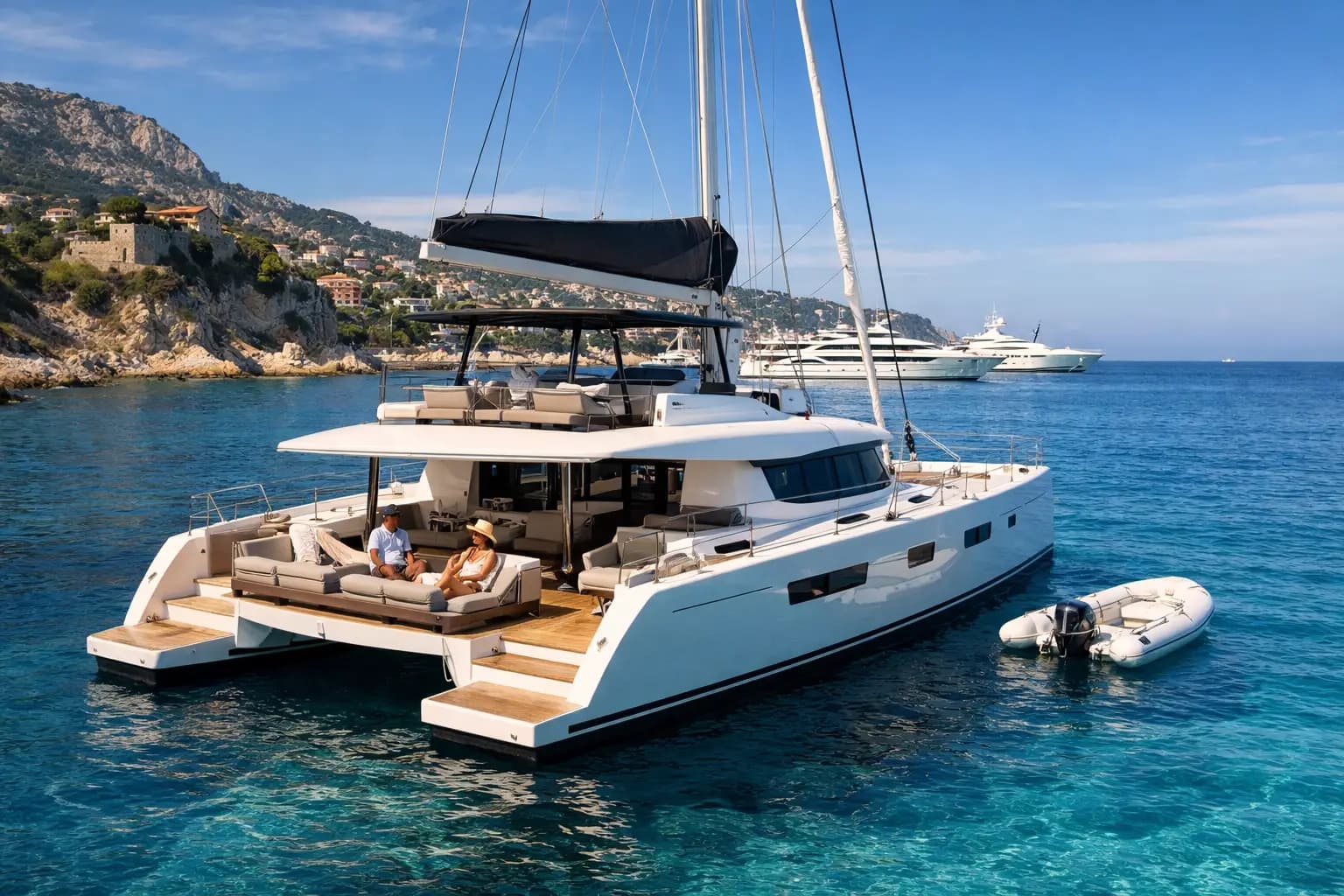
Your first day on a catamaran rarely feels like a lesson. It feels like space, light, and a surprisingly calm ride as you step aboard and realize this is very different from the crowded hotel-and-ferry version of coastal travel. For anyone considering a catamaran charter for beginners, the real question is not whether it is too advanced. It is whether you choose the right format, yacht, and itinerary for the kind of experience you actually want.
A catamaran is often the most comfortable entry point into private yacht charter. With two hulls instead of one, it offers more stability at anchor and underway, a broader deck layout, and living areas that feel open rather than confined. That matters for first-time charter guests, especially those who are drawn to the privacy and freedom of yachting but are unsure how technical or demanding the experience will be.
Why a catamaran charter suits first-time guests
For beginners, comfort is not a minor detail. It shapes the entire trip. A catamaran typically delivers more usable space than a monohull of similar length, which means larger outdoor lounging areas, wider saloons, and cabins that feel more like private suites than compact sleeping quarters.
The stability is another major advantage. Conditions always vary, and no yacht can remove motion entirely, but catamarans tend to reduce the side-to-side heel that surprises many first-time guests on sailing yachts. If your goal is a relaxed family holiday, a couples' escape, or a hosted trip with friends who value comfort as much as scenery, that trade-off often makes sense.
There are, however, nuances. A catamaran is excellent for anchoring in calm bays, short island hops, and social onboard living. If someone is chasing high-speed transit or the sharper performance feel of a different yacht type, the best fit may vary. For most first charters, though, ease and livability matter more than technical romance.
Catamaran charter for beginners: crewed or bareboat?
This is where many first-time inquiries become much simpler. A beginner does not need to approach charter as a hands-on boating exercise. In most cases, a crewed catamaran charter is the more refined and practical choice.
With a crewed charter, the yacht comes with a professional captain and, depending on the vessel, additional crew such as a chef or hostess. You are not responsible for navigation, docking, weather routing, or service logistics. You arrive, settle in, and enjoy a curated experience that can include tailored dining, swim stops, beach club reservations, and route planning built around your pace.
A bareboat charter means you or someone in your party is qualified to operate the yacht. For experienced sailors, that can be appealing. For true beginners, it is usually not the right starting point unless a certified skipper is being arranged. Even then, some guests discover they wanted a vacation, not an operational responsibility.
If your priority is discretion, elevated service, and a smooth first experience, crewed is typically the better answer.
What to expect onboard
The appeal of a catamaran starts with the layout. Most charter catamarans are designed around easy outdoor living. You will usually find a generous aft deck for dining, a forward lounge area for sunbathing or quiet mornings, and a flybridge on some models that becomes a favorite spot for sunset views.
Inside, the saloon is usually bright and connected to the exterior spaces, which keeps the experience social without feeling crowded. Cabins are commonly arranged in separate hulls, giving guests a degree of privacy that works well for couples, families, or two parties sharing a yacht.
The atmosphere can be as relaxed or as polished as you want. Some charters are informal and barefoot-luxury in style. Others are highly serviced, with restaurant-level meals, premium onboard amenities, and structured daily planning. Neither is inherently better. The right choice depends on whether you want unhurried independence or a more concierge-led itinerary.
How to choose the right catamaran for a first charter
The best first charter yacht is not necessarily the largest one available. It is the one that fits your group, destination, and expectations.
Guest count matters first. A catamaran that feels ideal for two couples may not feel as balanced for a multigenerational family with children, staff, or additional guests. Cabin configuration matters just as much as length. Ensuite cabins, twin versus double arrangements, and crew separation all influence comfort.
Your destination should shape the yacht choice too. In places where you will spend long hours at anchor and move between close coastal highlights, catamarans are particularly attractive. In destinations known for glamorous port arrivals, beach clubs, or a higher-energy social scene, layout and onboard service may matter more than sailing profile alone.
You should also be honest about your style of travel. If you imagine leisurely breakfasts on deck, long swims, and quiet nights in secluded bays, prioritize space and service. If you want a packed schedule with frequent transfers and more time ashore, speak openly about itinerary pace before booking. A premium charter experience is strongest when the yacht matches the rhythm of the guest.
Costs, planning, and what beginners often overlook
One of the most common misconceptions is that charter pricing is one number. In reality, the structure depends on the yacht, destination, season, and charter format.
The base charter fee covers the yacht itself for the agreed period. Additional costs may include fuel, provisioning, dockage, local taxes, and crew gratuities, depending on how the charter is arranged. That does not make the process complicated, but it does mean clarity matters. First-time clients are best served when they ask for a full estimate built around their expected usage rather than comparing headline rates alone.
Seasonality also affects the experience. Peak summer in the Mediterranean offers energy, atmosphere, and access to the social side of yachting, but it can also mean higher demand and tighter availability. Shoulder-season charters often bring a more relaxed pace and excellent cruising conditions, though destination ambiance varies. There is no universal right answer. It depends on whether you value buzz, privacy, or a balance of both.
Lead time matters more than many beginners expect. The most attractive catamarans, crews, and itineraries are often secured well in advance, particularly in sought-after regions such as the Balearics, the French Riviera, Greece, or the Caribbean. Late bookings are possible, but choice narrows quickly.
A practical approach to your first itinerary
Beginners often assume they need an ambitious route to justify a yacht charter. Usually, the opposite is true. The most successful first catamaran charter keeps the schedule light enough to enjoy the yacht itself.
A strong itinerary includes short passages, dependable swim stops, one or two standout lunches ashore, and enough flexibility to adapt to weather or mood. Rushing from port to port can make a private charter feel strangely structured. The value of a catamaran is the freedom to slow down.
This is especially true for families or mixed groups. Some guests want paddle-free relaxation on deck, some want lively beach afternoons, and some simply want privacy. A well-planned route leaves room for all three. That is where experienced charter guidance becomes valuable. Companies such as Master Ocean can help align destination, vessel, and onboard service so the charter feels intentional rather than improvised.
Questions to ask before you book
Before confirming a catamaran charter for beginners, ask how the crew structure works, what is included in the fee, how provisioning is handled, and what the yacht is best suited for. Ask about tender access, water toys, dining style, and whether the yacht works better for active days or quiet anchorage living.
It is also worth asking what first-time guests tend to love and what they sometimes misjudge. That answer reveals a great deal about both the yacht and the broker. A credible charter advisor will not oversell. They will explain trade-offs clearly.
For example, a larger flybridge may be perfect for entertaining, but it may matter less if your group plans to spend most afternoons ashore. A high-service crew may elevate the experience for one client and feel overly formal to another. Precision beats generic luxury language every time.
The beginner mindset that leads to the best charter
The smartest first-time charter clients do not try to become experts overnight. They focus on the quality of the match: the right catamaran, the right crew, the right cruising area, and the right pace.
That is what makes catamaran charter approachable at a premium level. You do not need technical knowledge to enjoy it well. You need clear preferences, realistic expectations, and professional support that treats the experience as more than a vessel reservation.
If this will be your first charter, choose comfort over complexity and let the itinerary breathe. The moment you stop thinking about the mechanics and start noticing the still water at breakfast, the extra space around you, and the ease of moving from one beautiful anchorage to the next, you will understand why so many first-time guests start with a catamaran and return to it again.