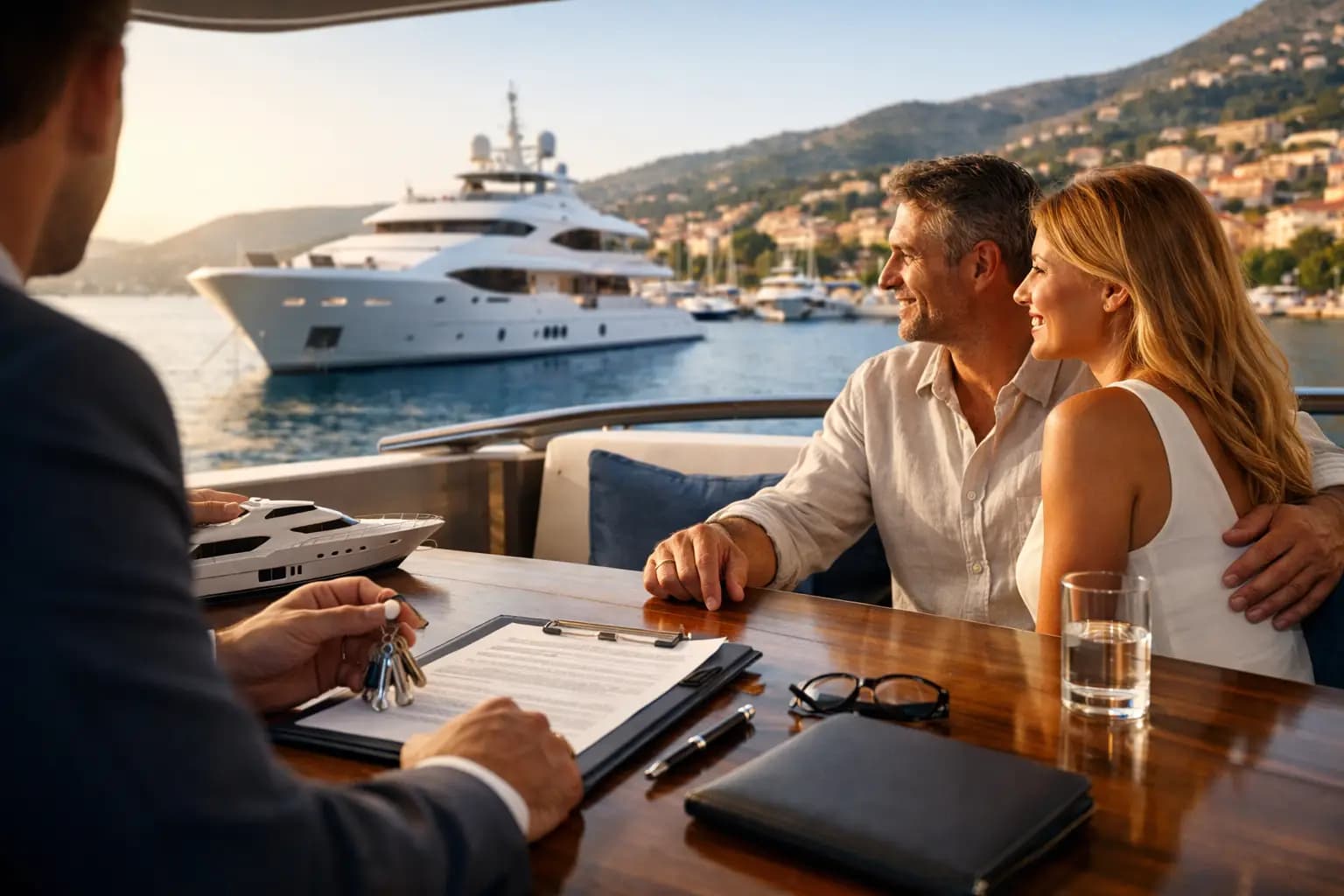
The wrong yacht rarely looks wrong at first. It usually appears impressive at the dock, presents well in photos, and seems to fit the lifestyle you have in mind. The real challenge in how to buy a yacht is not finding a beautiful vessel - it is choosing one that suits the way you plan to use it, the regions you cruise, and the level of ownership complexity you want to take on.
For serious buyers, the process is part lifestyle decision, part financial commitment, and part operational planning. A yacht is not a simple retail purchase. It is a high-value asset with technical, legal, and practical layers that should be handled with care from the first conversation to final delivery.
Start with the right ownership brief
Before reviewing listings, define what ownership should look like for you. This step sounds obvious, but it is where many expensive mistakes begin. Buyers often focus first on length or styling, when the better starting point is usage.
Will the yacht be used for family cruising, business entertaining, long weekends in the Mediterranean, island hopping in the Caribbean, or extended passages between major destinations? A yacht designed for day cruising around Miami may not suit longer-range plans in the Balearics or the South of France. Likewise, a sleek open motor yacht may be perfect for short coastal use, while an explorer yacht, catamaran, or tri-deck motor yacht may serve a very different ownership profile.
The number of guests, preferred crew arrangement, cabin layout, and onboard amenities all shape the right choice. So does your expectation around privacy, maintenance involvement, and charter potential. Some owners want a purely private vessel. Others want a yacht that can offset operating costs through selective charter activity. Neither is inherently better, but the ideal yacht for each scenario can be quite different.
How to buy a yacht with the right vessel category in mind
Once your brief is clear, the next step is matching it to the right segment of the market. This is where buying discipline matters. A buyer who wants elegant weekend cruising, easy marina access, and fast departures may lean toward a motor yacht or sport yacht. A client focused on stability, volume, and relaxed entertaining may prefer a power catamaran or sailing catamaran. Someone planning serious range and autonomy may be better served by an explorer yacht.
New and pre-owned yachts also come with different advantages. A new build offers customization, modern systems, builder warranties, and a vessel tailored around your preferences. The trade-off is lead time, possible shipyard variations, and a more involved specification process. A pre-owned yacht offers immediate availability and, in some cases, a stronger value position, but condition, maintenance history, and prior use become central.
This is also the stage where emotion needs to be balanced with technical reality. Design, pedigree, and finish matter. So do engine hours, refit history, class status where applicable, and the consistency of maintenance records. A yacht can feel exceptional and still be the wrong acquisition.
Work with a brokerage process, not just a listing search
High-quality yacht acquisition is rarely about scrolling until something catches your eye. The most efficient buyers approach the market through a structured brokerage process that filters unsuitable inventory early.
That means verifying whether the asking price aligns with current market conditions, whether the yacht has a realistic maintenance profile, and whether the ownership structure is straightforward. It also means understanding why the vessel is for sale, how long it has been on the market, and whether significant work is being deferred.
An experienced broker does more than present options. The right advisor helps narrow the field, identify red flags before travel or inspection, coordinate technical input, and guide negotiation with discretion. For buyers entering the market at the luxury or superyacht level, this level of representation is not a luxury in itself - it is a practical safeguard.
Inspect first impressions carefully
A polished yacht can still hide costly issues. Cosmetic condition matters, but it should never be confused with mechanical or structural quality. Early inspections should assess not only finish and comfort, but also how the yacht has been cared for over time.
Look closely at service documentation, machinery spaces, electronics age, safety equipment status, and signs of water intrusion or deferred engineering work. Crew feedback, if available, can also be revealing. Well-managed yachts tend to show consistency in the details, from maintenance logs to onboard organization.
This stage is also where layout decisions should be tested against your actual use. A yacht may have impressive volume yet feel impractical for your guest flow. Another may be smaller on paper but better designed for privacy, crew separation, or entertaining. The strongest purchase decisions are rarely made on specification sheets alone.
Survey, sea trial, and due diligence are not optional
If you are serious about how to buy a yacht properly, this is the non-negotiable core of the process. Once an offer is accepted, the vessel should go through formal due diligence. This typically includes a marine survey, sea trial, title and lien checks, document review, and legal oversight of the transaction.
The survey should be carried out by an independent, qualified marine surveyor with experience in the relevant vessel type and size. For larger yachts, engine specialists and additional technical experts may also be involved. Their role is to assess the yacht objectively and identify defects, safety concerns, operational issues, and future capital expenses.
A sea trial provides another layer of clarity. It confirms how the yacht performs underway and whether onboard systems function as represented. This can reveal issues that static dockside inspections do not show, including vibration, electrical faults, engine performance concerns, and handling characteristics.
Due diligence also extends to ownership documents, registration, VAT or tax status where relevant, flag considerations, and corporate holding structures if the yacht is owned through an entity. These details vary by jurisdiction and cruising plans, which is why legal and registration guidance should be part of the transaction, not an afterthought.
Understand the true cost of ownership
Purchase price is only the opening number. A well-run yacht ownership strategy accounts for annual operating costs from the start. These may include crew, dockage, insurance, fuel, maintenance, technical servicing, refit work, management, compliance, and seasonal repositioning.
The exact profile depends on the yacht's size, age, complexity, and itinerary. A newer vessel may have lower immediate refit needs but can still involve significant running costs. A pre-owned yacht with an attractive purchase price may require major technical work within a short ownership window. Neither scenario is unusual.
This is why sophisticated buyers treat cost forecasting as part of selection, not just ownership. The right yacht is not simply the one you can acquire. It is the one you can operate comfortably and maintain to the standard you expect.
Negotiation is about terms as much as price
Many buyers focus heavily on headline price and overlook the value of deal structure. In yacht transactions, the finer points can materially affect the outcome. Survey findings may justify a price reduction, but they can also support repair credits, equipment replacements, revised delivery terms, or documentation conditions before closing.
Deposit structure, acceptance timelines, inventory inclusions, and post-survey remedies all deserve attention. So does delivery location. Taking possession in Fort Lauderdale, Monaco, or Dubai may have practical implications depending on your operating plans, tax structure, and crew arrangements.
The strongest negotiations remain commercially disciplined without becoming adversarial. Sellers respond better to buyers who are informed, decisive, and professionally represented.
Plan for handover before you close
Closing is not the finish line. It is the point at which ownership begins to become real. Before completion, you should already be planning registration, insurance activation, crew placement if needed, berth arrangements, management support, and any immediate technical or cosmetic work.
If the yacht will be chartered, those preparations become even more important. Charter compliance, crew standards, guest readiness, and operational presentation should be addressed from day one. If the yacht is for private use only, the same principle applies in a different form: your first season should feel organized, not reactive.
This is where a full-service approach adds tangible value. Buyers who combine brokerage guidance with management, technical support, and post-sale coordination usually transition into ownership more smoothly than those trying to assemble every service separately. For clients operating across multiple regions, that coordination becomes even more useful.
A premium acquisition should feel considered from beginning to end. If you approach the purchase with a clear brief, disciplined due diligence, and the right professional support, buying a yacht becomes far more than a transaction. It becomes a well-positioned entry into ownership, with the confidence to enjoy the vessel the way it was meant to be used.