Yacht Service in Italy for Demanding Owners
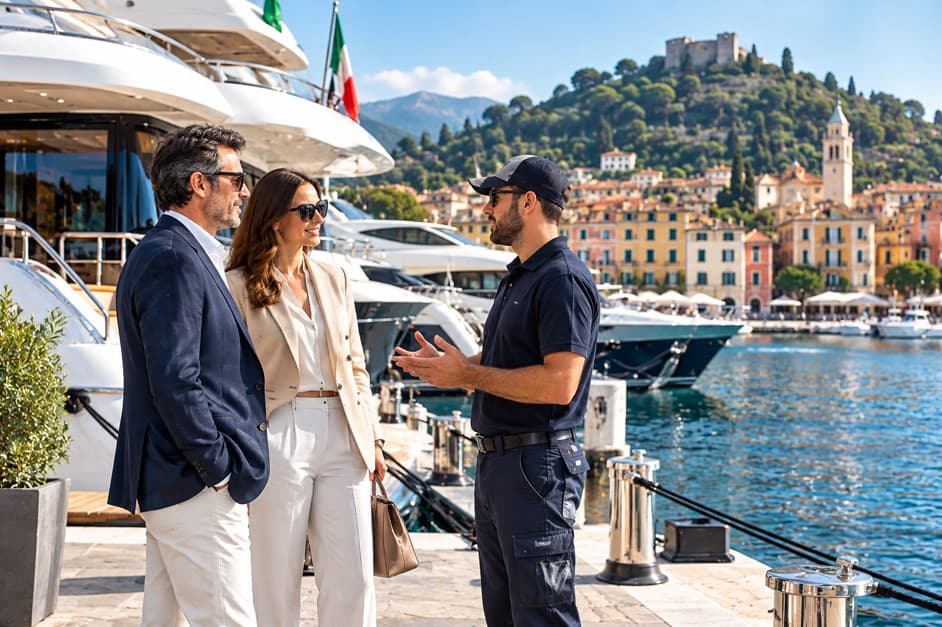
A yacht arriving in Italy for a short stop can quickly become a technical project if the work scope, yard access, parts lead times, and contractor responsibilities have not been set before arrival. Effective yacht service in Italy is not simply about finding a technician in port. It is about organizing the right people, documentation, timing, and quality control around the yacht’s operational schedule.
For a 40-foot family cruiser, the priority may be dependable seasonal maintenance before a Sardinian cruise. For a motor yacht or superyacht, it may involve coordinating engineering, exterior works, guest-area upgrades, and class-sensitive inspections without disrupting charter commitments. The vessel, its location, and the owner’s timetable should determine the service plan.
Why Italy Requires a Planned Service Approach
Italy has one of the Mediterranean’s strongest marine supply and shipyard ecosystems. Genoa, La Spezia, Viareggio, Naples, Sardinia, and Sicily each offer different advantages, from specialized technical contractors and established shipyard infrastructure to convenient access for cruising itineraries. That strength can also create complexity: availability varies by season, local port rules differ, and the best specialist for one scope may not be the right choice for another.
The summer operating season places particular pressure on berths, lifting facilities, skilled labor, and logistics. An owner who waits until a failure occurs may face a choice between a temporary repair, a costly schedule change, or moving the yacht to a more suitable facility. A well-managed program identifies predictable work before the season, reserves the necessary access, and keeps contingency time for findings uncovered during inspections.
Italy is especially well suited to projects that require more than one discipline. A refit may include paint assessment, teak restoration, hydraulic servicing, electronics upgrades, interior upholstery, and engine work. These are separate scopes, but they affect one another. Removing deck equipment before refinishing, for example, may influence electrical and hydraulic work. The coordination is as valuable as the individual repair.
Yacht Service in Italy Starts With the Correct Scope
A clear scope protects both the owner and the service team. It should define the reported issue, the desired standard, the inspection method, access requirements, expected materials, and approval process for additional work. Vague instructions such as “service the engines” or “refresh the interior” invite uncertainty over what is included and what is not.
For routine maintenance, the scope may be straightforward: engine and generator servicing according to manufacturer intervals, replacement of consumables, inspection of belts and hoses, fluid analysis where appropriate, and a documented test after completion. For a larger refit, it should distinguish between survey findings, essential technical work, cosmetic improvements, and optional upgrades.
Owners should also establish a realistic authorization process. A contractor may find corrosion behind a panel, moisture beneath a deck fitting, or wear in a hydraulic component that was not visible during the initial inspection. Those findings may be legitimate, but they should be supported with photographs, measurements, technical explanation, and a costed proposal before work proceeds, except in a genuine safety or damage-mitigation situation.
A disciplined service manager will keep this information organized in one place: work orders, estimates, approvals, invoices, photographs, warranty records, and final reports. This is useful operationally and can also support a future sale by showing that the yacht has been maintained with care and traceable documentation.
Selecting the Right Location and Team
The best location is not always the nearest marina. A vessel requiring straightforward mechanical maintenance may be efficiently handled close to its itinerary, provided the required technician, tools, and parts can be confirmed. A yacht requiring substantial paint, structural, machinery, or interior work may benefit from a shipyard environment with controlled access, lifting capacity, security, and multiple specialist trades.
La Spezia and Viareggio are often considered for complex yacht work because of their established marine-industrial networks. Genoa can be practical for technical supply and service coordination. Naples, Sardinia, and Sicily can make sense where the yacht’s seasonal program or cruising area makes relocation inefficient. The right choice depends on the project rather than reputation alone.
Before appointing any contractor, owners and captains should confirm the team’s actual scope of responsibility. Ask who performs the work, who supervises subcontractors, who orders parts, and who tests the completed system. It is also sensible to clarify the daily reporting rhythm, site-access rules, insurance requirements, and whether the yacht can remain occupied or operational during the project.
For clients managing vessels from abroad, Master Ocean can coordinate yacht management, repair, maintenance, refit, and mobile technical support by arrangement across Italy and wider Europe. Availability should always be confirmed against the yacht’s location, technical requirements, port access, and project schedule.
Maintenance That Prevents Larger Costs
The least visible work is often the work that preserves the yacht’s reliability. Planned maintenance reduces avoidable breakdowns, protects onboard systems, and gives owners a more accurate view of operating costs. This is particularly relevant for yachts that spend long periods idle between seasons, operate intensively on charter, or move between different climates.
Hull and underwater care should be planned around the yacht’s use, berth conditions, coating system, and haul-out schedule. Antifouling, anode replacement, through-hull inspections, propeller condition, and rudder or shaft checks are not cosmetic details. Delaying them can affect efficiency, maneuverability, and the condition of more expensive components.
Technical systems need the same attention. Engines, generators, HVAC, batteries, chargers, pumps, sanitation systems, electronics, and fire-safety equipment should be assessed as connected operating systems. Replacing one worn item without considering the surrounding installation can lead to repeat failures. A battery issue, for example, may stem from charging behavior, cabling, a failing component, or extended inactivity rather than the battery alone.
Exterior presentation also deserves a planned schedule. Gelcoat repairs, polishing, paint care, teak cleaning, caulking, canvas, upholstery, and detailing affect the yacht’s use and market position. The correct level of cosmetic work depends on the vessel’s age, intended use, and sale horizon. Not every owner needs a full cosmetic refresh, but deferred presentation work can become more expensive when minor defects are allowed to spread.
Refit Work Needs Commercial Control
A refit is where technical decisions and commercial discipline must work together. Owners should begin with a realistic project brief: what must be corrected, what will improve usability, what supports compliance or resale, and what can wait. Combining all possible improvements into one yard period may appear efficient, but it can also expand budget, duration, and decision risk.
The strongest projects separate essential work from discretionary work. They use a defined budget range, a written change-order procedure, and regular reporting against the original scope. If the project involves a future sale, the aim should not be to personalize every space. It should be to preserve condition, functionality, and broad market appeal.
Timing matters. A winter refit may provide better planning room, but it can also encounter weather limitations for certain exterior finishes. A pre-season yard period protects summer cruising plans, yet contractor capacity may be tight. The right window depends on the yacht’s program and the consequences of delay.
What Owners Should Expect From Service Coordination
Good service coordination gives an owner control without requiring them to manage every technical detail. The process should begin with an onboard inspection or a well-documented remote assessment, followed by a prioritized scope and a practical timeline. During the work, the owner or captain should receive clear updates on progress, findings, costs, and decisions that require approval.
At handover, the yacht should not simply look complete. The completed systems should be tested where relevant, the work area should be inspected, and the owner should receive final documentation. Open items, warranty conditions, and follow-up recommendations should be stated plainly.
A capable yacht service partner brings structure to a process that can otherwise become fragmented between marinas, yards, suppliers, captains, and contractors. For an owner, that means fewer surprises and better evidence behind every significant decision.
If your yacht is scheduled for maintenance, repair, or a larger refit in Italy, define the scope before the berth is booked and the season begins. Discuss your project with Master Ocean to assess the right location, technical approach, and service coordination for your vessel.