Yacht Refit & Repair
Yacht Repair on the French Riviera: What Matters
MaMaster Ocean Team
•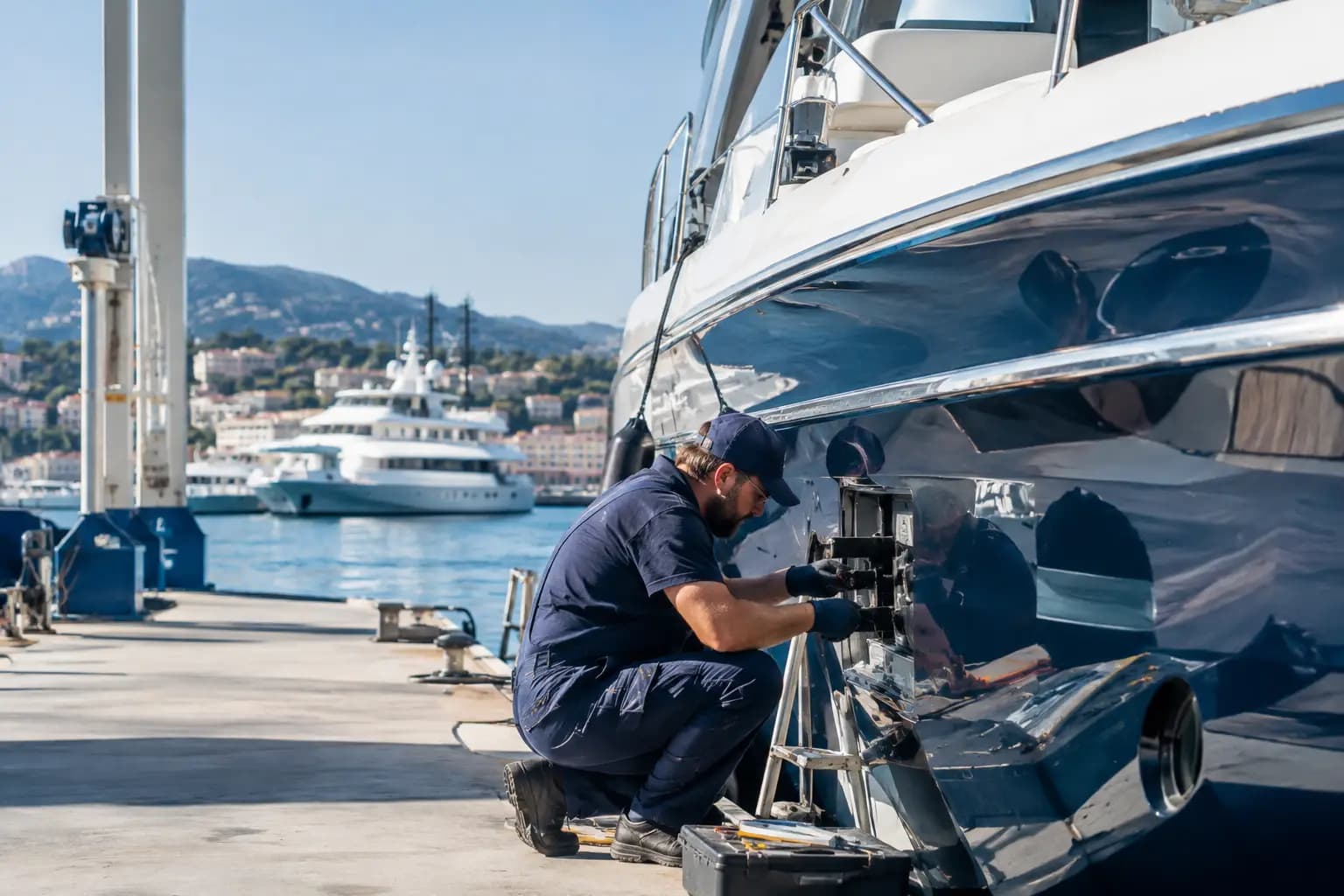
A missed departure time in Cannes, a recurring generator alarm in Antibes, or water under the cabin sole: any of these can quickly turn a planned Mediterranean season into an operational challenge. When owners seek yacht repair support on the French Riviera (Côte d'Azur), they are rarely looking for an ordinary workshop. They need a team capable of accurately diagnosing the fault, engaging the right specialists, controlling the scope of work, and ensuring seamless coordination between the captain, owner, yacht manager, and future charter commitments.
The French Riviera remains one of the most practical regions in the Mediterranean for yacht maintenance and repair, combining well-equipped marinas, specialized subcontractors, shipyard access, and proximity to Monaco, Italy, and major cruising routes. However, this does not mean every repair will be straightforward. Shipyard capacity changes rapidly, specialist availability varies by vessel type, and a seemingly minor issue can reveal deferred maintenance or hidden flaws from the original installation. The right approach relies on disciplined coordination rather than a rushed authorization to begin work.
Yacht repair on the French Riviera begins with an accurate scope of work
The most costly repair decisions are often made before a technician even arrives on board. A vague request like “fix the air conditioning” or “resolve the vibration” can lead to open-ended labor hours, repeated service visits, and uncertain outcomes. A far better starting point is a detailed history of the symptoms: when the issue occurs, what changed prior to its onset, which alarms were triggered, what corrective actions have been taken so far, and whether the fault impacts safety, navigation, guest comfort, or the vessel's operational readiness.
On a motor yacht, this might mean isolating engine-related vibration from issues involving the propeller shaft, propeller, engine mounts, or hull. On a sailing yacht, it could involve distinguishing rig load concerns from hydraulic, electrical, or deck hardware issues. On catamarans, duplicate systems offer redundancy, but they also require a clear understanding of how the port and starboard installations are configured and maintained.
A proper repair scope must specify the reported fault, the diagnostic process, expected access conditions, likely required parts, labor hour estimates, and designated approval checkpoints should new issues be uncovered. This does not eliminate uncertainty entirely. Corrosion, water ingress, obsolete components, and undocumented previous modifications are common triggers for scope expansion. However, this process ensures the owner knows precisely what is confirmed, what is suspected, and what remains to be inspected.
Diagnosis prior to parts replacement
Replacing parts without confirming the root cause is one of the fastest ways to waste time and budget. This is especially true for electrical faults, cooling systems, stabilizers, hydraulics, battery banks, and navigation electronics. The failed component is frequently a symptom of the underlying problem rather than the cause itself.
Troubleshooting takes time, which can be frustrating when the vessel is scheduled to sail. However, the alternative is often far more damaging: installing a new component, discovering the fault persists, and repeating the entire process under even greater time pressure. For critical systems, owners should request a written diagnostic report before approving major component replacements, unless immediate action is required for safety or to prevent catastrophic damage.
Selecting the right repair partner
The Riviera features a broad network of service providers: from independent mobile technicians to specialized workshops and major refit shipyards. The best choice depends on the vessel, the nature of the repair, access constraints, budget, and timeline. A local contractor may be ideal for routine mechanical, electrical, plumbing, or detailing work. Conversely, a complex project involving propulsion, structural integrity, paintwork, classification society requirements, or warranty claims may demand the specialized oversight and controlled environment of a shipyard.
Technical competence should be evaluated beyond brand recognition and casual recommendations. Inquire whether the contractor has direct experience with the specific equipment, whether they can source certified OEM parts, how they handle technical documentation, and who bears responsibility for final commissioning and testing. For commercial or charter vessels with professional crews, the repair process must also align with the vessel's operational standards and regulatory reporting requirements.
Comparing quotes is prudent, but the lowest estimate does not always translate to the lowest final cost. An incomplete proposal may omit essential items such as haul-out fees, staging equipment, consumables, freight, travel expenses, testing, waste disposal, or project management fees. Conversely, a comprehensive estimate may appear higher initially because it accounts for every practical step required to complete the job correctly.
Scheduling is a commercial decision
The timing of repairs on the French Riviera is heavily influenced by the yachting calendar. The pre-season rush, major events, and peak summer months place immense demand on berths, technicians, cranes, transport, and parts logistics. A repair that is straightforward during the winter can prove exceptionally difficult to schedule in July or August.
Owners must distinguish between urgent corrective repairs and deferred tasks that can be scheduled around the vessel's operational calendar. A worn pump may require immediate attention, while a cosmetic interior refresh is better combined with a scheduled winter maintenance period. Grouping compatible tasks reduces recurring setup costs and downtime, though overloading a shipyard period can introduce unnecessary schedule risk.
For charter yachts, every repair decision must be evaluated against guest commitments, crew workload, and the financial impact of potential delay. A realistic plan might involve a temporary operational workaround, a firm date for the permanent repair, and transparent communication with all stakeholders. Depending on the fault, maintaining a safe, reliable itinerary is generally far more valuable than forcing an overambitious repair schedule that risks disruption.
Managing repairs, parts, and approvals
Many repair delays stem not from a lack of manpower, but from missing technical data, delayed owner authorizations, incorrect parts identification, or shipping lead times. Older yachts and vessels with custom installations require extra care, as serial numbers, schematics, and service histories may not be readily available.
A practical repair dossier should include photographs, equipment model and serial numbers, past invoices, service logs, user manuals, and relevant survey notes. This information enables technicians to arrive fully prepared and minimizes the risk of ordering incorrect parts. It also gives the owner a solid baseline to determine whether repair, overhaul, or full replacement offers the best long-term value.
Strict authorization discipline is essential. Establish a clear spending threshold for additional work and require written approval for any expenditures exceeding that limit. Request progress updates at key milestones rather than low-value daily messages: following initial diagnosis, upon parts confirmation, whenever scope changes occur, prior to commissioning, and at final handover. For larger projects, progress reporting should outline completed tasks, outstanding items, revised schedules, and current budget status.
Testing, documentation, and resale value
A repair project is not complete when the invoice is issued. It is complete only when the system has been tested under actual operating conditions and the vessel's documentation has been updated. Dockside testing may suffice for certain systems, but work involving propulsion, steering, stabilizers, navigation, and performance requires sea trials or extended operational trials.
Retain final reports, warranty documentation, photographs, part numbers, test logs, and invoices in an organized vessel archive. These records support future maintenance planning and build buyer confidence during pre-purchase surveys or sales negotiations. Buyers and surveyors do not expect a pre-owned yacht to be flawless; they expect documented proof that known issues were addressed systematically, professionally, and transparently.
This is where repair management integrates directly into asset management. Well-documented technical decisions protect the yacht's market value, particularly when a future buyer reviews the operational history of the engines, generators, stabilizers, paint, rigging, or core systems.
When a repair becomes a refit decision
There comes a point where recurring individual repairs are no longer economically viable. If a system is obsolete, unreliable, unsupported by spare parts, or increasingly costly to maintain, full replacement becomes the rational choice. The same logic applies when multiple related tasks share the same access path: for example, replacing pipework while the engine room is opened up, modernizing control systems during an electrical overhaul, or correcting cosmetic flaws during a planned paint schedule.
This does not mean every older system requires replacement. Original equipment can remain entirely reliable with proper maintenance, and unnecessary upgrades add cost without meaningfully improving vessel utility or market standing. The decision should be driven by technical condition, parts availability, operational demands, regulatory compliance, and the owner's planned holding period.
Master Ocean coordinates yacht repair and refit discussions with a focus on the complete ownership picture—whether the priority is returning a family yacht to service, protecting a charter season, preparing a vessel for sale, or planning a major technical program. Discuss your project with us by providing a clear description of the vessel, location, fault, desired timeline, and any available maintenance or survey records.
The French Riviera offers world-class technical infrastructure, but its true value is unlocked through structured execution. A well-managed repair should render the yacht fully operational, simplify ongoing maintenance, ensure transparent documentation, and leave the vessel thoroughly prepared for its next voyage.