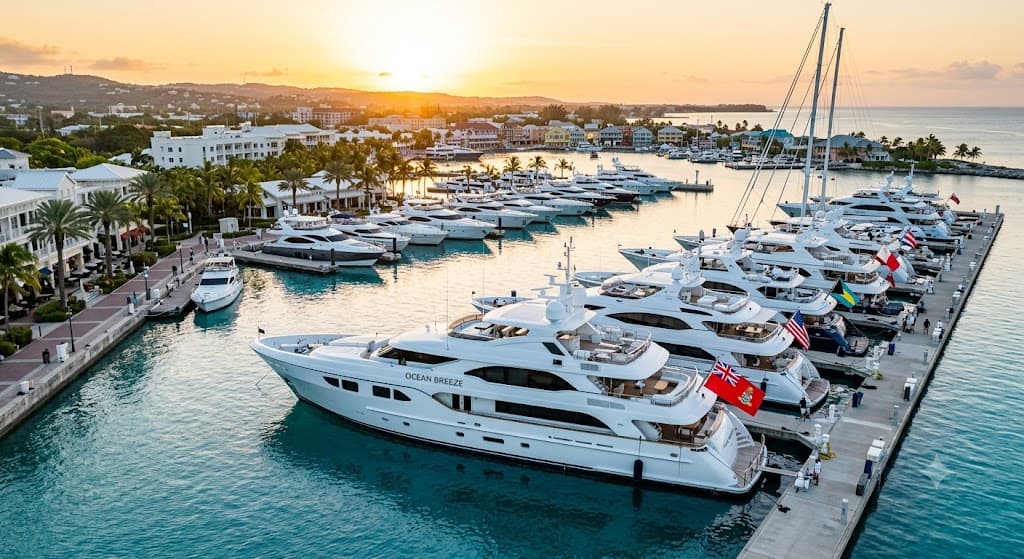
Yacht Registration Guide: Register a Yacht Anywhere in the World
The strategic selection of a yacht registry is the foundational legal decision in maritime asset management. Whether commissioning a hundred-meter custom new build from a northern European shipyard or acquiring a production vessel for Mediterranean cruising, the flag state dictates the yacht's operational liberty, structural compliance, tax exposure, and ultimate financial security. This comprehensive editorial guide provides an exhaustive analysis of international maritime law, corporate ownership structures, and the world's leading sovereign registries, serving as the definitive reference for ultra-high-net-worth individuals, family offices, marine legal counsel, and financial institutions.
The Foundation of Maritime Jurisdiction
Under public international law, a vessel traversing the high seas cannot exist in a legal vacuum. It must possess a sovereign nationality. The act of yacht registration grants this nationality, establishing which sovereign state exercises legislative, administrative, and judicial enforcement over the vessel. This relationship dictates how the yacht is taxed, how marine mortgages are recorded and enforced, and the level of scrutiny the vessel will face from foreign port authorities.
Yacht registration intertwines complex cross-border disciplines. It requires harmonizing the Ultimate Beneficial Owner’s (UBO) tax residency with the physical cruising footprint of the yacht, while ensuring the corporate ownership structure complies with aggressive global anti-money laundering regulations. A flawless registration strategy shields the owner from personal liability, preserves the long-term resale value of the asset, and unlocks significant fiscal efficiencies. Conversely, an ill-advised flag selection can result in localized tax audits, vessel arrest, invalidated insurance policies, and severe restrictions on charter operations.
International Maritime Law and Conventions
The operational existence of a superyacht is governed by a formidable architecture of international treaties. The constitutional framework for this system is the United Nations Convention on the Law of the Sea (UNCLOS). Article 91 of UNCLOS mandates that every state shall fix the conditions for the grant of its nationality to ships and demands a "genuine link" between the flag state and the vessel. Reputable open registries satisfy this genuine link by enforcing strict corporate representation, maintaining local registered offices, and executing rigorous statutory safety inspections.
While UNCLOS provides the jurisdictional framework, technical enforcement is directed by the International Maritime Organization (IMO). Compliance with the IMO’s core conventions is non-negotiable for luxury yachts crossing international borders. The International Convention for the Safety of Life at Sea (SOLAS) represents the highest standard of maritime safety, dictating structural fire protection boundaries and multi-compartment damage stability. The International Convention for the Prevention of Pollution from Ships (MARPOL) governs the environmental footprint of the yacht, demanding sophisticated onboard oil-water separators and strict adherence to emission control areas.
The Convention on the International Regulations for Preventing Collisions at Sea (COLREG) establishes the universal navigation rules binding upon all vessels globally. The International Convention on Standards of Training, Certification and Watchkeeping for Seafarers (STCW) establishes the legal baseline for crew competency, mandating training and examination standards. Finally, the Maritime Labour Convention (MLC) functions as the universal bill of rights for seafarers, enforcing strict legal requirements regarding crew employment contracts, wage payments, medical insurance, and crew accommodation.
These international conventions are enforced through a dual mechanism. On the high seas, the flag state exercises exclusive jurisdiction. However, when a yacht enters the territorial waters of a foreign nation, it submits to Coastal State Jurisdiction and Port State Control (PSC). PSC authorities proactively board foreign-flagged yachts to audit safety compliance. Registries are continually tracked by regional PSC agreements, such as the Paris MoU, which categorizes flag states into White, Grey, and Black lists. Operating under a White List flag guarantees low-risk status and minimal operational friction.
Private vs. Commercial Registration
The primary operational path an owner must determine is the classification between private and commercial use. This single decision governs the entire structural, legal, and tax profile of the yacht.
Private registration is restricted to vessels utilized exclusively for the recreational pleasure of the UBO, their immediate family, and non-paying guests. The primary advantage is a significantly reduced administrative and technical burden. Private yachts are generally exempt from the heaviest commercial safety audits. However, under international safety law, private vessels are strictly prohibited from carrying more than twelve guests, regardless of the physical size of the superyacht. Fiscally, private registration offers zero structural tax relief; the yacht is considered a luxury consumer good. If the vessel operates permanently within high-tax jurisdictions like the European Union, the owner must ensure the yacht is fully VAT-paid or actively operating under the strict parameters of Temporary Admission.
Commercial registration transforms the superyacht from a private luxury asset into a commercial merchant vessel. This status is legally mandatory for any yacht placed on the third-party charter market. Commercial registration triggers intense regulatory scrutiny, requiring mandatory adherence to commercial yacht codes, strict STCW crew manning scales, and comprehensive MLC labor compliance. The profound advantages of commercial registration are financial. Properly structured commercial yachts frequently qualify for absolute exemption from Value Added Tax on the acquisition of the hull. Furthermore, actively chartering yachts are legally authorized to purchase duty-free marine fuel and source tax-exempt provisions. However, European tax authorities aggressively police the boundary between private and commercial use.
Corporate Ownership and Fiduciary Structures
Registering a high-value superyacht directly in the name of a natural person is fundamentally incompatible with modern asset protection and wealth management. Direct ownership exposes the individual’s entire global asset portfolio to unlimited liability in the event of a catastrophic maritime incident, environmental spill, or severe crew injury. Professional registration mandates the utilization of isolated corporate entities.
The international standard is the Special Purpose Vehicle (SPV), typically an International Business Company (IBC) or Limited Liability Company (LLC) incorporated in a tax-neutral jurisdiction. The SPV exists solely to hold the legal title to the yacht. By ring-fencing the asset, third-party maritime liabilities are strictly contained within the corporate shell, shielding the UBO’s personal wealth.
For ultra-high-net-worth individuals, these corporate shells are managed by Family Offices and integrated into sophisticated estate planning frameworks utilizing Discretionary Trusts or Private Foundations. Transferring the shares of the SPV to a trust legally divorces the UBO from direct ownership while preserving beneficial enjoyment. This eliminates complex international probate procedures upon the owner's death.
Before accepting a vessel, elite flag states execute intense Know Your Customer (KYC) and Anti-Money Laundering (AML) protocols. The owner must submit a comprehensive Source of Wealth and Source of Funds audit trail, providing audited financial statements or contracts proving exactly how their capital was legally generated.
VAT and International Taxation
Value Added Tax is the most significant variable financial liability in yacht ownership, dominating operational planning within the European Union. A yacht inside this zone must either be VAT-paid, structurally exempt through commercial operations, or operating under customs relief.
Temporary Admission is the primary legal defense for non-EU residents. Under the EU Customs Code, a yacht registered to a non-EU flag and owned by a non-EU corporate entity can enter European waters without paying Import VAT for a continuous period of up to eighteen months. To reset the clock, the yacht must physically exit the EU customs territory, enter a third-party nation, and obtain formal customs clearance proving departure, before returning.
For European residents or owners keeping their vessels permanently in the EU, the yacht must generally be fully VAT-paid upon importation. Attempting to hide an EU-resident's yacht behind an offshore corporate flag while permanently moored in France or Italy will trigger aggressive "Deemed Registry" tax audits, resulting in the piercing of the corporate veil, immediate VAT assessment, and potential vessel confiscation.
How Yacht Registration Works: The Step-by-Step Methodology
Executing a flawless yacht registration is a highly orchestrated legal sequence. It requires absolute precision to ensure the vessel does not become legally "stateless" during the transition of ownership.
Step 1: Strategic Flag Selection and Tax Planning Before any documents are signed, maritime counsel evaluates the UBO’s tax residency, the vessel’s operational intent (private vs. commercial), and the intended cruising grounds to select the optimal flag state. A comprehensive VAT strategy is established to ensure the vessel can clear customs upon delivery.
Step 2: Corporate Formation and Structuring The legal team incorporates the chosen Special Purpose Vehicle (e.g., a Marshall Islands LLC or Maltese Shipping Company) to act as the title-holding entity. The corporate officers execute all necessary trust declarations, banking mandates, and registered agent appointments within the target jurisdiction.
Step 3: Title Clearance and Application Submission The formal Application for Registration is submitted to the chosen flag state alongside an exhaustive KYC and Source of Wealth dossier. Simultaneously, maritime lawyers audit the incoming title documents. If purchasing a brokerage yacht, an original Deletion Certificate must be secured from the outgoing registry to prove the hull is free of existing mortgages and maritime liens.
Step 4: Issuance of Provisional Registration Upon verifying the corporate identity and the chain of title (via the Bill of Sale or Builder’s Certificate), the registry issues a Provisional Certificate of Registry. This document, typically valid for three to six months, grants the yacht immediate nationality, allowing it to secure marine insurance and execute initial transit voyages.
Step 5: Technical Surveys and Tonnage Measurement While operating under provisional status, the yacht must undergo a physical evaluation by an authorized Classification Society surveyor (e.g., Lloyd's Register, RINA). The surveyor verifies the vessel’s structural compliance with the flag’s specific yacht codes and executes the mathematical calculations required to issue the International Tonnage Certificate.
Step 6: Carving and Marking The flag state issues an official Carving and Marking Note. The captain or shipyard must permanently carve, weld, or resin-bond the yacht’s official registry number and net tonnage into a main structural bulkhead deep within the hull. An authorized surveyor must physically inspect this marking, sign the note, and return it to the registry to prevent identity fraud.
Step 7: Radio Licensing and MMSI Activation The legal team submits the technical specifications of the yacht’s emergency communication equipment (including EPIRBs and AIS systems) to the flag state’s telecommunications authority. The authority issues a permanent Ship Radio Licence, a unique Call Sign, and a nine-digit Maritime Mobile Service Identity (MMSI) number, ensuring the vessel is integrated into the global search and rescue network.
Step 8: Permanent Certificate Issuance and Annual Maintenance Once the signed Carving and Marking Note and all original notarized title documents are received by the registry in hard copy, the provisional file is closed. The flag state issues the Permanent Certificate of Registry. From this point forward, the owner’s management team must execute annual tonnage tax payments, renew corporate SPV filings, and coordinate ongoing statutory safety audits to maintain the flag's validity.
Required Documents for Yacht Registration Worldwide
No premium registry operates on trust; every claim of ownership, corporate authority, and structural safety must be backed by original, notarized, and frequently apostilled documentation. A complete registration dossier requires the following critical instruments:
• Original Bill of Sale: The absolute root of title for a used yacht. It must clearly state the seller, the buyer, the consideration paid, and be executed before a notary public. If signed in a foreign jurisdiction, an Apostille under the Hague Convention is typically required to authenticate the notary’s seal.
• Original Builder’s Certificate: The equivalent of a Bill of Sale for a new build yacht. Issued directly by the shipyard, it details the technical dimensions of the hull, the engine specifications, and officially transfers initial title to the first corporate owner.
• Certificate of Deletion: A statutory document issued by the vessel’s former flag state confirming that the yacht has been permanently erased from their registry. This provides the incoming registry and the buyer’s lending bank absolute proof that no historical mortgages or active liens remain recorded against the hull.
• Certified Passports and Proof of Address: Required for all ultimate beneficial owners, corporate directors, and authorized signatories to satisfy international Anti-Money Laundering (AML) protocols. Proof of address must typically be an original utility bill or bank statement dated within the last three months.
• Source of Wealth (SOW) and Source of Funds (SOF): Detailed, independently verifiable documentation tracing the legal origin of the owner's capital. This may include audited corporate financial statements, public stock sale records, or formal inheritance deeds. Vague self-declarations are categorically rejected by top-tier registries.
• Corporate Constitutional Documents: For the owning SPV, the registry requires the Certificate of Incorporation, Memorandum and Articles of Association, the Register of Directors, and a recent Certificate of Good Standing to prove the entity is legally active and capable of owning property.
• Power of Attorney (POA): A formalized, notarized legal mandate authorizing a specific maritime lawyer, broker, or corporate agent to sign registry applications and execute customs declarations on behalf of the owning company.
• International Tonnage Certificate (1969): A highly technical document issued by a classification society surveyor detailing the precise Gross Tonnage (GT) and Net Tonnage (NT) of the vessel based on complex internal volume calculations.
• CE Declaration of Conformity: Mandatory for recreational craft operating within the European Union that were built after 1998, proving the hull and engines comply with strict European environmental and structural safety directives.
• Certificate of Insurance Entry: A formal cover note from a recognized marine insurance syndicate (such as a P&I Club) proving the vessel holds valid third-party liability coverage, a prerequisite for almost all international registries to activate a provisional certificate.
• Proof of VAT Status: While not always required by the flag state itself, maintaining original customs importation documents, commercial invoices, or T2L transit logs onboard is essential to prove VAT compliance to local Port State Control and customs authorities during international operations.
Registration Costs Worldwide and Cost Comparison
Yacht registration costs are not a single flat fee; they are a matrix of government tariffs, corporate structuring expenses, and technical auditing requirements.
Government and Tonnage Fees: The base cost of entering a registry is typically scaled to the vessel's Gross Tonnage. A highly accessible registry like Poland charges a nominal, flat fee of roughly 200 to 500 EUR for a lifetime registration, making it incredibly attractive for private yachts under 24 meters. In contrast, registering a massive 1,500 GT commercial superyacht in the Cayman Islands or the Isle of Man will require initial government filing fees and tonnage taxes exceeding 5,000 USD, followed by substantial annual renewal tariffs.
Corporate SPV and Fiduciary Fees: Most premium open registries require the yacht to be owned by a local corporate entity. Incorporating a Marshall Islands IBC or a BVI Business Company generally costs between 1,500 and 3,000 USD initially. However, owners must budget for the ongoing annual maintenance of these structures, including registered agent fees and government franchise taxes, which typically add an additional 2,000 to 5,000 USD to the annual operational budget.
Technical Classification and Survey Costs: This represents the largest variable expense. If a yacht is upgrading to a commercial Red Ensign flag, it must be physically audited by an approved Classification Society (such as Lloyd's Register or RINA). A comprehensive condition, statutory, and tonnage survey for a 40-meter yacht can easily range from 15,000 to 40,000 USD, excluding the surveyor’s flights and accommodations.
Legal and Notarial Expenses: Executing complex cross-border closings, drafting pristine Bills of Sale, recording multi-million dollar marine mortgages, and navigating VAT importation structures requires specialized maritime counsel. Professional legal representation for a superyacht transaction typically demands budgets ranging from 10,000 to 35,000 USD depending on the complexity of the underlying family office or trust structure.
The Spanish Outlier (Matriculation Tax): Spain represents a unique cost extreme. While the administrative registry fees are standard, registering a private yacht over eight meters in Spain triggers the 12% Matriculation Tax. On a newly acquired 10,000,000 EUR yacht, the act of selecting the Spanish private flag adds an immediate, non-refundable 1,200,000 EUR tax liability, making it the most expensive registry choice in the world for private owners.
Registration Timeline Worldwide
Time is frequently the most critical factor when executing a brokerage closing or securing a shipyard delivery.
The Fastest Registries (24 to 72 Hours): Highly digitized, decentralized open registries dominate this tier. The Marshall Islands, utilizing its global network of 28 offices, can process corporate documents, execute KYC compliance, and issue a Provisional Certificate of Registry and Radio License within 24 hours of receiving clean digital files. Poland’s REJA24 online system routinely issues provisional EU certificates within 48 to 72 hours. Transport Malta is equally rapid, processing provisional commercial and private applications within two business days.
Average Processing Times (1 to 3 Weeks): Premium onshore and Category-One offshore registries operate at a slightly more deliberate pace. The Cayman Islands, the United Kingdom (Part I), the Isle of Man, and the British Virgin Islands typically require 3 to 7 days to issue provisional documentation. The transition to permanent registration for all these flags generally takes 2 to 4 weeks, as the timeline is entirely dependent on the physical execution of the Carving and Marking Note and the secure international couriering of original notarized title deeds back to the registry headquarters.
Slow and Bureaucratic Registries (1 to 6 Months): Traditional civil-law onshore registries that integrate heavy customs reviews with technical homologation are notoriously slow. Spain and Italy can take several weeks to months to finalize a registration, particularly if the yacht was built outside the EU and requires localized engineering approvals or complex tax valuations by regional revenue agencies. The United States Coast Guard (USCG) Documentation Center also frequently experiences severe administrative backlogs, with standard processing times routinely stretching across multiple months unless expensive expedited processing tracks are utilized.
Choosing the Best Flag State: The Decision Framework
Selecting the optimal registry is an exercise in aligning the owner's ultimate objectives with jurisdictional realities. There is no single "best" flag; the decision is entirely contextual.
If the objective is institutional bank financing for a custom mega-yacht... Choose the Cayman Islands or the United Kingdom. Lenders demand the absolute legal certainty provided by English common law and the rigorous technical oversight of the Red Ensign Group. These registries offer unassailable marine mortgage protection and guarantee the highest possible resale value for the asset.
If the objective is high-volume commercial chartering within the European Union... Choose Malta or France (RIF). These native EU flags are specifically engineered to interface with European customs law. They unlock powerful, legally approved Import VAT deferment structures, grant access to duty-free marine fuel, and offer massive social security and income tax redemptions for commercial crew members operating within the Mediterranean.
If the objective is extreme corporate privacy and rapid operational deployment... Choose the Marshall Islands or the British Virgin Islands. These open registries permit the use of highly confidential corporate SPVs that shield the Ultimate Beneficial Owner from public record searches. The Marshall Islands provides 24-hour administrative turnarounds and elite US Coast Guard Qualship 21 status, making it the ultimate flag for seamless transit between the US Eastern Seaboard and the Caribbean.
If the objective is minimizing bureaucratic overhead for a private yacht under 24 meters... Choose Poland. It offers a completely digitized application process, issues a valid European Union flag, and permanently eliminates all ongoing annual government renewal fees and mandatory recurring technical flag surveys for private pleasure craft under 15 meters.
25 Common Registration Mistakes
Even highly experienced owners and family offices fall into predictable, devastating traps during the registration process.
1. Buying a Yacht Without an Original Deletion Certificate: Transferring purchase funds to a seller before receiving the original, physical Deletion Certificate from the outgoing registry. If the seller’s bank still holds a recorded mortgage, you have just purchased a yacht with a multi-million-dollar lien permanently attached to its hull.
2. Chartering Under a Private Flag: Assuming you can quietly "rent" your privately registered yacht to friends to offset fuel costs. If customs authorities discover financial consideration exchanged hands, the yacht is immediately seized for tax evasion, and the marine insurance policy is rendered instantly void due to unauthorized commercial operation.
3. Ignoring the "Deemed Registry" Risk: An Italian or French resident attempting to hide their ownership behind a BVI or Cayman flag while keeping the vessel permanently moored in Genoa or Cannes. European tax authorities will aggressively pierce the corporate veil, demand full localized Import VAT, and apply massive wealth tax evasion penalties.
4. Registering a Superyacht in a Personal Name: Registering a 40-meter yacht directly in the name of an individual rather than an isolated corporate SPV, exposing the owner's entire global asset portfolio to unlimited liability in the event of a catastrophic environmental spill or crew fatality.
5. Choosing a Black-Listed Flag to Save Money: Selecting a low-tier open registry because the initial government fee is cheap. The resulting Port State Control detentions, delayed customs clearances, and skyrocketing marine insurance premiums will immediately dwarf any initial administrative savings.
6. Failing to Verify the 12-Passenger Limit: Purchasing a massive private superyacht and assuming it can carry 20 guests simply because it has enough bedrooms. Under SOLAS, carrying more than 12 guests requires the yacht to be structurally certified under the Passenger Yacht Code, an upgrade that can cost millions to execute retrospectively.
7. Mismanaging Temporary Admission Deadlines: A non-EU resident cruising the Mediterranean on a Cayman flag and forgetting to officially reset the 18-month Temporary Admission clock. Exceeding the deadline by a single day triggers an immediate 20% VAT assessment on the total value of the hull.
8. Purchasing an Older Yacht for a Premium Flag Without a Pre-Survey: Buying a 20-year-old classic motor yacht and assuming it can easily be flagged in the Isle of Man for commercial charter. The structural refits required to bring an older hull up to modern commercial fire safety standards will often exceed the purchase price of the vessel.
9. Failing to Update the Registry After a Major Refit: Adding a helicopter deck or executing a hull extension without notifying the flag state and securing a new International Tonnage Certificate. This structural discrepancy instantly invalidates the vessel's statutory safety certificates.
10. Assuming an EU Flag Means VAT is Paid: Registering a yacht in Malta or Poland and assuming this automatically clears the vessel's EU VAT status. Registration and VAT are separate legal concepts; an EU flag does not protect an EU resident from paying VAT if the vessel was not formally imported.
11. Mixing Private and Commercial Use Improperly: A UBO utilizing their own commercially registered, tax-exempt yacht for a family holiday without signing a formal charter agreement and paying the market-rate output VAT to their own company, triggering immediate tax fraud investigations.
12. Losing the Original Builder’s Certificate: Misplacing the original, shipyard-issued Builder's Certificate for a new yacht. Many premium registries demand the physical original as the absolute root of title, and shipyards are notoriously slow to issue authenticated duplicates.
13. Submitting Incomplete Source of Wealth Files: Applying to a top-tier registry with vague, unverified statements regarding how the UBO generated their wealth. Registries will immediately freeze the application under strict anti-money laundering protocols until audited financials are provided.
14. Using Sanctioned Entities in the Ownership Chain: Inadvertently utilizing a corporate holding company that shares a director with a sanctioned entity. Registries run continuous OFAC and UN screenings; any connection results in the immediate cancellation of the flag and freezing of the asset.
15. Failing to Secure a Proper CE Mark Before EU Import: Buying a US-built yacht without a European CE marking and attempting to import it into Spain or Italy. The vessel must undergo an incredibly expensive Post-Construction Assessment before any European registry will accept the hull.
16. Delaying the Carving and Marking Note: Failing to permanently carve the official registry number into the hull and return the signed surveyor's note before the provisional registration expires, legally rendering the yacht stateless in international waters.
17. Appointing an Unreliable Local Representative: Utilizing a budget corporate service provider to act as the mandatory Resident Agent. If the agent fails to forward critical registry correspondence or pay annual franchise taxes, the owning SPV is struck off, and the yacht loses its legal title holder.
18. Ignoring MLC Crew Requirements on a Commercial Yacht: Attempting to operate a commercially registered yacht without providing proper Seafarer Employment Agreements, standard medical coverage, or adhering to strict rest-hour logs, leading to immediate Port State Control detention.
19. Not Registering the Marine Mortgage Immediately: Delaying the formal recording of a marine mortgage with the flag state after closing. Until recorded, the lender has no protected priority lien against third-party commercial claims.
20. Paying the Seller Before the Mortgage is Discharged: Releasing escrow funds to a seller based on a promise that they will pay off their bank loan later. If the seller defaults, the bank will arrest the yacht from the new buyer.
21. Chartering in the US with a Foreign-Built Yacht: Attempting to execute commercial charters in US territorial waters with a yacht built in Europe, directly violating the highly protectionist US Jones Act and Passenger Vessel Services Act.
22. Overlooking Local Crew Licensing Mandates: Registering a commercial yacht in Spain or Italy and assuming a captain with standard international qualifications can command the vessel, only to discover the registry demands specific domestic or EU-endorsed certificates of competency.
23. Failing to Renew the Ship Radio License: Allowing the annual radio license and MMSI registration to lapse. Operating without a valid radio license renders the vessel unseaworthy under international law and voids marine insurance.
24. Misunderstanding Corporate Economic Substance Laws: Incorporating an SPV in a zero-tax jurisdiction but failing to meet new global economic substance reporting requirements, leading to heavy corporate fines and the striking of the company.
25. Skipping the VAT Strategy at the Design Phase: Waiting until a custom superyacht is delivered from a German shipyard before consulting a tax lawyer. A seamless VAT exportation strategy must be built into the original shipbuilding contract to avoid massive, unexpected tax liabilities upon delivery.
Global Registry Guide
This section provides an uncompromised, exhaustive analytical deep dive into the world’s premier flag states. Each jurisdiction is systematically examined to provide family offices and marine counsel with a complete legal and operational reference.
The Cayman Islands
Country Overview: The Maritime Authority of the Cayman Islands (MACI) was established in 1903. It represents the intersection of uncompromised technical excellence, sophisticated corporate law, and British diplomatic prestige.
International Reputation: Flawless. Holds a permanent position on the Paris MoU White List and acts as the gold standard for maritime financial institutions globally.
Legal Framework: Governed by the Cayman Islands Merchant Shipping Act, derived from English common law.
Government Authority: MACI serves as the centralized regulatory body, operating across global time zones through strategic offices in George Town, London, Fort Lauderdale, Singapore, and Athens.
Who Can Register: Citizens of the UK, British Overseas Territories, and corporate bodies incorporated in the Cayman Islands, the UK, or the EU. Non-resident international citizens utilize a Cayman Islands corporate SPV.
Eligible Yachts: Optimized for superyachts exceeding 30 meters up to the world's largest custom mega-yachts. Older vessels require strict pre-entry surveys.
Ownership Structures: Special Purpose Vehicles (Exempted Companies) combined with offshore discretionary trusts.
Registration Process: Submission of corporate KYC, a formal title audit, physical tonnage survey validation by an approved classification society, issuance of the Carving and Marking Note, and permanent conversion.
Required Documents: Original notarized Bill of Sale/Builder's Certificate, Deletion Certificate, International Tonnage Certificate, corporate logs, and extensive UBO Source of Wealth files.
VAT & Taxation: Completely tax-neutral. Zero domestic asset or corporate taxes. Highly effective for non-EU residents utilizing Temporary Admission within Europe.
Commercial Registration: Regulated under the REG Large Yacht Code, demanding compliance with strict safety engineering and safe manning.
Private Registration: Restricted to personal recreation. Exempt from full ISM code audits under 500 GT; strictly capped at 12 passengers.
Registration Timeline: Provisional registration within 48 hours; permanent registration within 3 to 4 weeks.
Government Fees: Initial registration and tonnage fees average $1,500 USD, with annual registry maintenance costs hovering around $1,200 USD.
Annual Obligations: Payment of tonnage taxes, mandatory annual safety surveys for commercial craft, and corporate SPV compliance.
Marine Mortgage Registration: Exceptionally secure register under English common law, offering absolute chronological priority.
Banking & Financing: Maximum institutional trust. Preferred by all global yacht financing entities.
Insurance Acceptance: Unrestricted. Eligible for the lowest risk-premium tiers.
Resale Considerations: Maximizes asset resale value by verifying a pristine maintenance history.
Typical Owners: UHNW individuals, institutional corporate fleets, and family offices.
Best Cruising Areas: Global circumnavigation, Mediterranean, Caribbean, and US territorial waters.
Advantages: Unrivaled prestige, common-law security, bank preference, and 24/7 technical support.
Disadvantages: High operational costs, rigid technical enforcement, invasive KYC auditing.
Common Mistakes: Submitting incomplete Source of Wealth records, triggering application freezes.
When This Registry Is Not Recommended: Small private day boats under 24 meters, where corporate overhead is unjustifiable.
Master Ocean Professional Recommendation: Mandated for any custom superyacht over 40 meters requiring structural financing and unrestricted global mobility.
Malta
Country Overview: Transport Malta operates the largest yacht register in the European Union, establishing itself as the legislative hub of Mediterranean yachting.
International Reputation: Highly respected. Holds a premier White List status on the Paris MoU.
Legal Framework: Anchored by the Maltese Merchant Shipping Act.
Government Authority: Transport Malta functions as the centralized body, operating with commercial intelligence and high responsiveness.
Who Can Register: Open registry model. EU and Maltese citizens register directly. Non-EU residents appoint a licensed Maltese Resident Agent or incorporate a local shipping company.
Eligible Yachts: Accepts all sizes; highly popular for 24m to 60m semi-custom superyachts operating in the European charter market.
Ownership Structures: Maltese Shipping Companies (corporate SPVs) are the standard mechanism used to isolate liability.
Registration Process: Two-phase track: immediate provisional registration valid for 6 months, followed by technical compliance survey validation for permanent status.
Required Documents: Declaration of Ownership, notarized Bill of Sale, Deletion Certificate, ITC 1969, and certified corporate registers.
VAT & Taxation: Premier EU VAT optimization hub. Facilitates legally approved Import VAT deferment structures for commercial charter SPVs operating inside the single market.
Commercial Registration: Governed by the Malta Commercial Yacht Code. Grants the legal right to purchase duty-free fuel and execute commercial charters natively across the EU.
Private Registration: Tailored for private family enjoyment. Private craft over 15 meters owned by EU residents must provide absolute proof of paid EU VAT.
Registration Timeline: Provisional documents are issued within 48 hours; permanent certificates are finalized within 6 months.
Government Fees: Scaled by tonnage. Initial registration ranges from €500 to €1,500, with ongoing annual tonnage taxes matching these parameters.
Annual Obligations: Settling annual tonnage taxes and executing structural safety surveys for commercial vessels.
Marine Mortgage Registration: Powerful "Executive Title" framework, allowing lending banks to bypass lengthy courts to arrest a vessel upon debtor default.
Banking & Financing: Highly favored by European marine leasing houses.
Insurance Acceptance: Excellent market acceptance across all European syndicates.
Resale Considerations: Retains exceptional value for subsequent buyers targeting the European market.
Typical Owners: Professional charter operators, European corporate structures, and EU-resident UBOs.
Best Cruising Areas: Complete European Union waters and the Mediterranean.
Advantages: Native EU flag status, unmatched commercial VAT optimization, and powerful executive title mortgage security.
Disadvantages: Requires local resident agents, high compliance costs over 500 GT, and strict VAT enforcement.
Common Mistakes: Mixing private use with commercial status without executing formal charter contracts and paying output VAT.
When This Registry Is Not Recommended: Non-EU resident owners keeping their yachts permanently in Asia or the Pacific.
Master Ocean Professional Recommendation: The primary recommendation for any superyacht intended to run a legitimate, high-volume commercial charter business within European territorial waters.
The Marshall Islands
Country Overview: Managed by International Registries, Inc. (IRI), the Republic of the Marshall Islands (RMI) is a dominant open-registry powerhouse, highly optimized for speed and administrative flexibility.
International Reputation: Elite. Holds a permanent White List position on the Paris MoU and the coveted Qualship 21 status with the US Coast Guard.
Legal Framework: Regulated under the Marshall Islands Maritime Act.
Government Authority: IRI administers the flag via 28 worldwide offices, allowing for real-time localized transactions.
Who Can Register: Open to all global citizens. Foreign entities can utilize the Foreign Maritime Entity (FME) provision to register existing foreign companies directly without corporate dissolution.
Eligible Yachts: Accepts all sizes; highly favored by private owners under 50 meters crossing between US and Caribbean waters.
Ownership Structures: Highly confidential RMI Business Corporations (IBCs) or Limited Liability Companies (LLCs) that shield public records.
Registration Process: Digital filing directly to any global IRI office triggers 24-hour provisional issuance, followed by local technical survey validation.
Required Documents: MI-101Y application form, original Bill of Sale, Deletion Certificate, ITC, and corporate good standing documents.
VAT & Taxation: Tax-neutral offshore regime. Zero domestic taxes. Optimized for non-EU owners entering Europe via Temporary Admission.
Commercial Registration: Governed by the RMI Yacht Code. Features the innovative Yacht Engaged in Trade (YET) hybrid status, permitting limited EU chartering for private vessels.
Private Registration: Streamlined and non-bureaucratic. Exempt from recurring ISM safety management audits under 3,000 GT.
Registration Timeline: Provisional digital certificates within 24 hours; permanent files within 2 to 3 weeks.
Government Fees: Highly competitive, flat-fee structure. Initial registration averages $1,500 USD, with fixed annual renewal fees.
Annual Obligations: Settling the flat annual maintenance fee and executing basic flag safety equipment checklists.
Marine Mortgage Registration: Globally recognized register allowing direct recording at any international IRI office with instant time stamps.
Banking & Financing: Exceptional bank confidence from American and Asian institutional lenders.
Insurance Acceptance: Universally accepted by all top-tier underwriters.
Resale Considerations: Highly liquid; corporate SPV shares can be transferred instantly.
Typical Owners: North American and Asian UHNWIs, corporate managers, and cross-border family offices.
Best Cruising Areas: United States East/West Coasts, the Bahamas, and the Caribbean.
Advantages: 24/7 global office coverage, Qualship 21 status, FME corporate flexibility, and absolute corporate privacy.
Disadvantages: Requires an FME or RMI corporate structure, strict OFAC sanctions compliance, and lacks traditional European heritage.
Common Mistakes: Assuming Qualship 21 status protects the vessel from European VAT enforcement if an EU resident is found onboard.
When This Registry Is Not Recommended: European fiscal residents basing vessels permanently in European marinas.
Master Ocean Professional Recommendation: The absolute premier choice for international owners requiring extreme corporate privacy, rapid deployment, and frictionless operational transit between the US and the Caribbean.
Poland
Country Overview: Administered via the REJA24 digital network, Poland has executed a digital revolution to become the world's most utilized private registry under 24 meters.
International Reputation: Recognized globally as a modern, frictionless, and highly legitimate European Union flag.
Legal Framework: Governed by the Polish Act on Registration of Ships of 2018.
Government Authority: The Polish Chamber of Marine Commerce (POLBOAT).
Who Can Register: Completely unrestricted. Citizens of any country can hold direct legal title in their personal name.
Eligible Yachts: Highly optimized for private production motor yachts and recreational craft under 24 meters.
Ownership Structures: Direct personal ownership by foreign individuals is fully supported.
Registration Process: Scanned digital copies are uploaded into the online system, triggering immediate digital card issuance.
Required Documents: Bill of Sale, Prior Flag Deletion, CE Declaration of Conformity, owner's passport, and certified translations into Polish.
VAT & Taxation: Registering in Poland does not trigger domestic tax audits, but the owner must ensure independent VAT compliance if operating within the EU.
Commercial Registration: Permitted for small charter vessels under 24 meters, but requires a formal technical safety survey by the Polish Register of Shipping.
Private Registration: Private craft under 15 meters are permanently exempt from mandatory technical safety surveys or recurring flag inspections.
Registration Timeline: Provisional digital certificates within 72 hours; physical permanent plastic card within 2 to 4 weeks.
Government Fees: A flat initial processing fee of roughly 200 to 500 EUR, with zero ongoing annual government renewal fees.
Annual Obligations: None. The registration is valid for the lifetime of the vessel.
Marine Mortgage Registration: Legally valid, but less streamlined and rarely utilized by major cross-border commercial banks.
Banking & Financing: Excellent for standard retail marine loans.
Insurance Acceptance: Broadly accepted across all mainstream European recreational marine insurance companies.
Resale Considerations: Highly attractive to EU buyers due to the permanent, hassle-free nature of the title documents.
Typical Owners: Private boaters, budget-conscious yacht owners, and non-EU residents utilizing Temporary Admission.
Best Cruising Areas: Mediterranean Sea, European inland waterways, and standard coastal zones.
Advantages: True EU flag status, 72-hour digital deployment, zero annual renewal fees, and direct personal ownership permitted for foreign nationals.
Disadvantages: Not optimized for yachts over 24 meters, mandates sworn translations of all title records, and absolute lack of technical auditing means owners must self-regulate safety.
Common Mistakes: Assuming that a Polish flag exempts an EU resident from paying local VAT when stopped by Italian or French customs.
When This Registry Is Not Recommended: Multi-million-dollar custom superyachts requiring institutional bank financing.
Master Ocean Professional Recommendation: The absolute best, most cost-effective, and operationally frictionless option for any private pleasure vessel under 24 meters operating worldwide.
United Kingdom (UK Part I Register)
Country Overview: The United Kingdom Ship Register (UKSR) represents the highest echelon of maritime safety, regulatory prestige, and legal certainty, acting as the foundational pillar of the Red Ensign Group.
International Reputation: Unsurpassed. A permanent fixture at the top of the Paris MoU White List.
Legal Framework: Governed by the Merchant Shipping Act 1995.
Government Authority: The Maritime and Coastguard Agency (MCA).
Who Can Register: Qualified owners include UK citizens, British Overseas Territories citizens, and corporate bodies incorporated in the UK or the EU. Non-resident foreign owners must appoint a local UK Representative Person.
Eligible Yachts: Accepts vessels of all sizes. Highly favored by large private superyachts and explorer vessels.
Ownership Structures: Typically involves a UK Limited Company, providing robust corporate governance but lacking strict anonymity, as Companies House data is public.
Registration Process: Requires an unbroken chain of title and a formal MCA-approved tonnage measurement, culminating in a physical Carving and Marking Note.
Required Documents: Original Bill of Sale, Deletion Certificate, International Tonnage Certificate, and comprehensive UBO KYC disclosures.
VAT & Taxation: Outside the EU VAT zone post-Brexit. Exceptional vehicle for non-EU residents utilizing Temporary Admission within European waters.
Commercial Registration: Commercial yachts comply strictly with the REG Yacht Code, enduring rigorous MCA audits regarding structural fire safety and safe manning.
Private Registration: Private yachts face fewer technical hurdles but must comply with baseline safety and pollution standards.
Registration Timeline: Provisional registration takes 3 to 5 days; permanent takes 2 to 4 weeks.
Government Fees: Highly cost-effective; approximately £150 for initial registration with no annual government renewal fees (valid for 5 years).
Annual Obligations: Mandatory annual statutory safety surveys for commercial vessels. The UK Limited Company must file annual accounts.
Marine Mortgage Registration: The benchmark for global marine mortgages, governed by English common law, establishing absolute priority.
Banking & Financing: Secures highly favorable financing rates from tier-one international banks.
Insurance Acceptance: Secures the lowest risk premiums from global underwriters.
Resale Considerations: Retains excellent resale value due to impeccably documented maintenance under MCA oversight.
Typical Owners: Ultra-high-net-worth individuals and institutional corporate fleets.
Best Cruising Areas: Global circumnavigation and UK domestic waters.
Advantages: Absolute global prestige, unmatched legal security, highly preferred by marine banks, and no annual government renewal fees.
Disadvantages: Publicly accessible corporate ownership data, rigorous MCA technical standards costly for older yachts, and no automated EU VAT exemptions.
Common Mistakes: Assuming the UK flag grants automated tax-free cruising in Europe post-Brexit.
When This Registry Is Not Recommended: Owners requiring absolute public anonymity.
Master Ocean Professional Recommendation: Highly recommended for owners prioritizing absolute onshore legitimacy, institutional financing, and common law legal security over corporate anonymity.
Isle of Man
Country Overview: An elite, Category-One member of the Red Ensign Group providing the prestige of the British flag combined with the extreme tax efficiencies of a self-governing Crown Dependency.
International Reputation: Top-tier White List status globally, renowned for technical pragmatism.
Legal Framework: Isle of Man Merchant Shipping Registration Act.
Government Authority: The Isle of Man Ship Registry in Douglas.
Who Can Register: British citizens, EU citizens, and corporations registered in the Isle of Man, UK, or EU. Foreign nationals must incorporate an Isle of Man SPV and appoint a Representative Person.
Eligible Yachts: Engineered for custom superyachts exceeding 24 meters.
Ownership Structures: Isle of Man companies offer highly robust, zero-tax corporate holding environments perfectly suited for family trusts.
Registration Process: Heavily dependent on physical survey validation by an authorized Isle of Man surveyor.
Required Documents: Notarized Bill of Sale, Deletion Certificate, ITC, corporate records, and strict UBO KYC files.
VAT & Taxation: A 0% corporate tax rate and zero wealth taxes. Separate from the EU VAT area, ideal for Temporary Admission.
Commercial Registration: Commercial vessels comply flawlessly with the REG Large Yacht Code.
Private Registration: Enjoy a lower administrative burden but must maintain pristine safety standards.
Registration Timeline: Provisional registration within 3 to 5 business days.
Government Fees: Initial fees range from $800 to $1,200 USD, with annual tonnage taxes roughly identical. Corporate maintenance costs $3,000 to $5,000 annually.
Annual Obligations: Payment of annual maintenance fees, filing of corporate returns, and mandatory safety surveys for commercial vessels.
Marine Mortgage Registration: Exceptionally secure, adhering strictly to British common law principles.
Banking & Financing: Deep market acceptance among international finance houses.
Insurance Acceptance: Premium status among marine insurers.
Resale Considerations: Retains exceptional hull value due to stringent technical oversight.
Typical Owners: European superyacht owners and family offices.
Best Cruising Areas: European waters (via TA), the Caribbean, and global expeditions.
Advantages: Elite prestige, zero percent corporate tax, exceptional technical support for custom builds, and bank-approved security.
Disadvantages: High initial and annual corporate maintenance costs, strict entry standards for older vessels.
Common Mistakes: Registering small day boats where corporate costs outweigh the flag's value.
When This Registry Is Not Recommended: Small private pleasure craft under 24 meters.
Master Ocean Professional Recommendation: Recommended for massive custom superyacht projects and owners demanding elite British technical oversight combined with offshore tax neutrality.
British Virgin Islands (BVI)
Country Overview: A Category-Two member of the Red Ensign Group, synonymous with global yacht chartering and private tropical cruising, offering British maritime law combined with popular offshore corporate environments.
International Reputation: Strong White List position, highly respected in Caribbean and US markets.
Legal Framework: BVI Merchant Shipping Act.
Government Authority: Virgin Islands Shipping Registry (VISR).
Who Can Register: British citizens, Commonwealth nationals, and corporate bodies. International owners utilize a BVI Business Company (BVI BC).
Eligible Yachts: Authorized to register private yachts of any size, but strictly limits commercial yachts to a maximum of 3,000 Gross Tonnage.
Ownership Structures: The BVI BC is the global gold standard of offshore privacy, shielding director registers from public view.
Registration Process: Requires survey validation and carving/marking approval.
Required Documents: Declaration of Eligibility, original Bill of Sale, Deletion Certificate, ITC, and BVI corporate records.
VAT & Taxation: Zero-tax offshore jurisdiction. No domestic corporate or capital gains taxes.
Commercial Registration: Commercial up to 3,000 GT under REG codes.
Private Registration: Private registrations avoid full ISM codes but cannot charter under any circumstance.
Registration Timeline: Provisional within 3 to 5 business days; permanent within 3 to 6 weeks.
Government Fees: Highly cost-effective; initial registration and annual maintenance for a private yacht under 24m total approx. $400 to $600 USD.
Annual Obligations: Low annual registry maintenance fees and BVI BC corporate renewal fees.
Marine Mortgage Registration: Secure register adhering to British common law principles.
Banking & Financing: Good security for international marine lenders.
Insurance Acceptance: Broad acceptance for vessels in Caribbean and North American hubs.
Resale Considerations: Excellent resale liquidity as BVI BC shares transfer easily.
Typical Owners: Private catamaran owners and mid-sized superyacht owners seeking privacy.
Best Cruising Areas: Caribbean basin, US East Coast, and Mediterranean (via TA).
Advantages: Solid international reputation, tax neutrality, high corporate privacy, and low annual maintenance fees.
Disadvantages: 3,000 GT cap on commercial yachts, slower turnaround times than digital open registries.
Common Mistakes: Attempting to register commercial mega-yachts exceeding 3,000 GT.
When This Registry Is Not Recommended: Superyachts over 3,000 GT intending to operate commercially.
Master Ocean Professional Recommendation: Strongly recommended for private owners of motor yachts and catamarans under 50 meters desiring a secure, British-derived flag with exceptional corporate privacy.
United States (USCG Documentation)
Country Overview: Federal registration with the United States Coast Guard (USCG) provides the ultimate protection of the US government, functioning as the mandatory registry for commercial vessels in US waters.
International Reputation: Impeccable globally.
Legal Framework: Title 46 of the United States Code.
Government Authority: National Vessel Documentation Center (NVDC).
Who Can Register: Wholly restricted to United States citizens. Corporate entities must be incorporated in the US with majority US citizen control. Foreign nationals are categorically barred.
Eligible Yachts: Accepts vessels of all sizes that measure at least 5 net tons.
Ownership Structures: Direct individual ownership or US domestic LLCs/Corporations.
Registration Process: Federal filing subject to historical backlogs at the NVDC.
Required Documents: Application (CG-1258), original Bill of Sale (CG-1340), Builder's Certification, and definitive proof of US citizenship.
VAT & Taxation: Subject to complex US federal tax codes and aggressive state-level use and sales taxes depending on mooring location.
Commercial Registration: Commercial chartering is intensely regulated by the Jones Act. Yachts must be US-built, US-owned, and US-crewed to charter. Foreign-built yachts require a difficult MARAD Waiver.
Private Registration: Allows unrestricted personal use by the American owner in domestic and international waters.
Registration Timeline: Standard processing can take weeks to months.
Government Fees: Nominal federal fees, but state tax exposure can be massive.
Annual Obligations: Annual renewal of the Certificate of Documentation.
Marine Mortgage Registration: A USCG Preferred Marine Mortgage is immensely secure, allowing immediate federal foreclosure.
Banking & Financing: US domestic banks overwhelmingly demand USCG documentation to finance a yacht.
Insurance Acceptance: Universally accepted.
Resale Considerations: Highly desirable for US buyers.
Typical Owners: American citizens and domestic charter fleets.
Best Cruising Areas: US territorial waters, Alaska, Hawaii, and the Caribbean.
Advantages: Absolute protection of the US Coast Guard, unmatched security for US marine lenders, and frictionless cruising in US waters.
Disadvantages: Strictly limited to US citizens, punitive Jones Act restrictions on foreign-built yachts, and exposure to aggressive state-level taxes.
Common Mistakes: Foreign nationals forming a Delaware LLC assuming it grants them the right to register with the USCG.
When This Registry Is Not Recommended: Foreign nationals or US citizens intending to execute high-volume commercial charters on foreign-built superyachts.
Master Ocean Professional Recommendation: Strictly recommended for US citizens purchasing yachts intended to remain primarily in American waters, and practically mandatory if utilizing a US domestic bank.
France (The French International Register – RIF)
Country Overview: The RIF provides a top-tier European onshore flag capable of outcompeting offshore tax havens by offering unmatched commercial exemptions.
International Reputation: Flawless. Permanent top-tier position on the Paris MoU White List.
Legal Framework: French maritime law.
Government Authority: Directorate General for Maritime Affairs, Fisheries and Aquaculture (DGAMPA), operating via a Guichet Unique in Marseille.
Who Can Register: EU or EEA corporate entities or citizens. Foreign nationals must utilize an EU corporate SPV.
Eligible Yachts: The French International Register (RIF) is designed primarily for commercial vessels over 15 meters, while private yachts are generally registered through other standard French registration systems.
Ownership Structures: European corporate SPVs managed by professional yacht management companies.
Registration Process: Simultaneous customs "Francisation" and technical safety audits.
Required Documents: Bill of Sale, Deletion Certificate, ITC 1969, classification records, and formal commercial intent declaration.
VAT & Taxation: Provides the French Commercial Exemption (FCE). Total exemption from VAT on hull acquisition and refits. Crew members embarked for over 184 days receive full income tax redemption.
Commercial Registration: The yacht must spend a minimum of 70% of its operational time in international voyages to maintain fiscal exemptions. Rigorously enforces the MLC.
Private Registration: Generally barred from the RIF; private owners must use the domestic register, facing full VAT and wealth tax exposure.
Registration Timeline: Provisional clearance within 48 to 72 hours; permanent within 3 to 5 weeks.
Government Fees: Incorporates an annual maritime tax (DAFN) calculated on hull length and engine horsepower.
Annual Obligations: Settling DAFN tax and submitting annual operational logs proving the 70% international voyage rule.
Marine Mortgage Registration: Secured via formal notarial deed recorded with French customs.
Banking & Financing: Strongly backed by major European institutional shipping banks.
Insurance Acceptance: Elite acceptance; viewed as an ultra-low-risk flag environment.
Resale Considerations: Excellent value retention within the commercial charter industry.
Typical Owners: Professional yacht management companies and large commercial charter superyachts.
Best Cruising Areas: Western Mediterranean (French Riviera, Corsica) and French Caribbean.
Advantages: Pristine EU legitimacy, total VAT and fuel duty exemptions, and unparalleled tax redemptions for onboard crew.
Disadvantages: Rigid 70% international voyage mandate, complex horsepower-based annual taxes, and highly rigorous MLC enforcement.
Common Mistakes: Failing to meet the 70% international voyage threshold, triggering severe retroactive fiscal fines.
When This Registry Is Not Recommended: Any vessel intended for private family pleasure.
Master Ocean Professional Recommendation: Highly recommended for large, professionally managed commercial superyachts executing rigorous charter programs centered in European waters.
Spain (Lista 6ª and Lista 7ª)
Country Overview: Spain commands highly lucrative cruising grounds but features the most heavily taxed and intensely policed maritime environment in Europe.
International Reputation: Respected White List flag, but synonymous with high entry barriers.
Legal Framework: Spanish maritime law.
Government Authority: Directorate General of the Merchant Marine (DGMM) via regional Capitanías Marítimas.
Who Can Register: Spanish citizens, residents, and companies incorporated within the EU.
Eligible Yachts: Accepts all sizes; requires exhaustive technical individual homologation for vessels not constructed to CE standards.
Ownership Structures: Spanish corporate SPVs or direct personal registration.
Registration Process: Arduous, requiring physical technical safety inspection (ITB) and a comprehensive fiscal review by the Agencia Tributaria.
Required Documents: Original notarized Bill of Sale, Deletion Certificate, CE Declaration of Conformity, and definitive proof of payment/exemption from the Matriculation Tax.
VAT & Taxation: The registry's defining obstacle is the IEDMT (Matriculation Tax)—a 12% tax calculated on the total value of the vessel.
Commercial Registration: Yachts in Lista 6ª (commercial charter) can apply for an exemption from the 12% Matriculation Tax. However, if exempted, private use by the Ultimate Beneficial Owner (UBO) is highly restricted and requires extremely careful legal structuring.
Private Registration: Lista 7ª (Private) requires immediate payment of the 12% tax but grants total personal freedom regarding use.
Registration Timeline: Slow. A standard registration requires a minimum of 2 to 3 months.
Government Fees: The massive capital required to settle the 12% IEDMT overshadows moderate administrative entry fees.
Annual Obligations: Private yachts must pass ITB physical seaworthiness inspections every five years.
Marine Mortgage Registration: Recorded via a public notarial deed within the Mercantile Registry.
Banking & Financing: Preferred almost exclusively by domestic Spanish banking entities.
Insurance Acceptance: Broad acceptance within the Spanish domestic market.
Resale Considerations: Spanish buyers heavily favor yachts registered under Lista 7ª with taxes pre-settled.
Typical Owners: Spanish residents and local Balearic charter management companies.
Best Cruising Areas: The Balearic Islands and Costa del Sol.
Advantages: Ultimate legal security within Spanish waters and legitimate exemption from the 12% tax for strictly commercial vessels.
Disadvantages: Punitive 12% Matriculation Tax for private owners, agonizingly slow administrative processing, and intense Guardia Civil surveillance.
Common Mistakes: Assuming a foreign flag avoids Spanish tax if you are a Spanish resident.
When This Registry Is Not Recommended: International superyacht owners wishing to mix private leisure with occasional chartering.
Master Ocean Professional Recommendation: Recommended for Spanish fiscal residents requiring absolute domestic compliance, or dedicated commercial charter operators based permanently in the Balearics executing a 100% third-party business model.
Italy (STED Registry)
Country Overview: The Italian registry utilizes the STED digital portal to centralize electronic registration, cracking down on resident owners using offshore flags to force repatriation to the national registry.
International Reputation: Elite White List registry.
Legal Framework: Codice della Nautica da Diporto.
Government Authority: Ministry of Infrastructure and Transport; Italian Coast Guard.
Who Can Register: Primarily restricted to EU citizens and EU corporate entities. Non-EU nationals must establish an EU corporate SPV.
Eligible Yachts: Categorized into Imbarcazioni (10m-24m) and Navi da diporto (superyachts > 24m).
Ownership Structures: Italian corporate leasing structures or European SPVs.
Registration Process: Scanned records uploaded digitally into the central ATCN database.
Required Documents: Original notarized Bill of Sale, Deletion Certificate, CE Declaration, and fiscal entity records.
VAT & Taxation: Heavily audited. Requires absolute verification of VAT-paid status for private vessels.
Commercial Registration: Commercial (Noleggio) benefits from standard EU commercial exemptions but requires strict separation from private use.
Private Registration: Private registration (Uso Privato) uniquely features the Noleggio Occasionale framework, allowing private owners to legally charter for up to 42 days per year subject to a flat tax rate.
Registration Timeline: Standard builds take 2 to 3 weeks.
Government Fees: Moderate initial STED entry costs.
Annual Obligations: Safety Certificates must be physically renewed every 5 years.
Marine Mortgage Registration: Highly secure, civil law mortgage system (Ipoteche Navali) recorded directly in the electronic ATCN portal.
Banking & Financing: Seamless integration with major European marine leasing frameworks.
Insurance Acceptance: Elite acceptance across premium Mediterranean underwriters.
Resale Considerations: Highly attractive within Western Europe due to clean STED title histories.
Typical Owners: Italian fiscal residents and domestic commercial charter operations.
Best Cruising Areas: Italian Riviera, Amalfi Coast, and Sardinia.
Advantages: Neutralizes local tax profiling for Italian residents, features the flexible Noleggio Occasionale system, and provides excellent mortgage security.
Disadvantages: Demands heavily authenticated and translated documentation, direct ownership limited to EU structures, and severe administrative fines for failing to update STED.
Common Mistakes: Failing to formally update the STED system within strict deadlines regarding structural changes.
When This Registry Is Not Recommended: Non-EU residents keeping their vessels permanently outside Europe.
Master Ocean Professional Recommendation: Recommended strictly for Italian residents seeking absolute domestic fiscal protection and operators leveraging the brilliant Noleggio Occasionale hybrid charter framework.
The Netherlands
Country Overview: The Netherlands is a global superpower in superyacht construction. The Dutch registry operates an advanced, highly pragmatic framework designed to support precision marine engineering.
International Reputation: Impeccable. Sits securely at the top tier of the Paris MoU White List.
Legal Framework: Dutch Maritime Law.
Government Authority: Human Environment and Transport Inspectorate (ILT) under the Ministry of Infrastructure.
Who Can Register: Direct registration open to Dutch and EU citizens/corporations. Non-EU nationals must utilize a Dutch corporate SPV.
Eligible Yachts: Accepts all sizes; highly favored by custom superyachts (50m+) built at yards like Feadship or Oceanco.
Ownership Structures: Dutch BV corporate entities integrated directly into the centralized land register (Kadaster).
Registration Process: Requires formal technical measurement by the ILT and explicit physical marking of the hull by a Kadaster official.
Required Documents: Builder's Certificate/Bill of Sale, official Dutch tonnage validation, corporate files, and UBO KYC.
VAT & Taxation: Tax-neutral for non-resident corporate ownership operating outside EU waters. Domestic use applies strict 21% VAT.
Commercial Registration: Commercial vessels must meet the absolute highest thresholds of SOLAS and implement safe manning layouts.
Private Registration: Private ocean-going superyachts face less administrative monitoring but must maintain a Load Line Certificate.
Registration Timeline: Standard applications require 2 to 4 weeks to complete the mandatory physical hull marking.
Government Fees: Moderate and highly transparent, scaled to administrative processing hours.
Annual Obligations: Commercial vessels face rigorous annual technical safety audits.
Marine Mortgage Registration: Recorded directly in the official Dutch Kadaster. An exceptionally secure register providing absolute legal priority.
Banking & Financing: Maximum institutional confidence from international maritime banks.
Insurance Acceptance: Elite status; recognized globally as a benchmark of low risk.
Resale Considerations: Maximizes the yacht's long-term asset value through uncompromised technical oversight.
Typical Owners: European industrialists and custom superyacht buyers.
Best Cruising Areas: Northern Europe, global oceans, and polar routes.
Advantages: Pristine international prestige, unmatched technical support for custom shipyard projects, and a world-class mortgage register.
Disadvantages: Highly rigid technical standards with zero tolerance for deviations, and the public nature of the Kadaster ledger.
Common Mistakes: Attempting to rush the Kadaster marking process without flawless original paper documentation.
When This Registry Is Not Recommended: Budget-conscious private boaters seeking to avoid technical survey expenses.
Master Ocean Professional Recommendation: Highly recommended for custom superyacht new builds over 40 meters constructed in Northern Europe requiring ultimate legal and financial security.
Germany (Seeschiffsregister)
Country Overview: Germany operates a highly traditional, precision-focused maritime registry, intrinsically linked to the country’s dominance in the construction of the world’s largest giga-yachts (e.g., Lürssen, Abeking & Rasmussen).
International Reputation: Top-tier Paris MoU White List. Synonymous with engineering perfection and bureaucratic thoroughness.
Legal Framework: Governed by German Flag State Law (Flaggengesetz).
Government Authority: Administered by the Federal Maritime and Hydrographic Agency (BSH) and specific local shipping registers located at district courts (Amtsgericht).
Who Can Register: EU citizens and companies with their principal place of business in the EU, provided they appoint a representative in Germany.
Eligible Yachts: Mandatory for German-owned seagoing vessels over 15 meters. Highly focused on custom superyachts.
Ownership Structures: Typically utilizes German GmbH or EU corporate structures.
Registration Process: Highly formalized. Requires independent tonnage measurement by the BSH.
Required Documents: Original Notarized Bill of Sale, BSH Tonnage Certificate, Deletion Certificate, and corporate extracts.
VAT & Taxation: Strictly complies with EU VAT directives (19% standard rate). Excellent leasing and commercial deferment structures exist for professional operators.
Commercial Registration: Commercial yachts face incredibly high technical scrutiny and rigorous manning regulations.
Private Registration: Private yachts are highly respected but must adhere to strict safety outfitting mandates regardless of size.
Registration Timeline: 4 to 6 weeks, heavily dependent on local court processing speeds.
Government Fees: Moderate court fees, but survey and measurement fees are significant.
Annual Obligations: Routine rigorous technical inspections for commercial vessels.
Marine Mortgage Registration: Recorded in the Seeschiffsregister. Extremely robust civil law protection for lenders.
Banking & Financing: Preferred by massive German and European syndicates financing 100m+ builds.
Insurance Acceptance: Premium acceptance globally.
Resale Considerations: Retains immense value due to the strictness of German technical oversight.
Typical Owners: Northern European billionaires and owners of German-built giga-yachts.
Best Cruising Areas: Baltic Sea, North Sea, and global exploration.
Advantages: Unassailable technical prestige, absolute EU legitimacy, and powerful legal protection for lenders.
Disadvantages: Rigid bureaucracy, language barriers (documents must be sworn translated into German), and strict EU nationality requirements.
Common Mistakes: Failing to utilize sworn German maritime translators for foreign documents, causing immediate rejection by the district courts.
When This Registry Is Not Recommended: Owners seeking quick, offshore-style privacy, speed, and low administrative overhead.
Master Ocean Professional Recommendation: We advise utilizing the German registry strictly for newly launched, 80-meter-plus custom builds originating in German yards where the owning entity is deeply integrated into European corporate structures.
Greece (Hellenic Register)
Country Overview: As the central flag of the Aegean Sea, Greece operates a highly traditional, protectionist maritime regime designed to prioritize domestic charter fleets and local maritime employment.
International Reputation: Stable White List flag, but widely known for imposing immense localized bureaucracy on foreign-flagged commercial vessels operating in its waters.
Legal Framework: Administered under the Greek Maritime Code.
Government Authority: Local Port Authorities (Limenarcheio) integrated with the electronic "e-Register" network.
Who Can Register: Open to Greek and EU citizens/corporations. Non-EU nationals must incorporate a Greek SPV—specifically a NEPA (Maritime Company for Pleasure Yachts).
Eligible Yachts: Accepts all recreational and commercial sizes; highly popular for production sailing fleets and custom motor yachts.
Ownership Structures: The NEPA structure is designed explicitly to hold marine assets and isolate operational liability.
Registration Process: Decentralized and paper-heavy, requiring multiple physical filings through localized port captaincies.
Required Documents: Bill of Sale, foreign deletion confirmations, Greek corporate registration papers, and clear fiscal validation.
VAT & Taxation: Commercial NEPA structures enjoy extensive VAT exemptions on hull acquisition, but Greece applies strict local VAT percentages on charters.
Commercial Registration: Enforces a highly controversial minimum operational day threshold; a commercial yacht must complete a specific number of documented charter days over a rolling three-year period to avoid retroactive VAT.
Private Registration: Private vessels must provide absolute verification of paid EU VAT. Foreign offshore private vessels are subject to strict monitoring under transit log frameworks.
Registration Timeline: Slow; standard applications require 4 to 8 weeks to clear port and fiscal desks.
Government Fees: Moderate initial costs, but commercial vessels face continuous overhead relating to Greek corporate accounting.
Annual Obligations: Commercial yachts must submit certified charter logs to verify compliance with the minimum operational day threshold.
Marine Mortgage Registration: Recorded directly in the local port register.
Banking & Financing: Primarily utilized by local Greek institutional lenders.
Insurance Acceptance: Broad acceptance across Mediterranean underwriters.
Resale Considerations: Highly liquid within the domestic Greek tourism market.
Typical Owners: Greek charter companies and European residents basing their vessels permanently in the Aegean.
Best Cruising Areas: Aegean Sea, Ionian Sea, and Cyclades.
Advantages: Native access to the highly lucrative Greek domestic charter market and structural tax exemptions for verified NEPA companies.
Disadvantages: Suffocating bureaucracy, highly restrictive minimum charter day mandates, and protectionist local crew employment rules.
Common Mistakes: Registering commercially under a NEPA structure but failing to hit the mandatory minimum charter day count.
When This Registry Is Not Recommended: International superyachts that only visit Greece occasionally during a broader global voyage.
Master Ocean Professional Recommendation: Recommended exclusively for clients intending to base their vessels permanently in Greece to run a dedicated, high-volume commercial charter business within the Aegean.
Croatia
Country Overview: Croatia has exploded as a premier charter destination in the Adriatic. To support this, the Croatian registry has modernized, becoming highly attractive for vessels operating heavily in the Eastern Mediterranean.
International Reputation: Solid European registry, recognized for facilitating a booming local charter industry.
Legal Framework: Croatian Maritime Code.
Government Authority: Ministry of the Sea, Transport and Infrastructure.
Who Can Register: Croatian citizens, EU citizens, and legal entities registered in Croatia or the EU.
Eligible Yachts: Broad acceptance from small sailing yachts to large commercial charter motor yachts.
Ownership Structures: A Croatian d.o.o. (LLC) is commonly used to facilitate local commercial charter operations.
Registration Process: Decentralized through local harbor master's offices (Lučka kapetanija).
Required Documents: Bill of Sale, Deletion Certificate, CE certificates, and proof of paid customs/VAT.
VAT & Taxation: Subject to Croatian VAT (25%). For commercial charter yachts, VAT can be managed efficiently, making it highly competitive for local fleets.
Commercial Registration: Heavily utilized to secure local charter licenses and benefit from reduced VAT rates on charter fees within Croatian waters.
Private Registration: straightforward for EU residents ensuring VAT-paid status.
Registration Timeline: 2 to 4 weeks.
Government Fees: Highly competitive within the EU market.
Annual Obligations: Routine technical inspections depending on vessel size and commercial status.
Marine Mortgage Registration: Recorded at the local harbor master’s office. Secure under Croatian law.
Banking & Financing: Good for regional and European banks.
Insurance Acceptance: Broadly accepted across Europe.
Resale Considerations: Strong local resale value for the Adriatic charter market.
Typical Owners: European charter operators and private individuals cruising the Dalmatian coast.
Best Cruising Areas: The Adriatic Sea.
Advantages: Native access to the booming Croatian charter market, EU flag status, and reasonable entry costs.
Disadvantages: Bureaucracy can vary significantly between local harbor master offices.
Common Mistakes: Mismanaging the VAT importation process when establishing a local charter business.
When This Registry Is Not Recommended: Superyachts operating exclusively outside the Adriatic.
Master Ocean Professional Recommendation: Ideal for charter operators building fleets specifically dedicated to the lucrative Croatian and Adriatic coastlines.
United Arab Emirates (UAE)
Country Overview: The UAE is rapidly modernizing its maritime infrastructure, positioning itself as the premier flag state in the Middle East. Dubai and Abu Dhabi offer world-class marina facilities serving the global superyacht fleet.
International Reputation: Emerging global hub, highly respected for wealth management integration and security.
Legal Framework: UAE Federal Maritime Law, aggressively updated to align with superyacht standards.
Government Authority: Ministry of Energy and Infrastructure (MOEI), alongside free-zone authorities like Dubai Maritime City Authority (DMCA).
Who Can Register: Historically restricted to UAE nationals, but modern free-zone regulations now allow foreign UHNW individuals to utilize UAE Free Zone corporate structures with 100% foreign ownership.
Eligible Yachts: Broad acceptance; actively targeting large superyachts entering the Gulf.
Ownership Structures: UAE Free Zone Companies provide zero-tax, 100% foreign ownership environments perfectly suited for international family offices.
Registration Process: Highly digitized and efficient, particularly through Dubai's DMCA.
Required Documents: Bill of Sale, Deletion Certificate, Free Zone corporate documents, and standard technical classification certificates.
VAT & Taxation: Absolute tax-free environment for income, corporate, and wealth taxes. UAE VAT is 5%, but structured exemptions exist for international commercial operations.
Commercial Registration: An expanding framework for commercial chartering in the Gulf, though it requires strict adherence to local licensing rules.
Private Registration: Highly efficient, allowing for seamless use by the UBO within Middle Eastern waters.
Registration Timeline: 1 to 3 weeks via Free Zone integration.
Government Fees: Highly competitive to attract foreign tonnage into the Gulf.
Annual Obligations: Standard safety inspections and Free Zone corporate renewals.
Marine Mortgage Registration: Legally recognized, though complex Islamic finance (Sharia-compliant) structures often require specialized legal drafting.
Banking & Financing: Tremendous support from Middle Eastern financial institutions and sovereign wealth funds.
Insurance Acceptance: Universally accepted.
Resale Considerations: Highly liquid within the Middle Eastern market.
Typical Owners: Middle Eastern family offices, expats, and Gulf-based superyachts.
Best Cruising Areas: Arabian Gulf, Red Sea, and Indian Ocean.
Advantages: Zero income/wealth taxes, frictionless operation in the Gulf, and excellent integration with Dubai's elite marine infrastructure.
Disadvantages: Still maturing its specialized commercial yacht codes compared to the Red Ensign Group; not yet fully integrated into traditional Western marine mortgage syndicates.
Common Mistakes: Utilizing an onshore company instead of a Free Zone structure, inadvertently triggering local ownership mandates.
When This Registry Is Not Recommended: Yachts chartering heavily in Europe or the US, where Red Ensign flags provide smoother clearance.
Master Ocean Professional Recommendation: The definitive choice for Middle Eastern family offices and superyachts permanently based in Dubai or Abu Dhabi.
Singapore
Country Overview: The Singapore Registry of Ships (SRS) is one of the highest-quality registries in the Asia-Pacific region, offering an elite, onshore Asian alternative to traditional Caribbean offshore flags.
International Reputation: Impeccable. Holds top-tier White List status globally and Qualship 21 status with the USCG.
Legal Framework: Singapore Merchant Shipping Act.
Government Authority: Maritime and Port Authority of Singapore (MPA).
Who Can Register: Restricted to Singapore citizens, permanent residents, and companies incorporated in Singapore. Foreign owners must establish a Singaporean corporate entity.
Eligible Yachts: Highly selective, focusing on modern, high-quality tonnage. Older yachts face severe entry barriers.
Ownership Structures: Singapore Private Limited companies.
Registration Process: Highly efficient, corruption-free, and technologically advanced.
Required Documents: Bill of Sale, Deletion Certificate, Tonnage Certificate, and stringent corporate KYC.
VAT & Taxation: Exemption from Singapore income tax on international shipping profits under specific schemes. GST applies to local operations.
Commercial Registration: Extremely high technical enforcement ensuring maximum safety and operational standards.
Private Registration: Supported, but the strict entry requirements often push smaller private vessels toward more flexible registries.
Registration Timeline: 2 to 4 weeks.
Government Fees: Moderate, reflecting its premium onshore status.
Annual Obligations: Strict adherence to safety surveys and corporate filings.
Marine Mortgage Registration: Exceptionally secure under Singaporean law, heavily favored by Asian banks.
Banking & Financing: Massive institutional backing in the Asian financial hub.
Insurance Acceptance: Elite status globally.
Resale Considerations: Retains maximum value in the Asian market.
Typical Owners: Asian family offices and corporate fleets.
Best Cruising Areas: Southeast Asia, Pacific, and global oceans.
Advantages: Elite reputation, friction-free port entry globally, and perfect geographic/legal hub for Asia-Pacific operations.
Disadvantages: Strict nationality requirements (must use a Singapore company) and rigid technical standards.
Common Mistakes: Attempting to register an older, non-compliant yacht without budgeting for massive technical upgrades.
When This Registry Is Not Recommended: European/US owners with no economic ties to Asia.
Master Ocean Professional Recommendation: Ideal for Asian family offices requiring an unassailable onshore flag with pristine regulatory compliance.
Panama
Country Overview: Panama operates the world's largest open ship registry. While heavily dominated by commercial cargo shipping, it registers a massive volume of yachts due to its low barriers to entry and extreme affordability.
International Reputation: Generally seen as a budget open registry. It fluctuates on regional PSC lists and lacks the elite superyacht prestige of the Cayman Islands.
Legal Framework: Panamanian Maritime Law.
Government Authority: Panama Maritime Authority (AMP).
Who Can Register: Any individual or corporation globally without restriction.
Eligible Yachts: Accepts any vessel of any age or size.
Ownership Structures: Often Panamanian corporations (S.A.), which are cheap and fast to establish.
Registration Process: Extremely fast. Provisional registration is often granted almost instantly via an extensive network of global consulates.
Required Documents: Bill of Sale, builder certificates, and basic identity documents.
VAT & Taxation: Zero tax on international maritime operations.
Commercial Registration: Highly utilized for commercial vessels due to very relaxed crewing requirements, accepting almost any international competency certificate.
Private Registration: Extremely simple with minimal oversight.
Registration Timeline: Provisional within 24 hours.
Government Fees: Among the cheapest in the world.
Annual Obligations: Minimal compared to elite flags, focused mostly on basic statutory renewals.
Marine Mortgage Registration: Valid, but international superyacht lenders generally avoid Panama due to perceived risks in judicial enforcement speed compared to English common law.
Banking & Financing: Difficult to secure tier-one international superyacht financing.
Insurance Acceptance: May face premium loadings from top-tier underwriters due to lower regulatory oversight.
Resale Considerations: Does not add prestige value to a luxury yacht.
Typical Owners: Budget-conscious owners, older vessels, and commercial operators prioritizing low operational costs over prestige.
Best Cruising Areas: The Americas and global transit.
Advantages: Extremely cheap, fast, no nationality restrictions, and highly flexible crew licensing.
Disadvantages: Low prestige, higher risk of Port State Control inspections, and poor acceptance by elite banks.
Common Mistakes: Using Panama for a high-value superyacht and subsequently finding it impossible to secure favorable European insurance or financing.
When This Registry Is Not Recommended: Luxury superyachts over 30 meters requiring institutional financing and Mediterranean charter operations.
Master Ocean Professional Recommendation: Suitable only for older, budget-conscious vessels or commercial operational craft where prestige and tier-one financing are not required.
Extensive Frequently Asked Questions (FAQ) Database
To provide absolute clarity on the complexities of international maritime law, this professional reference database covers the most critical legal, fiscal, and operational queries our maritime lawyers navigate daily.
1. Does an offshore flag protect me from paying VAT if I am an EU citizen? Absolutely not. EU customs law focuses on the residency of the Ultimate Beneficial Owner, not the flag of the vessel. If you are an EU resident using a yacht within EU waters, the yacht must be VAT-paid, regardless of whether it flies the flag of the Cayman Islands, BVI, or Poland.
2. What is an Apostille, and why do registries demand it? An Apostille is a standardized international certification under the Hague Convention. If you sign a Bill of Sale in New York for a yacht being registered in Malta, the Maltese government needs proof that the New York notary is legitimate. The Apostille authenticates the notary's signature, making the document legally valid.
3. What constitutes an "Unbroken Chain of Title" in maritime law? An unbroken chain of title requires a continuous, legally documented line of ownership tracing back to the vessel's origin (Builder's Certificate) or its last clean entry in a recognized register. Each transfer must be verified by a notarized Bill of Sale.
4. What is an "In Rem" action? An in rem action is a maritime legal proceeding directed explicitly against the physical vessel (the hull), rather than against the person who owns it. If a yacht incurs a maritime lien, the claimant can file an in rem lawsuit to have maritime marshals arrest the yacht.
5. Can an owner change a yacht's flag state while an active marine mortgage is recorded against it? No. A ship registrar will flatly refuse to delete a vessel if an active, unsatisfied marine mortgage is recorded. The loan must be discharged, or the lender must issue written consent for a simultaneous tri-party transfer.
6. What is a Deletion Certificate, and why is it critical for marine financing? A Deletion Certificate is a statutory document issued by a flag state confirming the vessel's registration has been permanently closed. It serves as definitive proof that no historical mortgages or commercial liens remain recorded.
7. Can an owner utilize a trust structure to completely shield their identity from international law enforcement? No. Modern transparency laws (CRS, FATCA, EU AML Directives) have dismantled absolute maritime anonymity. While a trust shields the UBO from public ship registers, the trust company and registry are legally mandated to maintain a complete record of the UBO for law enforcement.
8. What specific documentation must a family office present to prove "Source of Wealth"? An authoritative documentary trail showing how the UBO legally accumulated their net worth. This includes audited corporate financials, contracts for the sale of real estate or business assets, inheritance deeds, or official bank reference letters.
9. What is a "Certificate of Good Standing"? A document issued by a corporate registry confirming that a corporate SPV is legally valid, has paid all its annual government fees, and is not currently in liquidation.
10. What is "Deemed Registry"? When a tax authority (like Italy or France) determines that an offshore-flagged yacht is actually owned and permanently managed by a local resident. They ignore the offshore flag, "deem" the yacht to be a domestic asset, and apply massive tax evasion penalties.
11. Can I use my own commercially registered yacht for a private family vacation? Yes, but you must legally charter it from your own company. You must sign a formal charter agreement, transfer the market-rate charter fee, and pay the applicable output VAT. Failing to do so constitutes tax fraud.
12. What is the "Q" Flag, and when must I fly it? The solid yellow "Q" (Quebec) flag is the international maritime signal meaning "My vessel is healthy and I request free pratique." You must fly it when entering the territorial waters of a foreign country until officially cleared by customs.
13. If I build a yacht in Germany, when do I pay VAT? If you are exporting the yacht outside the EU immediately upon delivery, the shipyard can zero-rate the sale. If you take delivery and keep the yacht in Europe as an EU resident, VAT is due immediately upon the transfer of title.
14. What is a "Bareboat" registry? A parallel registration system. It allows an owner to lease a yacht "bareboat" (without crew) to a charterer, who can temporarily register the yacht under their preferred operational flag for the duration of the lease.
15. Can the Coast Guard board my yacht in international waters? Generally, no. On the high seas, a vessel is subject only to the jurisdiction of its flag state. However, under UNCLOS, any warship has the "Right of Approach and Visit" if they suspect piracy, slave trade, or fraudulent flag use.
16. What happens if my yacht's MMSI number expires or is invalid? Operating with an invalid MMSI renders your Ship Radio License void. Port State Control will detain the vessel, and your hull and liability insurance may be completely voided in the event of a catastrophic emergency.
17. Can a private yacht legally charter if it only charges for fuel and crew costs? No. Any financial consideration exchanging hands classifies the voyage as commercial. Doing so without commercial registration and safety codes constitutes maritime fraud.
18. What is the Passenger Yacht Code (PYC)? A highly stringent safety code for superyachts carrying 13 to 36 passengers, mandating industrial-level fire zoning and advanced multi-compartment damage stability.
19. Why do classification societies matter for marine insurance? Underwriters rely entirely on Classification Societies (like Lloyd's Register) to verify structural soundness. If a yacht falls "out of Class" due to missed surveys, the hull insurance policy is instantly suspended.
20. Do sailing yachts face different registration rules than motor yachts? Administratively, no. Technically, yes. Sailing yachts must comply with distinct intact stability criteria and rigorous mast and rigging surveys under commercial yacht codes.
21. How do I claim a VAT refund on a yacht purchase? A VAT refund (or zero-rating) is typically only possible if the yacht is exported entirely outside the EU immediately upon delivery from the shipyard, or if it is acquired by a commercial corporate structure that actively charters the vessel, allowing the company to reclaim input VAT through standard corporate accounting. Private owners keeping boats in the EU cannot claim VAT refunds.
22. How does a vessel maintain CE Certification? CE Certification is required for recreational craft operating in the EU built after 1998, proving compliance with European environmental and safety standards. If you import a US-built yacht without a CE mark, it must undergo a complex "Post Construction Assessment" (PCA) by a notified body to secure the CE mark before an EU flag will register it.
23. What triggers a yacht arrest? A yacht can be arrested by maritime authorities via a court order to satisfy a "maritime lien." Triggers include unpaid crew wages, unpaid shipyard refit bills, unpaid marine fuel (bunker) invoices, salvage claims, or a default on a registered marine mortgage.
24. What is the timeline for Class Renewal? Classification societies mandate a "Special Survey" every five years to renew a yacht's class status. This is a highly invasive process requiring the yacht to be hauled out of the water, involving ultrasound hull thickness measurements, shaft removals, and complete machinery strip-downs.
25. How are crew visas managed under different flags? The flag state dictates the nationality of the vessel, which impacts visa requirements. For example, crew on a Cayman-flagged yacht entering the US generally require a B1/B2 (Business/Tourist) visa. If the yacht were US-flagged, foreign crew would require vastly more complex employment visas.
26. What is the difference between an EPIRB and AIS? An EPIRB is a satellite distress beacon that transmits emergency location data to rescue coordination centers. AIS (Automatic Identification System) broadcasts the yacht's position, speed, and heading to other vessels nearby to prevent collisions. Both use the vessel's MMSI.
27. What is Dual Registration? Dual registration occurs when a yacht is simultaneously registered under two sovereign flags. This is illegal under UNCLOS (Article 92), rendering the vessel effectively stateless and subject to seizure, except in specific authorized bareboat charter arrangements where the primary flag is formally suspended.
28. What are the consequences of failing an MLC audit? Failing a Maritime Labour Convention audit (e.g., due to unpaid crew wages or inadequate rest hours) will result in the immediate detention of the commercial yacht by Port State Control, preventing it from sailing until the deficiencies are rectified, and potentially voiding charter contracts.
29. Can a trust own a yacht directly? Generally, no. A trust is a fiduciary arrangement, not a distinct legal entity capable of holding title in a ship register. Therefore, the trust must own the shares of a corporate SPV (like a BVI Company), and that SPV holds direct legal title to the yacht.
30. What is Port State Control targeting weight? Targeting weight is a mathematical score calculated by Port State Control authorities based on the vessel's flag (White/Grey/Black list), age, classification society, and past deficiency record. A high targeting weight ensures the vessel will be boarded and inspected almost every time it enters a commercial port.
31. Does temporary admission allow my non-EU friends to use the yacht? No. Under the EU Temporary Admission rules for a private yacht, the Ultimate Beneficial Owner (who must be a non-EU resident) must generally be onboard when the vessel is operating. Loaning the yacht to EU-resident friends unaccompanied can trigger immediate VAT importation liabilities.
32. What is an International Tonnage Certificate (ITC)? A standardized document issued after a physical geometric measurement of the vessel by a surveyor, establishing the yacht's Gross Tonnage (GT) and Net Tonnage (NT). It is required globally to calculate port fees, canal transit tolls, and safety code thresholds.
33. How does the US Jones Act affect superyachts? The Jones Act restricts the transportation of merchandise or passengers for hire between US ports to vessels built in the US, owned by US citizens, and crewed by US citizens. Foreign-built or foreign-flagged superyachts are heavily restricted from chartering domestically within the US without a highly specific MARAD waiver.
34. What is an insurance "Navigational Limit"? A clause in a marine insurance policy dictating exactly where the yacht is allowed to sail (e.g., "Mediterranean waters only"). Sailing outside these geographical boundaries without notifying the underwriter and paying an additional premium voids the hull coverage instantly.
35. Can I register a yacht if I lost the original Builder's Certificate? It is extremely difficult. The Builder's Certificate is the ultimate root of title. If lost, you must petition the original shipyard to issue a certified duplicate or a formal letter of attestation, which many top-tier registries (like the UK or Cayman) must approve via a special committee before accepting.
36. What is the role of a Designated Person Ashore (DPA)? Under the ISM Code (mandatory for commercial yachts over 500 GT), the DPA provides a direct link between the yacht's captain and the highest level of onshore management. They are responsible for monitoring the safety and pollution-prevention operation of the yacht and ensuring adequate resources are provided.
37. Are there special registries for antique or classic yachts? While there are no specific flags purely for antiques, classic yachts (often over 50 years old) face massive hurdles entering strict registries like Cayman or the UK due to modern fire safety rules. They are often forced to use registries that offer exemptions for historical vessels or operate strictly privately under localized flags.
38. Can a marine mortgage be recorded in a foreign currency? Yes. Major international registries (such as the Marshall Islands, Cayman Islands, and Malta) allow a Preferred Marine Mortgage to be recorded in US Dollars, Euros, British Pounds, or other major currencies to align with the underlying syndicate loan agreement.
39. What is a "Transit Log"? A temporary customs document issued by non-EU countries (like Turkey or Greece for non-EU yachts) granting the vessel permission to cruise within their territorial waters for a specified period. The log must be stamped by local harbor masters during transit.
40. Why do yachts use offshore SPVs instead of domestic LLCs? Offshore SPVs (like a BVI BC) provide enhanced privacy, zero corporate taxation on the asset, and eliminate the complex domestic probate procedures that a local LLC (like a Delaware company) might trigger upon the death of the UBO, ensuring seamless estate transition.
41. What is the difference between a commercial yacht and a passenger ship? The critical legal distinction is the number of passengers. A commercial yacht carries 12 or fewer paying guests. A passenger ship carries more than 12 guests and must comply with vastly stricter construction, stability, and fire safety regulations under SOLAS.
42. How are crew wages protected under international law? Crew wages constitute a "maritime lien." This is a privileged claim upon the vessel that arises automatically and survives the sale of the ship. A maritime lien for crew wages outranks almost all other claims, including a registered marine mortgage.
43. What happens if a yacht is caught illegally discharging oil? Violating MARPOL Annex I triggers severe consequences. The port state can detain the vessel, levy multi-million-dollar fines, and initiate criminal prosecution against the captain, the chief engineer, and the owning corporate entity for environmental crimes.
44. Is a radio operator license required to register a yacht? Yes. To secure a permanent Ship Radio License and MMSI from the flag state, the registry typically requires proof that at least one crew member onboard holds a valid Global Maritime Distress and Safety System (GMDSS) or equivalent radio operator's certificate.
45. Can I import a yacht into the US without paying duty? If a foreign-built yacht is imported into the US and formally entered for consumption (sold to a US resident or kept permanently), US Customs and Border Protection levies an import duty (typically 1.5%), plus a merchandise processing fee, unless specific free-trade agreements apply.
46. What is a "Surveyor's Condition Report"? An independent, comprehensive evaluation of the yacht's structural and mechanical condition executed by a marine surveyor prior to purchase. While not always required by the flag state for new vessels, it is absolutely mandatory for securing marine insurance and bank financing on used yachts.
47. How does a yacht's flag affect its resale value? A premium flag (like the UK, Cayman, or Isle of Man) proves to a buyer that the yacht has been maintained to the highest global safety standards under rigorous surveyor oversight, preserving its premium market value. A poorly regulated flag signals potential hidden defects and deferred maintenance.
48. What is the role of a Maritime Registrar? A government official authorized by the flag state to process applications, review title deeds, record marine mortgages, and issue official Certificates of Registry. In decentralized open registries, registrars are stationed globally to facilitate real-time closings.
49. Can an owner be held personally liable for a yacht's debts? Only if the "corporate veil" is pierced. If the owner uses the yacht's SPV as a personal bank account, fails to maintain corporate formalities, or commits fraud, courts can ignore the corporate structure and hold the individual personally liable for the vessel's debts.
50. What is a "Flag State Dispensation"? If a yacht cannot meet a specific technical requirement of a commercial code (e.g., the ceiling height in a crew cabin is two centimeters too low), the owner can apply for a dispensation. The flag state's naval architects will review the issue and may grant a formal exemption if alternative safety measures are provided.
Conclusion
Registering a yacht is a highly strategic, structural decision that dictates the operational and financial future of your maritime asset. It is never a mere administrative checkbox.
There is no universal "best" flag state in the world. The optimal registry for your superyacht depends entirely on a precise, forensic calculation of variables: your personal tax residency, the physical engineering and age of the vessel, your intended global cruising itineraries, your need for institutional bank financing, and whether you intend to deploy the yacht as an active commercial charter enterprise or reserve it exclusively for private family use.
Attempting to navigate this complex legal, fiscal, and technical landscape without expert maritime guidance frequently results in catastrophic financial penalties, immediate operational paralysis by Port State Control, devastating tax audits, and the severe degradation of the asset's resale value.
Every registration decision should be made before signing the Memorandum of Agreement or Shipbuilding Contract. Correct planning at the acquisition stage is almost always less expensive than correcting structural ownership, taxation, or flag issues after delivery. Professional legal planning protects both the asset and the owner throughout the entire lifecycle of yacht ownership.
Master Ocean works with private owners, family offices, investors, brokers, and commercial operators worldwide, providing complete registration, ownership structuring, VAT planning, commercial coding, and international yacht advisory before, during, and after acquisition. Contact Master Ocean for comprehensive international registration advisory.