Corporate Yacht Charter & Events
Yacht Charter for Corporate Events That Work
MaMaster Ocean Team
•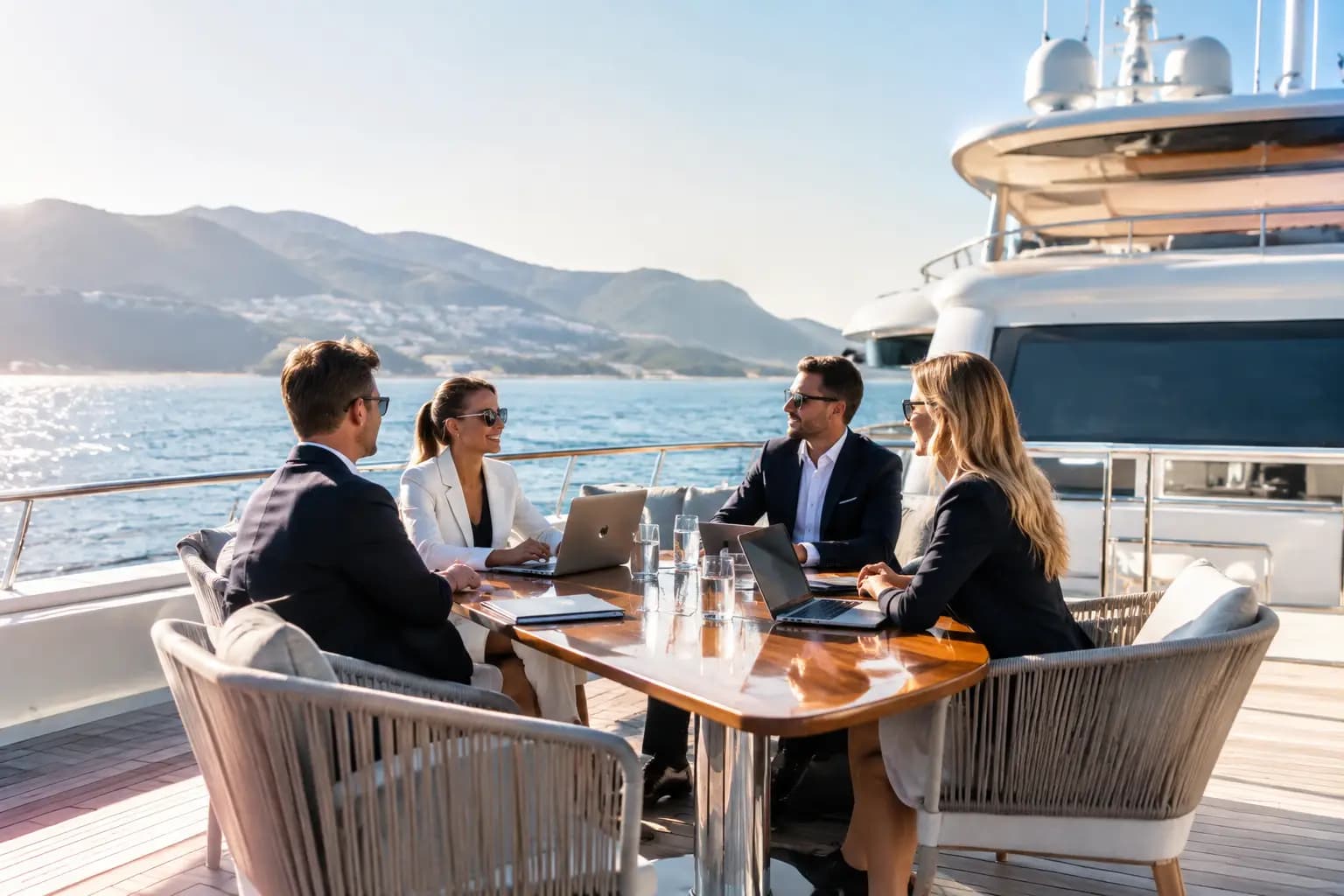
A meeting room can host a meeting. Chartering a yacht for corporate events, however, can completely transform the quality of the conversation. Away from fixed routines and the competing demands of office life, guests arrive with greater focus, teams interact more naturally, and a well-run itinerary gives the company's message the attention it deserves.
However, this impact is not created by the vessel alone. Corporate yacht events require careful alignment of guest numbers, route, onboard amenities, access arrangements, hospitality, safety requirements, and commercial objectives. The best result feels effortless and relaxed to attendees precisely because the operational planning behind the scenes was executed flawlessly.
When a Yacht Is the Right Corporate Venue
A yacht is particularly effective when the event needs to feel more intimate than a large conference and more memorable than a private dining room in a restaurant. It is ideal for executive offsites, client appreciation programs, investor gatherings, leadership meetings, product launches, incentive days, media events, and discreet celebrations following a major business milestone.
The format works best when the purpose is clear. If relationship-building is the goal, the focus can be placed on exceptional service, unhurried conversations, and a well-paced day on the water. For a strategic meeting, the priority shifts to quiet spaces, stable seating, reliable connectivity (where available), presentation capabilities, and sufficient time alongside or at anchor to work through the agenda productively.
There is a trade-off to consider. A yacht creates exclusivity and a strong sense of occasion, but it does not offer the unlimited capacity or standardized infrastructure of a convention center. Guest count, weather exposure, accessibility, berth timings, and vessel regulations must all be factored in before invitations are sent. A professional charter plan addresses these factors as part of the event design, not as last-minute constraints.
Choosing the right yacht begins with the event brief, not a preference for the largest vessel available. A larger yacht may offer more deck space, formal dining setups, additional lounges, and greater privacy for senior executives. However, a smaller motor yacht, sailing yacht, or catamaran may be a far more effective choice for a focused client group, a brief team incentive, or a day program with a defined budget.
Start with the True Guest Count
There are several guest numbers that need to be clarified: the number invited, the number expected to attend, the number onboard at any one time, and the number that can be comfortably accommodated for the proposed activity. A vessel's maximum legal passenger capacity is not necessarily its ideal capacity for a seated dinner, a product showcase, or a formal presentation.
Consider the practical details. Will guests need room for a welcome drink, a speaker, a stage, branded collateral, photographers, or entertainment? Will the group move between indoor and outdoor areas? A charter option that seems generous for a casual cruise can feel cramped once production equipment and catering setups are added.
Match the Yacht Layout to the Agenda
A yacht's layout determines the flow of the event. For executive discussions, look for a sheltered salon, an appropriate table configuration, quiet seating, and a deck layout that supports breaks without splitting the group too far apart. For networking, multiple social zones encourage guests to circulate while maintaining a cohesive atmosphere.
A catamaran can provide wide, stable deck areas and a more informal layout. A motor yacht is often better suited for elevated hospitality, formal guest reception, and a premium arrival experience. Sailing yachts bring character and an engaging spirit, but their deck configuration and wind-dependent motion may not suit every presentation-heavy event. The right choice depends on the desired tone and the operational requirements of the program.
Build the Program Around the Guest Experience
Corporate guests notice timing details. A delayed boarding process, unclear dress code instructions, an overly ambitious cruising schedule, or a meal served while the vessel is pitching heavily can undermine an otherwise strong event. The most successful programs have a clear rhythm from arrival to departure.
For a day charter, this often means a structured welcome, a short cruising period, a defined window for the main business purpose or hosting, followed by dining or a social activity at a suitable stop before returning. For an evening event, the yacht may remain berthed for most of the program, using the onboard setting as the venue rather than attempting to combine a complex cruising route with speeches, entertainment, and guest transfers.
Do not treat cruising time as dead space. It can be ideal for informal introductions, sightseeing hospitality, or a brief welcome address, but it is rarely the right moment for a detailed financial presentation or high-stakes negotiations. The agenda should respect the movement, noise, and social energy of the vessel.
Catering, Production, and Brand Presence
Hospitality should match both the guests and the timeline. A seated meal creates structure and suits smaller executive groups. Passed canapés and food stations allow for greater movement and work exceptionally well for networking. For longer itineraries, dietary requirements, beverage service, crew workflow, galley capacity, and storage space must be confirmed well in advance.
Branding should be applied with restraint. A yacht already possesses a strong visual identity, so excessive signage can feel out of place and impede guest movement. Subtle touches are far more effective: a customized menu, discreet welcome materials, branded screen content where appropriate, curated floral arrangements, coordinated host attire, or a thoughtfully designed gift presentation.
Production requirements demand an early technical assessment. Sound systems, microphones, screens, lighting, Wi-Fi, charging points, power consumption, and equipment loading logistics vary from yacht to yacht. If the event includes live music, a keynote speaker, videography, or a product reveal, the broker and event team should verify what is permitted and what the vessel can safely support. Unexamined assumptions become costly on the day of the event.
Operational Details That Safeguard the Event
A corporate charter is a regulated maritime operation, not merely a private venue rental. The charter agreement should clearly outline the itinerary, charter duration, included crew, catering scope, estimated fuel, applicable taxes or local fees, payment schedule, cancellation terms, and any supplementary services.
Weather is the most visible variable, but it is not the only contingency to plan for. Factor in late guest arrivals, security procedures, transfer coordination, accessibility needs, medical storage, dress code requirements, alcohol policies, and the decision-making process if conditions require a change of itinerary. A berth-bound alternative can be the right choice if the business goal depends on stable presentation conditions rather than time spent at sea.
For larger groups or high-profile attendees, guest management deserves its own plan. Boarding lists must be accurate, arrival windows staggered if necessary, and a designated host should know who holds decision-making authority for timing, guest issues, and commercial approvals. Discretion is often as valuable as visual impact, particularly for executive, investor, or client-facing occasions.
Budget with Clarity, Not Just the Charter Rate
The base charter fee is only one component of the event budget. Depending on the yacht and program, additional costs may include fuel, provisions, catering, beverages, berth/dockage fees, transfers, event staff, entertainment, AV equipment, decor, security, photography, and local operational fees.
This does not mean a yacht event is difficult to budget. It means the scope of services must be defined before comparisons are made. A proposal may appear less expensive because it includes a shorter operating window, lighter catering, fewer crew services, or no technical production allowance. A fair comparison should reflect the total expected event cost and identify which elements remain variable.
Master Ocean approaches corporate charter coordination as a commercial and operational task as much as a guest experience. The objective is to identify an appropriate vessel, establish a realistic brief, and coordinate the details that allow hosts to remain present with their guests rather than managing onboard logistics.
A Better Brief Delivers a Better Charter
Before requesting options, define the event date range, guest profile, expected attendance, budget parameters, desired charter duration, commercial purpose, catering expectations, and any non-negotiable requirements. These might include a formal dining setup, presentation facilities, a sheltered indoor area, privacy, water access, specific accessibility needs, or a branded event concept.
Be clear about the outcome you want to achieve. Is the goal to reward a team, secure dedicated time with clients, introduce a new offering, thank key partners, or create a setting for confidential discussions? That answer shapes the yacht, itinerary, service style, and event schedule far more effectively than a generic request for a luxury vessel.
Request a yacht with a clear brief, and then allow sufficient planning time for the right vessel and operational partners to be secured. The most powerful corporate event on the water is not the one with the most complex cruising route. It is the one where every guest feels that the company thought through everything that truly mattered.