Yacht Carpentry and Joinery on the French Riviera
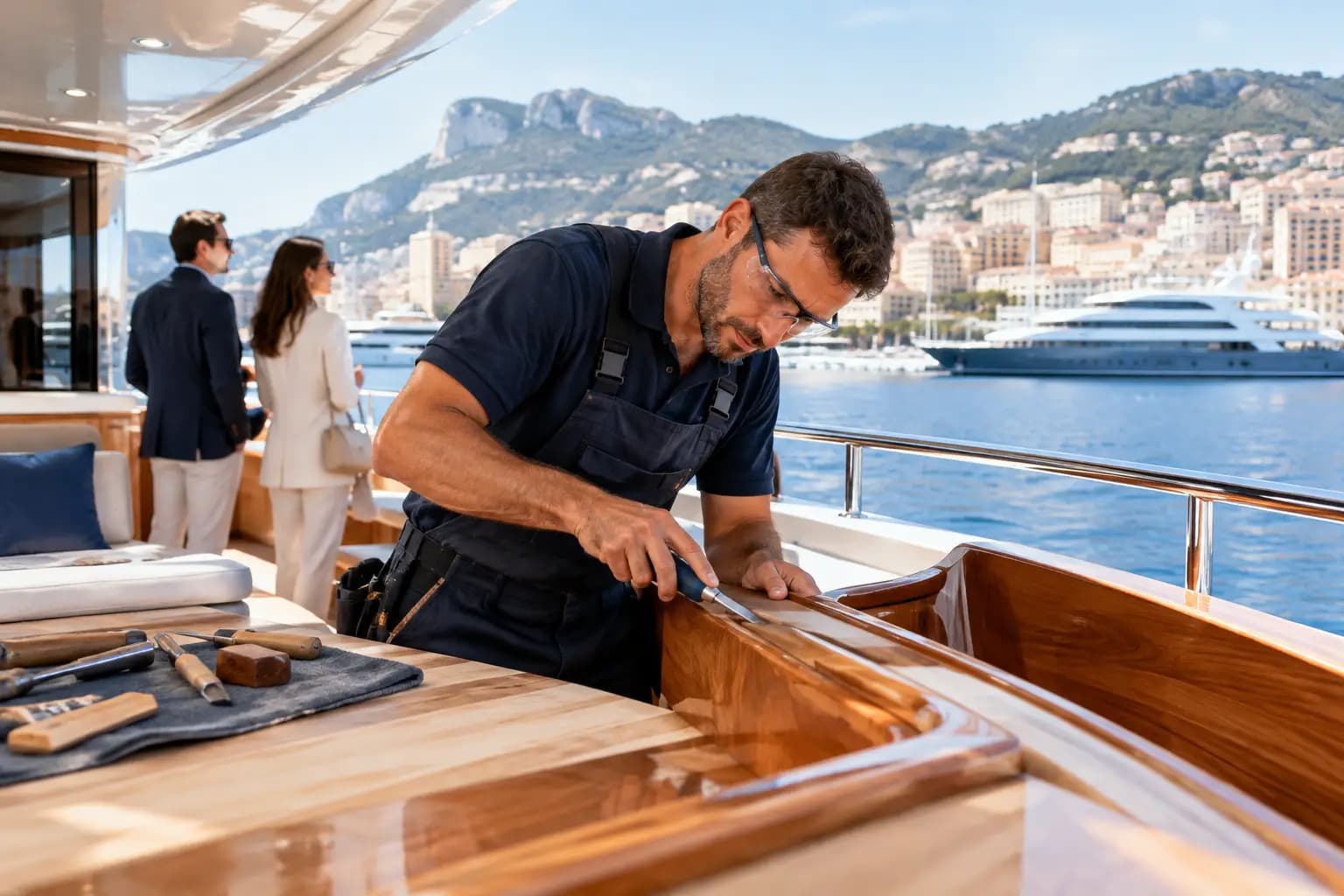
A loose drawer front in Cannes or a water-marked bulkhead in Antibes can look like a minor cosmetic issue. On a yacht, it may also point to movement, moisture ingress, failed bonding, or a finish that no longer protects the substrate. Yacht carpentry and joinery French Riviera projects therefore require more than a talented cabinetmaker. They require a clear understanding of marine construction, access constraints, material compatibility, and the yacht’s operating schedule.
The French Riviera is one of the Mediterranean’s most active ownership and refit environments. From compact day boats to large motor yachts and sailing yachts, owners often need work completed between guest use, charter commitments, surveys, deliveries, and seasonal moves. The best result is not simply a beautiful interior. It is joinery that fits correctly, tolerates the marine environment, can be maintained sensibly, and supports the vessel’s commercial or private use.
What Yacht Joinery Covers
Marine joinery includes the visible and structural interior elements that make a yacht practical and finished: cabinetry, doors, companionway steps, wall panels, ceiling panels, bunk surrounds, tables, drawer systems, galley components, wardrobes, and selected exterior timber details. Carpentry may also involve repairs to soles, trim, locker lids, backing structures, and framing behind decorative surfaces.
On a yacht, the distinction between cosmetic and technical work is rarely absolute. A veneered panel may conceal wiring, insulation, plumbing, or access to pumps and valves. A new locker arrangement can affect ventilation and service access. Replacing a damaged sole may reveal moisture below it. This is why a proper scope begins with inspection, measurements, and an understanding of what sits behind the finish.
Why Riviera Projects Need Careful Planning
The Riviera offers excellent access to marinas, shipyards, specialist trades, and supply routes. It also brings practical pressure. Berth access can be limited, summer schedules are congested, and a yacht that looks available may still have owner use, crew activity, charter preparation, or technical work underway.
Humidity, heat, salt air, and strong sunlight are equally relevant. Timber expands and contracts. Veneer edges can lift where moisture has entered. Finishes can fade or become brittle. Hardware may corrode, and poorly specified adhesives can fail under heat or vibration. A repair that appears correct in a workshop can become visibly misaligned once the vessel moves through a season of temperature changes.
For this reason, the first commercial question should be: what is the objective? An owner preparing for a sale may need targeted repairs that improve presentation without creating an open-ended refit. A long-term owner may reasonably choose a more extensive rebuild, matching grain, finish, hardware, and construction detail across an entire area. A charter yacht may prioritize durable finishes, safe edges, and fast access for maintenance over an exact restoration of a delicate original surface.
Start With the Cause, Not the Visible Damage
A joinery specialist should assess why damage occurred before recommending replacement. Water staining around a window, deck fitting, or air-conditioning run should trigger investigation of the source. Simply refinishing the affected panel can create a short-lived result if the leak remains active.
Movement is another common issue. Doors that no longer close squarely may be caused by worn hinges, distorted cabinetry, changes in vessel trim, or a structural or support problem. Likewise, recurring cracks in lacquer or filler may reflect vibration rather than a poor finish. The appropriate repair depends on the cause, and the lowest initial quotation is not always the lowest ownership cost.
For major works, owners and managers should request a defined survey of the affected area. This should identify the extent of removal, likely hidden risks, associated trades, material assumptions, and any exclusions. It is particularly useful where the yacht has changed hands, documentation is incomplete, or earlier repairs are difficult to evaluate.
Repair, Restoration, or Replacement?
Repair is often the right choice when the damage is localized and the original timber, veneer, or substrate remains stable. Skilled repairs can preserve a yacht’s character and avoid unnecessary disruption. This is especially relevant for high-quality interiors where matching an existing veneer, stain, or gloss level across a large area may be more challenging than restoring the damaged section.
Restoration is more involved. It may include refinishing multiple panels, renewing worn edging, rebuilding drawer boxes, correcting poor historic repairs, or updating hardware while retaining the original design language. The value lies in consistency. A single new panel can look out of place if grain direction, sheen, shadow gaps, and fittings do not align with the surrounding interior.
Replacement is sensible when there is extensive moisture damage, delamination, compromised structure, obsolete components, or a client objective to change the layout. It can also make sense when access to systems needs improvement. However, replacement requires careful coordination with electrical, HVAC, plumbing, insulation, and fire-safety considerations. A beautiful new cabinet is not a success if it blocks a service point needed every season.
Materials Must Suit the Yacht’s Use
Marine plywood, lightweight composite panels, solid timber, veneers, laminates, engineered boards, and specialty finishes all have a place. The right selection depends on weight, location, budget, expected wear, and the yacht’s original build standard.
Solid timber offers character and can be repaired over time, but it moves with moisture and may add weight. Veneered panels can provide a refined finish with better weight control, although edges and substrate quality are critical. High-pressure laminates are practical in crew areas, galleys, and heavily used day boats, where easy cleaning and impact resistance may matter more than traditional joinery detail.
For exterior or semi-exposed areas, material selection becomes even more demanding. Teak, synthetic decking, marine-grade adhesives, sealants, and protective coatings should be specified for the actual exposure and maintenance plan. A teak repair may be visually attractive on handover but still disappoint if the owner expects a low-maintenance surface in a high-sun berth.
Matching is often the hardest part of interior work. Different batches of veneer can vary noticeably, and aged timber will not match new material immediately. Where an exact match is unlikely, a responsible contractor should explain whether the practical solution is localized blending, a larger refinishing area, or a deliberately complementary material choice.
Building a Scope That Protects Budget and Schedule
The strongest projects start with a written scope rather than a verbal description of what should look better. It should state the areas involved, proposed materials and finishes, hardware requirements, access arrangements, protection of adjacent surfaces, and who is responsible for related systems or removals.
Owners should also distinguish fixed-price work from investigation work. Replacing a known damaged table top can often be priced with reasonable certainty. Opening a stained bulkhead to trace water ingress cannot. In the second case, an agreed investigation allowance with staged approvals is usually more realistic than a false fixed price.
Scheduling needs equal discipline. Joinery may need off-yacht fabrication, but templates and final fitting are site-specific. The yacht must be accessible, dust control must be agreed, and crew or management should know when cabins, saloons, or technical spaces will be unavailable. If the work is being completed before a sale, photography, viewings, and handover timing should be considered from the outset.
For yachts operating beyond the Riviera, mobile technical support can be coordinated by prior arrangement, subject to location, port access, scope, and confirmed availability. The planning principle remains the same: define the job before moving people, tools, and materials across borders.
Joinery and Yacht Value
Interior condition affects buyer confidence. Prospective buyers may accept normal wear on an actively used yacht, but they quickly notice swollen cabinetry, mismatched repairs, sticking doors, soft flooring, and neglected trim. These details can raise broader concerns about maintenance standards, even where the machinery and hull are well managed.
That does not mean every yacht should undergo a full interior refit before marketing. The commercially sensible approach depends on price level, age, vessel type, and the competitive set. A pre-sale review can identify which repairs remove objections, which work should be disclosed, and which upgrades are unlikely to be recovered in the transaction. Presentation should support an accurate story about the yacht, not conceal unresolved technical issues.
For owners planning a longer refit, joinery should be coordinated with upholstery, lighting, AV equipment, air conditioning, flooring, and paintwork. Sequencing matters. Installing new panels before access-dependent electrical work is complete can create unnecessary rework and cost.
A Better Standard for Interior Work
Good yacht carpentry is quiet. Doors close cleanly, drawers stay aligned, panels sit fair, service areas remain accessible, and finishes continue to look right after use at sea. Achieving that standard relies on precise measurements, realistic material choices, and a scope built around the yacht’s actual operating life.
Whether the requirement is a focused repair in Monaco, an interior refresh before a Mediterranean season, or a larger refit program, begin with a documented inspection and a clear commercial brief. Discuss your yacht’s joinery scope with Master Ocean to align technical work, scheduling, and ownership priorities before the first panel is removed.