Yacht Antifouling on the French Riviera Guide
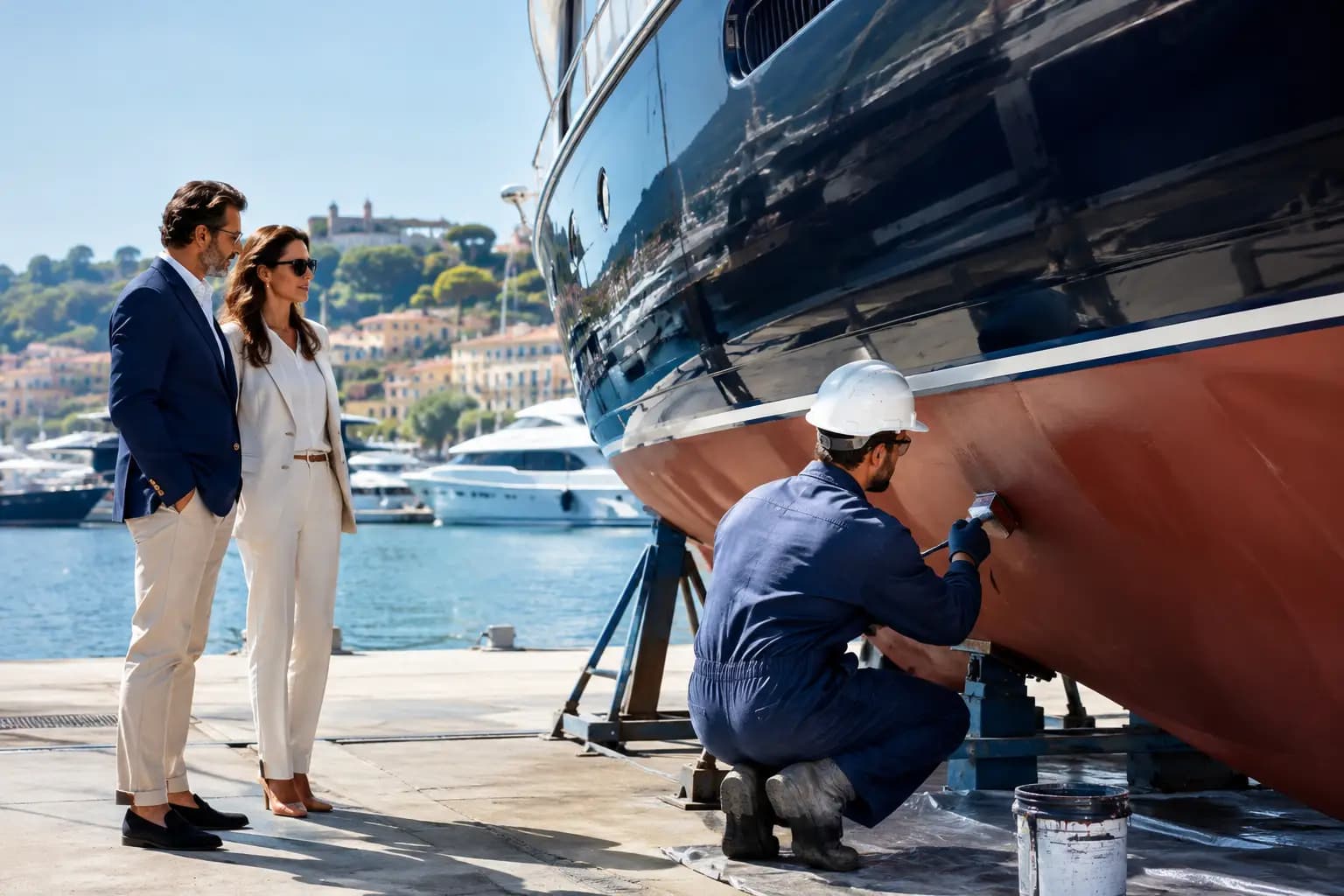
A clean hull is not a cosmetic detail on the Côte d’Azur. For an owner preparing for a Cannes crossing, a Saint-Tropez season, or a delivery toward Monaco and Italy, yacht antifouling French Riviera planning directly affects fuel use, speed, maneuverability, and the condition presented to guests or prospective buyers.
The right result depends on more than selecting a paint can. The vessel’s hull material, operating pattern, berth location, prior coating system, haul-out availability, and the period available ashore all need to be assessed before work begins. A well-managed antifouling project protects the underwater body while avoiding rushed preparation, incompatible products, and unnecessary time out of service.
Why French Riviera Antifouling Needs Planning
The French Riviera offers exceptional cruising, but warm water, strong sunlight, long periods alongside, and concentrated summer traffic create demanding conditions for underwater coatings. A yacht used frequently can accumulate different fouling from one that remains in a marina for extended periods. Sailing yachts, motor yachts, catamarans, tenders, and larger yachts also impose different operational demands on their coatings.
Fouling is not limited to visible growth. Slime, algae, barnacles, and tube worms add drag below the waterline. On a planing motor yacht, that drag may affect acceleration, top-end performance, trim, and fuel consumption. On a sailing yacht, it can reduce feel and efficiency under sail. For a vessel entering the sales market, a neglected bottom can also raise sensible questions during inspection and survey.
Antifouling should therefore be treated as part of annual technical management, not as a last-minute pre-season task. The objective is a documented, compatible coating system applied over sound preparation, with realistic curing time and a clear understanding of what is included in the yard scope.
Start With the Existing Hull System
Before approving any yacht antifouling on the French Riviera, establish what is already on the hull. This sounds straightforward, yet it is one of the most common sources of avoidable rework. Different antifouling systems may react poorly when applied over unknown or unsuitable previous layers.
A proper assessment considers the vessel’s hull material, existing paint condition, prior product history where available, signs of blistering or adhesion failure, and whether the boot stripe, transducers, running gear, and underwater fittings require separate treatment. A fiberglass hull with stable, compatible layers may need cleaning, sanding, spot repairs, and fresh antifouling. A hull with failing layers may require more extensive stripping and barrier-coat evaluation.
For aluminum yachts and components, coating selection deserves particular care. Copper-based products can be unsuitable in direct contact with aluminum because of galvanic corrosion risk. The same principle applies around metal appendages, saildrives, stern drives, and other sensitive underwater equipment. Product choice should be matched to the vessel and confirmed against manufacturer guidance rather than assumed from a previous yard invoice.
Choosing the Right Antifouling Paint
There is no single best coating for every Riviera-based yacht. The practical choice depends on how the yacht is used, where it is kept, and how often the owner intends to haul out.
Self-polishing antifouling gradually wears away in service, exposing fresh biocide. It is often suitable for vessels that are regularly used and can help limit paint buildup over successive seasons. The trade-off is that application thickness and launch timing must be carefully controlled, particularly where the yacht may spend long periods idle.
Hard antifouling creates a tougher surface and is often considered for faster vessels or yachts that may be cleaned periodically by appropriate methods. It can be durable, but repeated application can create a thicker paint film that eventually needs more substantial preparation. On performance-focused sailing yachts, some owners may consider specialist low-friction systems, although these demand disciplined surface preparation and maintenance.
Environmental rules, local yard procedures, and product availability also influence the decision. The correct approach is not simply to choose the strongest product. It is to select a lawful, compatible system that suits the operating profile and can be applied under the expected temperature and humidity conditions.
Preparation Determines the Result
Antifouling is only as dependable as the surface beneath it. Once the yacht is hauled, the hull should be pressure-washed promptly to remove marine growth before it dries and bonds to the surface. The team can then inspect the underwater body with the benefit of a clean, dry view.
Preparation may include controlled sanding, removal of loose paint, fairing of minor defects, treatment of localized damage, masking, and cleaning before primer or antifouling is applied. Propellers, shafts, rudders, thrusters, and trim tabs need their own appropriate products and procedures. Applying standard hull antifouling to all underwater metalwork is not a reliable shortcut.
Owners should request a defined scope before work starts. It should distinguish routine preparation from additional findings such as gelcoat damage, corrosion, osmosis indicators, failed fairing, or a coating system that requires stripping. This separates the expected maintenance budget from remedial work that may only become visible after haul-out.
Photographs of the hull before, during, and after treatment are useful for technical records. They also support a transparent maintenance file for future buyers, surveyors, managers, and insurers, without replacing any formal survey or policy requirements.
Scheduling Around the Riviera Season
The most convenient time to book antifouling is often not the best time to secure yard space. In Antibes, Cannes, Nice, Saint-Tropez, and nearby facilities, haul-out capacity can become constrained before spring launch periods and around major charter, event, and cruising dates.
For yachts with a fixed summer program, the work should be scoped well in advance. Allow time for lift arrangements, wash-down, drying, inspection, repairs, coating application, curing, relaunch, and post-launch checks. A simple annual repaint may be efficient; a hull requiring paint removal or repairs may alter the calendar materially.
Weather matters as well. Coastal humidity, wind, rain, and low overnight temperatures can affect coating application and cure windows. Yard teams will work to product specifications, but the owner or captain should avoid building a tight departure plan around the most optimistic completion assumption.
Mobile technical support can be coordinated across Europe by arrangement, subject to the yacht’s location, yard access, required scope, and confirmed scheduling. For Riviera projects, the most efficient setup is usually a coordinated plan between the captain or owner’s representative, the haul-out facility, and the technical team carrying out the agreed work.
Cost Control Without Cutting Corners
The cost of antifouling varies considerably. Yacht size is only one factor. Labor access, the amount of old paint to remove, hull condition, coating specification, underwater gear treatment, lift charges, yard stays, and unforeseen repair findings can all change the final figure.
The lowest initial quote may omit essential preparation or exclude consumables, lift fees, disposal, or treatment of running gear. Conversely, a detailed estimate should not be mistaken for a fixed price if the hull has not been inspected out of the water. The commercially sensible route is a transparent scope with stated assumptions, agreed day rates or unit rates for additional findings, and approval controls for work outside the original brief.
This is especially relevant before listing a yacht or placing it into charter service. A clean, properly maintained underwater body supports confident sea-trial preparation and helps reduce avoidable operational disruption. It does not guarantee performance figures, sale outcomes, or charter revenue, but it is a visible sign that the yacht has been managed with care.
Antifouling as Part of a Wider Maintenance Plan
Annual haul-out is an efficient opportunity to inspect more than paint. Depending on the vessel and service history, owners may combine antifouling with anode checks, propeller and shaft inspection, through-hull and seacock review, transducer checks, minor gelcoat repairs, hull polishing above the waterline, and servicing of underwater equipment.
Bundling the right work can reduce repeated lifting and yard logistics. It should not become an excuse to overload a short haul-out period. Prioritize safety-critical and access-dependent tasks first, then schedule cosmetic or discretionary items around the yacht’s operational calendar.
For owners managing yachts across several Mediterranean locations, maintain a clear record of products used, batch details, dates, yard invoices, underwater photographs, and any coating issues observed during the season. That history makes the next decision faster and gives a new captain, manager, buyer, or surveyor a more reliable starting point.
A French Riviera antifouling project should leave the yacht ready for the way she will actually be used, not merely freshly painted for launch day. Define the vessel’s schedule, inspect the existing system, agree the scope before haul-out, and allow enough time for the work to be done properly. To discuss maintenance planning, refit coordination, or a pre-sale technical review, contact Master Ocean with the yacht’s location, hull type, and intended operating schedule.