How Yacht Sea Trials Work Before You Buy
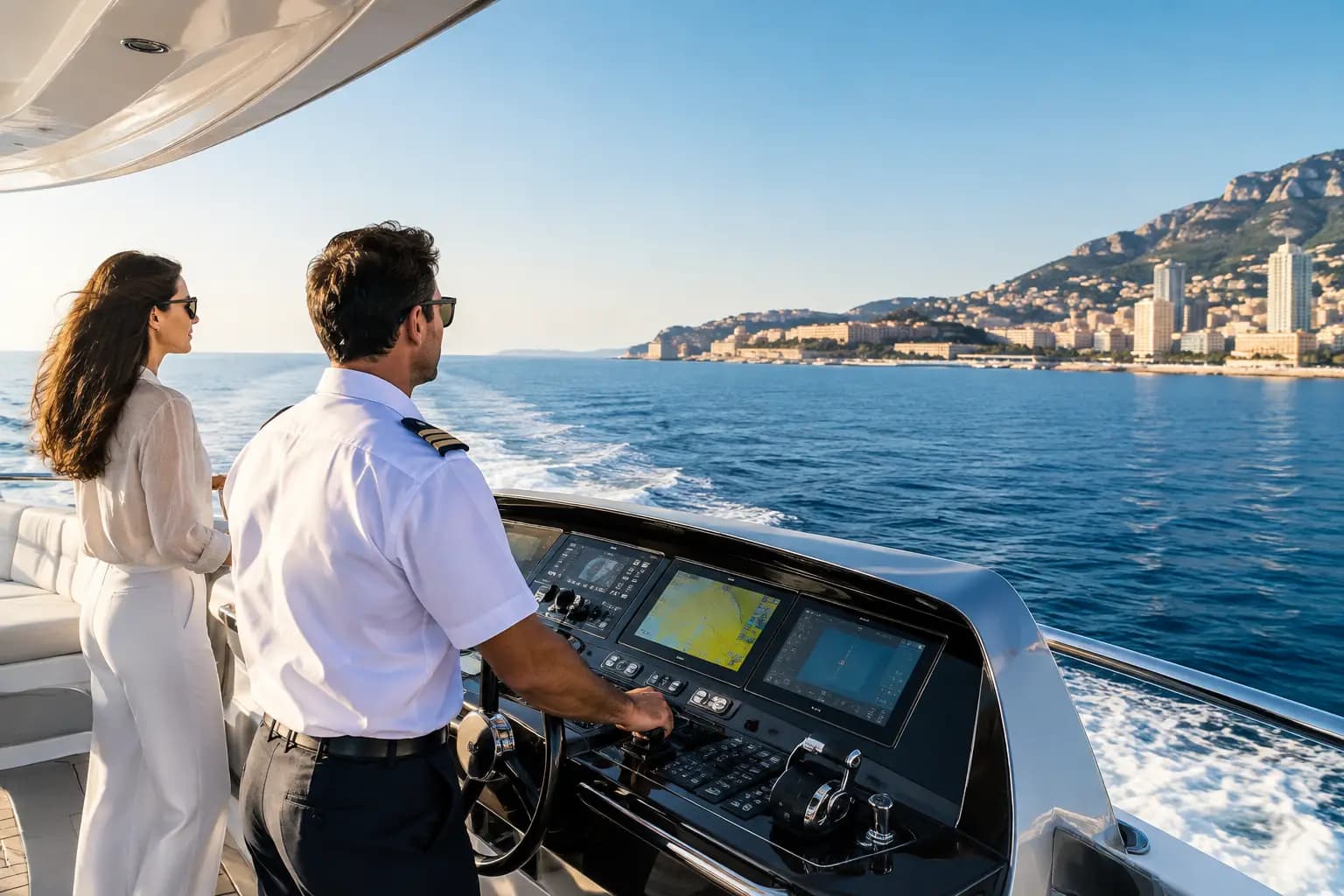
A yacht can look impeccable alongside in Monaco, Cannes, or Viareggio and still reveal costly issues once it is operating at speed. That is why understanding how yacht sea trials work matters before a purchase is completed. A sea trial is the practical, underway assessment of a yacht’s machinery, handling, systems, and real-world behavior. It is not a substitute for a condition survey, but it is one of the most valuable moments in the acquisition process.
For a buyer, the objective is straightforward: confirm that the yacht performs in a manner consistent with its age, specification, maintenance history, and seller’s representations. For a seller, a well-prepared sea trial protects transaction momentum by demonstrating that the vessel has been maintained and is ready to operate.
What Is a Yacht Sea Trial?
A sea trial is a controlled run at sea, usually conducted after an offer has been accepted and before final closing. The buyer, broker, captain, surveyor, and sometimes an engine specialist attend. The seller or the seller’s representative may also be present, depending on the agreement and the nature of the yacht.
The trial gives the attending professionals an opportunity to observe the yacht under load. Engines that sound acceptable at the dock may overheat at higher revolutions. Stabilizers, steering, thrusters, generators, navigation equipment, and hydraulic systems are easier to evaluate when they are actually being used. On a sailing yacht, the trial may also include sail handling, rig behavior, and performance on different points of sail.
A sea trial is normally arranged as part of the purchase agreement, with terms agreed in advance. Those terms should address who pays for fuel, crew, berthing, insurance, and any agreed route or duration. The agreement should also define the buyer’s rights if a material defect is found. This is a commercial point that should not be treated casually, especially on larger yachts or complex new-build deliveries.
How Yacht Sea Trials Work in a Purchase Process
The sequence varies by jurisdiction, yacht type, and deal structure, but a typical brokerage acquisition follows a clear order. First, the buyer and seller agree on price and principal terms, usually subject to survey and sea trial. The yacht is then inspected ashore and afloat, followed by a sea trial at a suitable time and location. Survey findings are reviewed, negotiations may follow, and the parties proceed to closing only when agreed conditions have been satisfied.
The sea trial is often scheduled on the same day as the survey, particularly for yachts based in the Mediterranean where berth availability, crew schedules, and shipyard access require careful coordination. That can be efficient, but it should not create unnecessary pressure. A 30-meter motor yacht with sophisticated propulsion, stabilization, audiovisual, and hotel systems deserves enough time for meaningful checks.
Weather matters. Flat water may be appropriate for confirming propulsion data and machinery operation, while moderate conditions can reveal ride quality, vibration, spray, hull noise, and handling characteristics that would remain hidden in a protected harbor. The goal is not to expose a yacht or crew to unsuitable conditions. It is to choose conditions that allow a sensible evaluation of the vessel’s intended use.
Before Leaving the Dock
Preparation determines the value of the day. The buyer’s representative should request relevant records in advance, including service history, engine-hour reports, maintenance invoices, class documentation where applicable, and operating manuals. The captain should confirm fuel levels, fluid levels, safety equipment, navigation readiness, and the availability of keys, remote controls, tenders, and supporting equipment.
A professional surveyor will often establish baseline information before departure. This may include engine starts from cold, visible smoke, alarm-panel status, bilge condition, battery charging, and the operation of shore power and generators. Any defect observed before the yacht leaves the berth should be recorded rather than dismissed as a minor inconvenience.
On a newer yacht, attention may focus on commissioning quality, warranty items, and whether the delivered specification matches the contract. On a pre-owned yacht, the emphasis is more likely to be maintenance standards, deferred work, component life cycles, and evidence of repairs or recurring faults.
Underway Testing
Once clear of the harbor, the captain will normally bring the yacht through a planned set of operating conditions. The exact test program depends on the yacht, but it commonly includes low-speed maneuvering, acceleration, cruising speed, higher engine load, turning circles, reverse engagement, and stop-start procedures.
The surveyor and technical specialists observe engine temperature, oil pressure, exhaust appearance, cooling-water flow, gear engagement, shaft or pod vibration, and alarm systems. GPS speed is compared with engine revolutions and expected performance. A yacht may not achieve the brochure speed quoted when new, particularly if it carries additional equipment, has aging engines, or is operating with fouled running gear. The key question is whether its performance is reasonable and consistent with the known condition of the vessel.
Steering deserves close attention. At displacement speed, the yacht should track predictably and respond appropriately to helm input. At planing speed, the team will assess trim, list, porpoising, directional stability, and whether the yacht produces abnormal vibration or structural noise. A slight vibration may be attributable to propeller condition or hull fouling. A pronounced vibration can point to alignment, shaft, propeller, bearing, or drivetrain issues that require further investigation.
For yachts fitted with stabilizers, the crew should demonstrate both at-rest and underway modes when conditions permit. Bow and stern thrusters should be tested during maneuvering, along with anchor windlasses, passerelles, cranes, tender garages, and hydraulic platforms where practical. These are not cosmetic amenities. On a yacht intended for family cruising or charter, their reliable operation affects safety, crew workload, and the ownership experience.
Systems That Merit Particular Attention
A good sea trial is neither a sightseeing cruise nor an attempt to operate every item without a plan. It should prioritize systems whose failure would be expensive, safety-critical, or disruptive to the yacht’s intended use.
On motor yachts, propulsion and electrical generation sit at the center of the assessment. Generators should carry a meaningful load, particularly if the yacht will operate air conditioning, galley equipment, watermakers, and entertainment systems while at anchor. Electrical switching, chargers, inverters, battery banks, and shore-power transfer should also be reviewed. An intermittent electrical issue can be difficult to diagnose and may lead to significant labor costs.
Air conditioning is especially relevant in the French Riviera, Italy, Spain, and other warm-weather cruising markets. It should be tested across multiple zones, with attention to cooling output, condensate drainage, pump operation, and control responsiveness. Watermakers, toilets, showers, galley appliances, refrigeration, and hot-water systems should be sampled as time allows.
For sailing yachts, the inspection extends to saildrive or shaft performance, rig tension, furlers, winches, hydraulic systems, autopilot response, and sail handling. A rig survey may be separate from the sea trial, but operation under sail can still expose issues with controls, mast movement, deck hardware, or electrical loads.
Sea Trial Results: What Happens if an Issue Is Found?
Most sea trials produce observations. Not every observation justifies renegotiation. A worn tender remote, an inaccurate gauge, or a serviceable but aging pump may be routine ownership maintenance. The meaningful distinction is whether the finding affects safety, seaworthiness, legal compliance, usability, or the yacht’s represented condition and value.
If a material issue emerges, the buyer should avoid making assumptions at the dock. The proper next step may be further diagnostics by an authorized engine dealer, naval architect, electrician, or specialist yard. A seller may agree to rectify the defect before closing, offer a price adjustment, place funds in escrow, or decline the request. The buyer can then assess the available contractual rights and decide whether the yacht remains the right acquisition.
This is where disciplined brokerage advice becomes valuable. The best outcome is not always a price reduction. For an owner planning a summer charter program or immediate Mediterranean cruising, a confirmed repair scope, parts availability, yard slot, and completion timetable may be more valuable than an uncertain discount. Conversely, where the defect indicates a broader pattern of neglected maintenance, walking away can be the commercially sound decision.
Sea Trials for New Builds and Refit Deliveries
New-build sea trials are more formal and more technical than most brokerage trials. The owner’s team, project manager, surveyor, and shipyard representatives may compare measured performance against contractual criteria for speed, noise, vibration, range, maneuverability, and equipment operation. The trial program is usually prepared well in advance, and any deficiencies are placed on a punch list for rectification before acceptance.
Refit deliveries also require an organized test plan. A yacht returning from paintwork, propulsion work, stabilizer upgrades, interior renovation, or major systems replacement should be trialed with the work scope in mind. The question is not simply whether the yacht runs. It is whether the completed work performs as specified and integrates correctly with existing systems.
For buyers considering a yacht for private use, charter, or a future refit program, sea-trial findings should be evaluated alongside the wider ownership plan. A technically sound yacht may still be the wrong choice if its layout, crew configuration, fuel consumption, or maintenance profile does not support the intended operation.
A sea trial is the moment when a prospective yacht moves from presentation to proof. Arrange it carefully, appoint independent technical professionals, and leave enough room in the transaction timetable to act on what the yacht reveals. For an acquisition, sale, refit delivery, or new-build project, Master Ocean can help coordinate the right process and technical team for the decision ahead.