Catamarans for Sale: A Smarter Buyer’s Brief
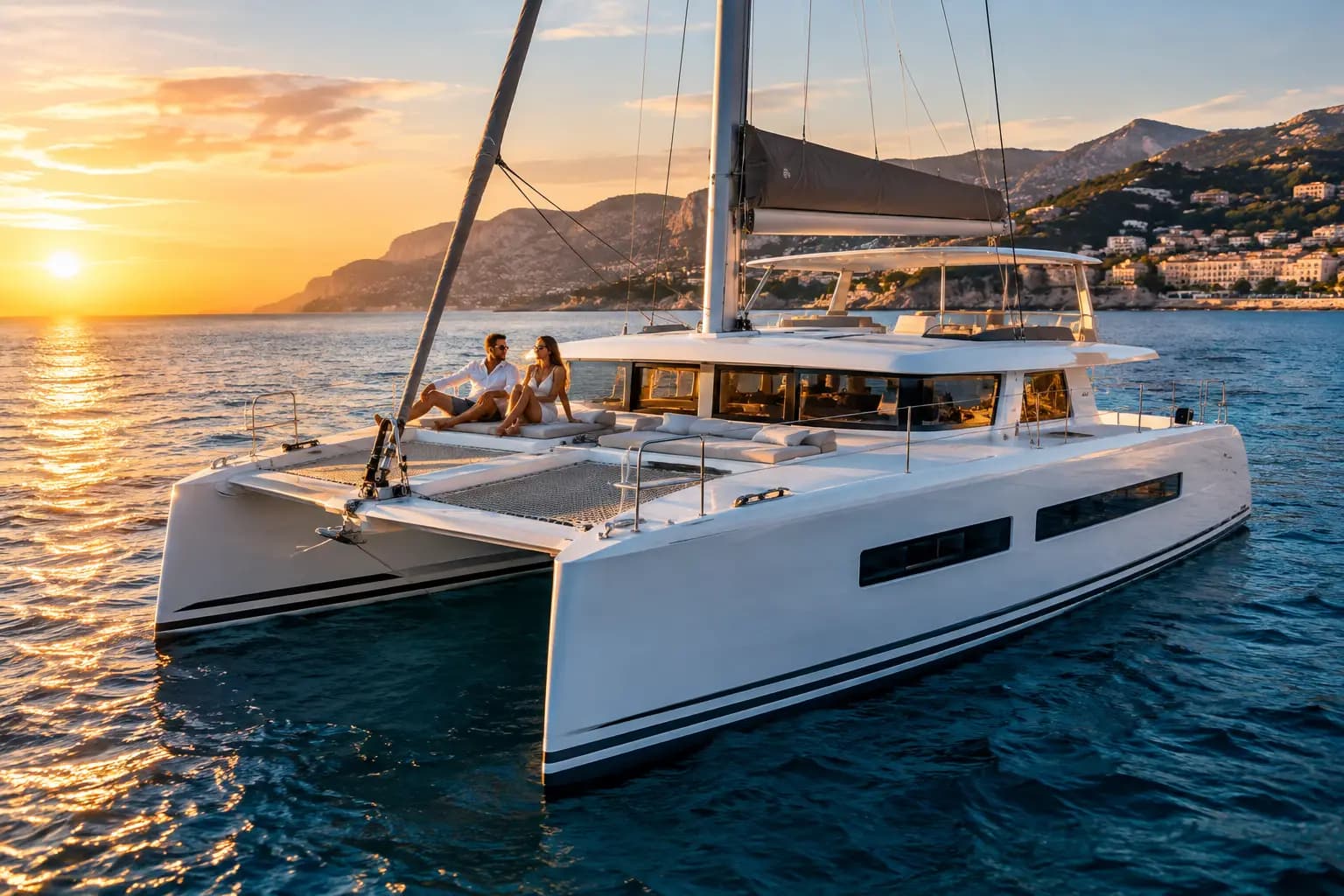
A catamaran can transform how an owner uses time on the water. The platform is broad, stable at anchor, and naturally suited to families, guests, and extended Mediterranean cruising. Yet the strongest catamarans for sale are not always the newest, largest, or most heavily equipped. The right purchase is the yacht that matches a clear cruising program, has been maintained to a documented standard, and can be operated without unwelcome surprises after completion.
For buyers considering the French Riviera, Sardinia, the Balearics, Greece, the Caribbean, or a worldwide itinerary, a catamaran acquisition deserves the same disciplined process as any substantial yacht purchase. Layout, construction quality, service history, flagging, berth availability, crew requirements, and resale liquidity all deserve attention before a buyer focuses on finish selections or brochure specifications.
Why Catamarans for Sale Attract Serious Buyers
The appeal begins with usable volume. A multihull of a given length can offer more exterior living space, more privacy between cabins, and a more sociable main deck arrangement than many comparable monohulls. For private owners, that often means separate family and guest accommodation, protected dining, and an easier transition between interior and exterior spaces. For charter-minded buyers, those same features can be commercially relevant because they support the onboard experience clients expect.
Stability at anchor is another practical advantage. In destinations where a yacht spends long afternoons off Ibiza, around Corsica, or in the bays of Sardinia, a stable platform changes the character of a day aboard. Wide aft decks, forward lounges, and hydraulic swim platforms have made modern power catamarans particularly compelling for day use and event-oriented cruising.
There are trade-offs. Beam can restrict marina choices and increase berthing costs. A catamaran’s motion underway differs from that of a monohull, particularly in certain sea states and when operated at speed. Some owners prefer the range, fuel profile, and passage behavior of a displacement monohull. The decision should follow the intended use, not the assumption that one hull configuration is universally superior.
Start With the Operating Profile
Before reviewing listings, define where and how the yacht will be used. A buyer who wants frequent Monaco-to-Saint-Tropez day trips has different priorities from an owner planning six-week family cruising in the Cyclades or a charter program in the Caribbean.
A sailing catamaran may suit owners who value quieter passages, longer periods at anchor, and a more direct connection to sailing. It also introduces sail-handling systems, rig inspections, standing-rigging replacement schedules, and performance considerations that must be assessed carefully. A power catamaran generally prioritizes easy cruising, deck space, and predictable guest comfort, but fuel consumption, machinery access, generator hours, and engine redundancy require close review.
Consider guest count, crew model, and usage pattern at the outset. A compact owner-operated yacht can be highly rewarding, but a larger catamaran with multiple tenders, water toys, chef-level galley equipment, and advanced AV systems may need professional crew and a more formal management structure. That affects annual running costs as much as the purchase price does.
New Build, Recent Build, or Refit Candidate?
New-build catamarans offer the opportunity to specify cabin configuration, galley arrangement, propulsion, electronics, and finishes around the owner’s program. The trade-off is lead time, change-order discipline, and the need for proper technical supervision from contract negotiation through delivery. A new build should be treated as a managed project, with defined specifications, payment milestones, independent survey input, and clear acceptance criteria.
A recent-build yacht may offer a faster route to ownership, especially when the first owner has already absorbed the commissioning period and added desirable equipment. However, buyers should distinguish between equipment that has been installed and equipment that has been maintained. A long options list does not replace service documentation.
Older catamarans can represent value when the underlying structure is sound and a refit scope is honestly priced. They can also become expensive when deferred maintenance spans engines, generators, sails, standing rigging, air conditioning, watermakers, batteries, chargers, electronics, upholstery, and tender systems. The purchase decision should be based on the all-in cost to achieve the desired standard, not simply the advertised asking price.
How to Assess a Catamaran Before Making an Offer
The hulls may look immaculate on arrival, but a serious inspection goes well beyond cosmetic presentation. Request maintenance records early, then compare them with the yacht’s age, engine hours, equipment inventory, and cruising history. Gaps in documentation do not automatically end a transaction, but they should influence valuation, survey scope, and contractual protections.
On a sailing catamaran, inspect the rig, mast, boom, sail inventory, winches, furler systems, trampolines, chainplates, and deck hardware. Standing rigging has a finite service life, and replacement costs can be meaningful. On a power catamaran, give equal attention to engine maintenance, driveline condition, cooling systems, fuel tanks, generators, stabilizing systems if fitted, and maneuvering equipment.
Moisture readings and structural assessment are especially relevant around bulkheads, deck fittings, windows, hatches, and high-load areas. A qualified marine surveyor should determine whether findings are cosmetic, routine maintenance items, or evidence of a more significant concern. The surveyor should be selected by and accountable to the buyer.
Sea trials matter because they reveal details a dockside inspection cannot. Test the yacht at various speeds, check vibration and sound levels, observe steering response, operate all major systems, and review engine data under load. For sailing catamarans, assess sail handling and balance under sail where conditions allow. For power catamarans, confirm real-world cruising behavior rather than relying only on quoted performance figures.
Price Is Only One Line of the Acquisition Budget
A prudent buyer prepares a complete first-year ownership budget before submitting an offer. It should include purchase taxes where applicable, registration, insurance, survey, legal and closing support, delivery, berth costs, crew, management, routine maintenance, contingency, and any immediate upgrades.
Berthing deserves early attention. Catamaran beam can narrow the range of suitable berths in high-demand ports, especially during peak season in Monaco, Cannes, Antibes, Palma, Ibiza, and Sardinia. A yacht that works perfectly on paper can become operationally inconvenient if the owner has not secured practical home-port and seasonal berth options.
For buyers considering charter, the calculation needs further discipline. Charter income depends on location, brand positioning, crew quality, condition, availability, marketing, booking terms, and operating cost control. It should be assessed as a scenario, not a promise. A well-positioned yacht may offset ownership costs, but charter use also increases wear, scheduling complexity, and the need for consistently high operational standards.
The Value of Brokerage Representation
A buyer’s broker does more than identify catamarans for sale. The role is to filter the market, compare relevant vessels rather than merely similar-looking listings, identify potential off-market opportunities, coordinate surveys and negotiations, and help structure a transaction around the buyer’s jurisdiction, timeline, and intended use.
This is particularly valuable in international transactions. A yacht may be lying in Italy, flagged elsewhere, managed by a third party, and offered through several brokerage channels. Clear communication around central agency status, VAT position, ownership documentation, inventory, deposit terms, and closing deliverables protects all parties and reduces avoidable friction.
For sellers, preparation has a direct impact on buyer confidence. A clean inventory, current photography, recent service invoices, transparent condition disclosure, and a realistic asking price help distinguish a serious listing from a vessel that remains on the market without traction. Catamarans are often bought emotionally, but they are negotiated analytically.
Choosing the Right Catamaran for Your Plans
The best catamaran is rarely the model with the most features. It is the yacht whose design, technical condition, operating budget, and cruising geography align. A couple planning owner-operated island cruising may value simplicity, sail efficiency, and easy maintenance. A family may prioritize four equal guest cabins and shaded deck areas. An investor may focus on charter layout, crew flow, maintenance planning, and deployment in a proven destination.
Take time to compare more than interiors and asking prices. Compare beam against berth availability, tankage against itinerary, crew accommodation against service expectations, and equipment age against replacement schedules. These details determine whether a yacht remains a pleasure after the first season.
Master Ocean supports buyers and sellers with international catamaran brokerage, acquisition strategy, survey coordination, charter assessment, refit planning, and new-build advisory. Browse yachts, request a tailored shortlist, or discuss a purchase program before the market narrows your options. A well-chosen catamaran should not only look right at the dock - it should make every departure easier to say yes to.