Best Yachts for Family Cruising Compared
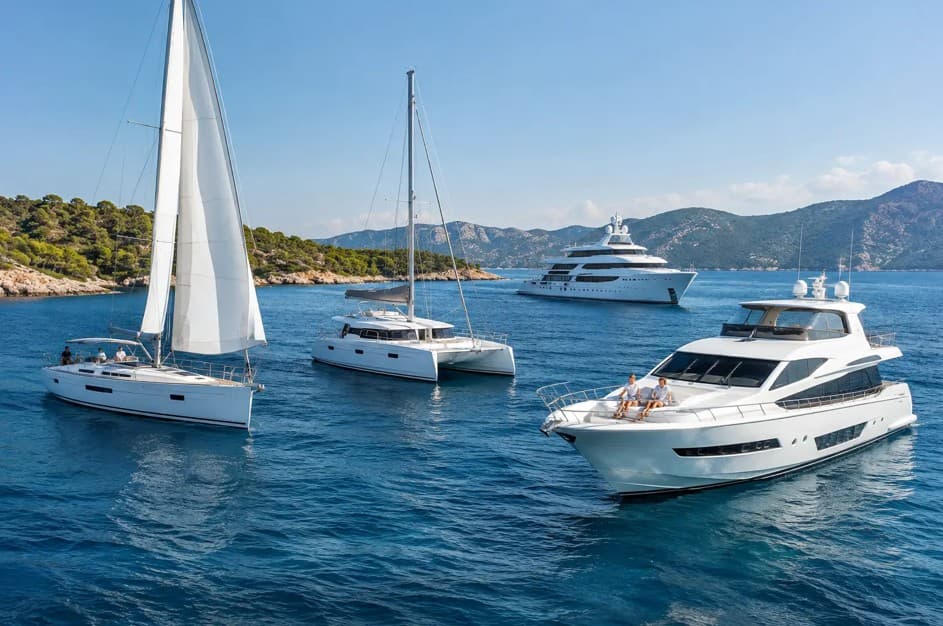
A yacht can look ideal at a boat show and still be wrong for a week aboard with children, grandparents, luggage, watersports equipment, and changing weather. The best yachts for family cruising are not defined by length or headline speed. They are defined by how safely and comfortably a family can live, move, rest, and enjoy time on the water together.
For most buyers, the right decision comes down to a practical balance: cabin arrangement, deck safety, range, crew requirement, operating budget, and the kind of cruising actually planned. A family using a yacht for long Mediterranean summers has different needs from one making weekend trips in Florida or chartering between Caribbean islands.
What Makes a Yacht Work for a Family?
A family yacht should reduce friction. That begins with a layout that separates activity zones from sleeping areas, gives adults and children sufficient privacy, and makes it easy to supervise younger guests. A large salon is useful, but it should not come at the cost of awkward side decks, limited storage, or a cockpit that cannot comfortably handle meals for everyone aboard.
The boarding experience matters more than many first-time buyers expect. Look for a protected swim platform, secure handrails, wide walkways, non-slip surfaces, and practical access from dock to cockpit. On a yacht used frequently with children or older relatives, safe circulation is often more valuable than a larger sun pad.
Storage deserves equal attention. Family cruising generates equipment quickly: life jackets in multiple sizes, snorkeling gear, paddleboards, strollers, provisions, towels, toys, and luggage. A yacht with disciplined locker space and a capable tender arrangement will feel considerably larger in daily use than a more glamorous vessel with nowhere to put essentials.
Best Yacht Types for Family Cruising
There is no single best hull type. The appropriate yacht depends on the cruising ground, family size, budget, and whether the owner wants to operate personally or employ professional crew.
Power Catamarans for Space and Stability
Power catamarans are a strong choice for families prioritizing usable living space, stability at anchor, and a relatively shallow draft. Their wide beam can create a main deck that feels closer to a waterfront apartment than a conventional monohull, with generous cockpit seating and direct access to the water.
Separate hulls also suit family cabin planning. Parents may occupy a full-beam owner’s suite or a private hull, while children and guests have cabins set apart from the main sleeping space. This arrangement can be especially valuable on longer holidays, when everyone needs room to reset.
The trade-off is beam. Marina selection, berth availability, and costs can be more restrictive in some destinations. A catamaran can also feel less natural to operators accustomed to the handling characteristics of a single-hull motor yacht. Buyers should assess the intended home port and cruising itinerary before assuming a wider platform is automatically the better purchase.
Flybridge Motor Yachts for Versatile Family Use
For families seeking a proven all-round format, the flybridge motor yacht remains one of the most practical options. It typically combines enclosed accommodation, a protected cockpit, multiple social areas, and a raised upper helm with excellent visibility. The flybridge can become the family’s preferred space underway, provided it has adequate shade and secure seating.
In the approximately 50- to 80-foot range, many motor yachts offer three or four cabins, crew quarters, a tender garage or platform, and enough range for coastal cruising. This makes them suitable for owner-operated use at the smaller end of the range or professionally crewed operation as size and complexity increase.
The key is to inspect the layout, not simply the cabin count. A fourth cabin may be cramped, poorly ventilated, or positioned beside machinery. Conversely, a well-designed three-cabin yacht with a convertible lounge can serve a family better, especially when children are young and guest numbers vary.
Explorer Yachts for Longer, More Independent Cruising
Families planning extended passages or less predictable cruising areas should consider an explorer-style yacht. These vessels generally favor range, seakeeping, tank capacity, storage, and protected exterior areas over maximum top speed. They are particularly relevant for owners who want to move beyond short marina-to-marina itineraries.
An explorer yacht can offer confidence during variable conditions, ample refrigeration and provisioning space, and room for tenders and water toys. It can also support a more self-sufficient style of cruising, which is useful when traveling with a large family or visiting destinations where shoreside services are less immediate.
The compromise is that explorer yachts may feel more operationally serious than a sport-focused cruiser. They can require more crew, more technical oversight, and a larger annual budget. Their appeal is strongest when the family will genuinely use their passage-making capability rather than primarily day cruising near home.
Sailing Catamarans for Active, Relaxed Holidays
For families who enjoy participation, sailing catamarans offer an engaging and comfortable route to coastal exploration. Their stable platform at anchor, broad outdoor living areas, and shallow draft suit beach-focused cruising and island itineraries. The movement under sail can also be part of the experience rather than simply the transit between destinations.
However, sailing systems add a learning curve and require thoughtful crew planning. An experienced owner-operator may enjoy this involvement. A family new to sailing may prefer a captain or begin with a crewed charter before purchasing. Sailing catamarans also demand realistic expectations about performance in light winds, marina logistics, and maintenance of rigging and sail systems.
Larger Crew-Capable Yachts for Multi-Generational Travel
Once a family regularly travels with several generations, friends, or household staff, a larger crew-capable motor yacht becomes compelling. Dedicated crew circulation, separate service areas, more substantial galley capacity, and multiple decks can materially improve the guest experience. Properly managed, crew provide continuity that lets family members spend their time together rather than managing docking, provisioning, housekeeping, and technical checks.
Size does not eliminate the need for careful selection. A larger yacht has higher fixed costs, more systems, and greater dependence on crew quality. The best result comes from matching the vessel to the intended program and building a capable operational structure around it.
Layout Details That Matter More Than a Brochure
When comparing the best yachts for family cruising, start with a real-use walkthrough. Imagine returning from the beach with wet children, groceries, and gear. Can everyone enter safely? Is there a day head near the cockpit? Where do wet towels go? Can meals be served inside if weather changes? These questions identify practical weaknesses quickly.
Cabin location is another priority. Families with very young children often prefer children’s cabins close to the primary suite. Families with teenagers may value more separation and a second lounge or media space. If grandparents are regular guests, an easily accessible main-deck cabin can be more useful than an additional lower-deck stateroom reached by steep stairs.
A good galley should support the family’s actual service style. An open galley encourages casual shared use, while a separate galley may be preferable with crew or formal entertaining. Refrigeration, pantry volume, dishwasher capacity, and laundry equipment are not exciting specifications, but they shape every extended trip.
Safety, Crew, and Operating Reality
No yacht should be chosen on appearance alone. A professional survey, sea trial, and detailed review of maintenance history remain essential for any pre-owned acquisition. Families should also consider backup systems, engine-room access, fire detection, life raft stowage, emergency communication equipment, and the practical condition of railings and deck hardware.
Crew requirements should be assessed early. A capable couple may operate a modest motor yacht or sailing catamaran, depending on experience and local conditions. As vessel size, guest numbers, and itinerary ambition increase, a captain and crew can become an operational necessity rather than an indulgence. Their cost should be evaluated alongside berthing, insurance, fuel, maintenance, winter storage, management, and refit allowance.
Chartering before buying is often the most commercially sensible step. It allows a family to test different yacht types, cabin arrangements, crew models, and destinations without committing to ownership. The experience frequently clarifies whether the family values speed, privacy, water access, quiet anchoring, or simply more time aboard.
Choose for the Next Five Years, Not One Summer
A yacht purchase should account for how the family will use the vessel as children grow, travel patterns change, and guest groups expand. Buying too small can create an early upgrade cycle. Buying substantially beyond the real operating plan can lead to underuse and unnecessary annual cost.
Master Ocean can assist buyers with a structured acquisition brief that considers yacht type, condition, operating profile, survey strategy, crew, and ownership planning across international markets. For a family evaluating several formats, independent guidance helps turn a broad wish list into a vessel that will work in practice.
Request a Yacht when you are ready to compare suitable options. The right family yacht is the one that makes every member of the group want to come back aboard after a day ashore.