Best Used Yachts to Buy Between €50,000 - €500,000
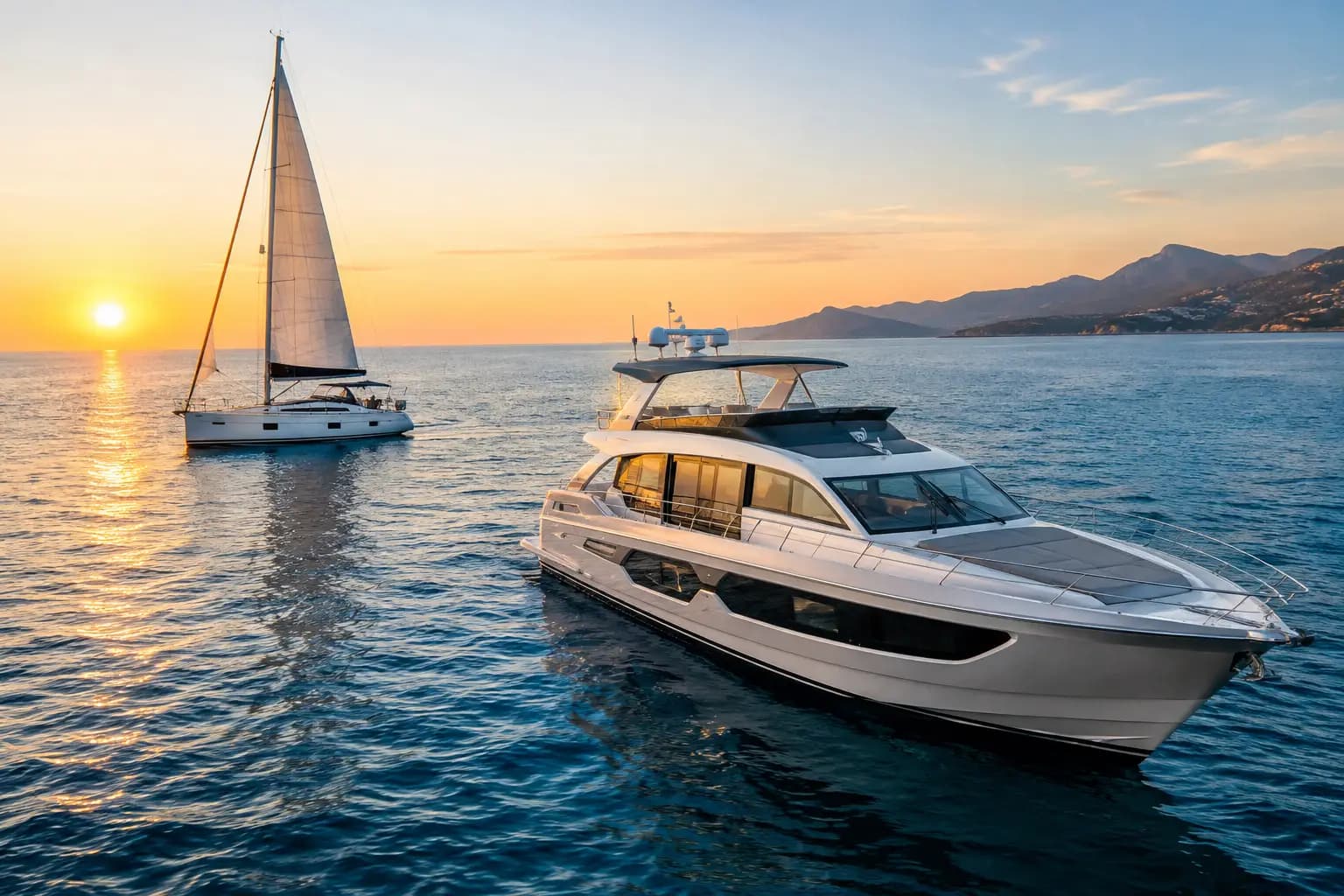
A €50,000 budget can buy a well-kept coastal cruiser with genuine cruising potential. At €500,000, buyers can enter the market for larger flybridge yachts, premium express cruisers, and serious sailing yachts capable of extended Mediterranean use. The best used yachts to buy between €50,000 - €500,000 are not defined by length alone. They are the vessels with transparent maintenance records, sound survey results, practical ownership costs, and a specification that suits how you will actually use them.
For buyers considering Monaco, the French Riviera, Italy, Spain, or a wider Mediterranean cruising program, this price range offers meaningful choice. It also contains some of the market’s most expensive mistakes: neglected engines, tired interiors, overlooked osmosis, obsolete electronics, and vessels purchased for a lifestyle that does not match their intended use.
Best Used Yachts to Buy Between €50,000 - €500,000
The right acquisition begins with a clear brief. A couple planning weekend trips from Antibes has a different requirement from a family based in Mallorca, an owner seeking day-charter potential in Ibiza, or an investor evaluating a yacht for managed charter use. Start with the operating profile, then assess the yacht category.
€50,000 to €120,000: Practical cruisers and entry-level sailing yachts
This is a compelling bracket for buyers who value time afloat over onboard volume. Typical opportunities include 25- to 35-foot express cruisers, older but capable sailing yachts, select small flybridge models, and well-maintained RIBs or day boats with premium engines.
A quality diesel-powered cruiser from a recognized European builder can be a sensible purchase in this range, particularly if it has been used privately and maintained annually. Brands with a broad Mediterranean support network are usually easier to service and sell later, provided the vessel has not been heavily modified or allowed to deteriorate cosmetically.
The trade-off is age. At this level, condition matters more than the badge on the hull. A €75,000 yacht with documented engine servicing, recent batteries, renewed safety gear, clean upholstery, and a dry bilge may be a more intelligent acquisition than a €50,000 example needing a €40,000 catch-up refit.
Sailing yachts can offer particularly good value here. A 34- to 40-foot monohull may provide comfortable family cruising, lower fuel exposure, and an active resale market. Buyers should inspect rigging age, sail condition, keel bolts, deck moisture, through-hull fittings, and the engine installation with the same care they would apply to the hull.
€120,000 to €250,000: The versatile Mediterranean ownership range
This is often the market’s sweet spot for private ownership. Buyers can find 35- to 45-foot motor yachts, performance cruisers, sport yachts, sailing catamarans, and more recent monohulls with better layouts and updated systems.
For Mediterranean day cruising, an open or hardtop sports cruiser can be highly effective. It gives owners a strong social deck, straightforward handling, and the speed to move between coastal destinations without the operating complexity of a larger yacht. A tender garage, hydraulic swim platform, sun protection, air conditioning, and a well-designed galley can materially improve usability, but every added system should be checked for maintenance history.
Flybridge yachts become increasingly attractive in the upper part of this bracket. They provide separate entertaining zones, more cabin volume, and a commanding helm position. They also introduce more exterior canvas, more equipment, and often higher marina, cleaning, and maintenance requirements. A flybridge is ideal for families and guests who spend full days on board; it is less compelling for an owner who primarily wants short, fast coastal passages.
A well-selected sailing catamaran deserves consideration for buyers who prioritize stability, exterior living space, and multi-generational cruising. However, catamarans require careful berth planning. Their beam can affect marina availability and cost, especially in high-demand locations during peak season.
The €250,000 to €500,000 bracket: Buy capability, not just size
Above €250,000, buyers gain access to yachts that can support a more substantial ownership program. Depending on age, build quality, and location, the market may include 45- to 60-foot flybridges, premium open yachts, trawler-style motor yachts, newer sailing catamarans, and bluewater sailing yachts with serious equipment inventories.
A 50-foot-plus flybridge yacht can be an excellent platform for family cruising between the French Riviera, Corsica, Sardinia, the Balearics, and Italy. It may offer three cabins, crew-capable accommodation, stabilizers, a tender, air conditioning, a generator, and a layout suitable for extended stays. But the purchase price is only the entry point. Larger yachts carry higher costs for berthing, insurance, haul-outs, crew support, mechanical servicing, and seasonal preparation.
For some owners, a premium 40- to 45-foot yacht in exceptional condition is the better decision than an older 55-footer with deferred maintenance. The smaller yacht can deliver a more reliable season, simpler handling, lower fixed costs, and stronger appeal when it is time to sell. This distinction matters especially for first-time owners moving up from a day boat or charter background.
Sport yachts in this band offer a different proposition. They suit owners who want style, speed, and access to beach clubs, restaurants, and anchorages along the coast. They can be rewarding vessels, but high-performance engines require a disciplined review of service intervals, cooling systems, drives, exhaust components, and operating hours. A sea trial should be treated as a test of the yacht’s systems under load, not as a ceremonial final step.
How to identify value in a used yacht
A yacht should be evaluated as an operating asset, not a showroom object. Fresh detailing can make an old vessel appear convincing, while a clean engine room and orderly maintenance file often reveal the more meaningful story.
Before making an offer, establish the year, builder, model, engine type, hours, ownership history, VAT status where relevant, registration documents, and service invoices. Then consider whether the yacht has had regular preventive maintenance or only repairs when something failed. The difference is significant.
A proper pre-purchase survey should cover the hull, moisture readings where appropriate, deck hardware, safety equipment, electrical systems, plumbing, tanks, air conditioning, generator, engines, propulsion, and electronics. For yachts with a history of charter operation, examine the condition of guest areas and machinery spaces particularly closely. High usage is not automatically a reason to reject a yacht, but it must be reflected in condition, price, and expected refit budget.
The four costs buyers most often underestimate are:
Berthing, particularly in sought-after Riviera, Balearic, and Italian marinas.
Engine, generator, and drivetrain servicing, including unexpected age-related replacement work.
Insurance, safety compliance, winter storage, haul-out, and antifouling.
Interior, exterior canvas, upholstery, teak, and electronics upgrades required to bring the yacht to the owner’s standard.
A realistic first-year reserve is prudent. It allows the buyer to correct survey findings and personalize the yacht without compromising routine maintenance.
Location and resale matter
A yacht located in France, Italy, or Spain may be easier to inspect and commission for a Mediterranean buyer, but location should not override condition. Transporting a better yacht from another market can be justified if its documentation, machinery, and refit history are materially stronger.
Resale is also shaped by practical factors. Popular layouts, recognized builders, reliable engine packages, sensible color schemes, and complete service records generally support marketability. Highly personalized interiors, unusual propulsion systems, or neglected cosmetic work can narrow the future buyer pool.
For owners considering limited charter use, assess the proposition conservatively. Charter can contribute toward operating costs in the right market and with appropriate management, but it also adds wear, compliance requirements, scheduling limits, and a different maintenance standard. Any revenue projection should be tested against realistic utilization, management fees, berth costs, insurance, crew requirements, and downtime.
Buy with a clear operating plan
The strongest purchase in this market is the yacht that will be used frequently and maintained correctly. A compact motor yacht for spontaneous weekends may deliver more value than a larger vessel that remains in port because it is difficult to operate. Equally, a carefully specified sailing yacht or catamaran may be the right long-term choice for owners who want slower, more independent cruising.
Master Ocean can coordinate a focused acquisition search, shortlist suitable yachts, arrange inspections, support negotiation, and organize survey, delivery, refit, and management discussions. Define the cruising plan first, protect the budget for due diligence and first-year works, and buy the vessel whose condition gives you confidence before its styling wins you over.