A yacht that lingers on the market rarely has a visibility problem alone. More often, it has a pricing problem, a positioning problem, or a preparation problem. If you are asking how to sell yachts efficiently and protect value at the same time, the answer is rarely one move. It is a coordinated sales process built around timing, presentation, buyer qualification, and disciplined negotiation.
At the higher end of the market, buyers are informed, selective, and quick to detect when a vessel is overpriced or poorly represented. In the mid-market, competition can be even sharper because buyers have more options and compare listings aggressively. In both segments, sellers who approach the sale like a serious asset transaction tend to outperform those who treat it like a casual listing.
How to sell yachts without leaving money on the table
The strongest yacht sales begin well before a listing goes live. Sellers often focus on the asking price first, but experienced buyers look at the complete picture: maintenance history, cosmetics, specifications, brand reputation, seasonal timing, and how convincingly the yacht is marketed.
A realistic strategy starts with understanding where your yacht sits in the live market, not where you hope it sits. Comparable listings matter, but closed deals matter more. A 70-foot motor yacht with recent refit work, updated navigation systems, and strong charter pedigree will not be judged the same way as a similar model with dated interiors and patchy service records. Small differences can move the value significantly.
This is where sellers need discipline. Ambitious pricing can feel justified, especially when substantial upgrades have been made, but buyers do not reward every dollar spent on ownership. Some investments improve marketability more than they improve price. Engine service, clean documentation, and visible upkeep tend to carry more weight than highly personal cosmetic choices.
Price for the market you have, not the market you want
Overpricing is one of the most expensive mistakes in yacht brokerage. It creates the impression that the seller is unrealistic, limits qualified inquiries, and often leads to repeated price reductions that weaken negotiating leverage. A well-priced yacht attracts serious attention early, when a listing feels fresh and credible.
The right asking price depends on several variables. Brand and model history influence buyer confidence. Location affects accessibility and logistics. Age, engine hours, class status, flag, VAT position, refit history, and charter use all shape perceived value. Even the quality of photography and specification presentation can affect the level of inquiry in the first few weeks.
There is also a strategic difference between pricing to test the market and pricing to sell. If time is flexible, a seller may accept a longer campaign in exchange for holding closer to a target number. If the yacht is tied to an upgrade, relocation, operating cost pressure, or management transition, speed may matter more than extracting the final margin. Good brokerage advice should reflect that reality, not ignore it.
Preparation changes the quality of buyer response
Well-presented yachts attract better buyers. That sounds obvious, but many vessels come to market before they are ready. Loose service records, dated imagery, cluttered interiors, minor cosmetic defects, and deferred maintenance all create doubt. In a high-value purchase, doubt reduces offers.
Preparation is not about making the yacht look artificially perfect. It is about removing friction from the buyer's decision. A polished yacht with organized documentation, current inventory details, and clear maintenance history signals serious ownership. Buyers become more comfortable moving to inspection, survey, and contract when the vessel feels professionally managed.
Before listing, sellers should address visible issues that create outsized concern. Worn teak, stained headliners, neglected engine rooms, poor odor control, faded upholstery, and unserviced systems can all overshadow the yacht's stronger attributes. Some corrective work is cosmetic, some technical, and some simply administrative. All of it contributes to trust.
Professional photography and video are equally important. In global yacht sales, the first showing usually happens on a screen. Sharp imagery, drone footage where appropriate, accurate specifications, and a listing that speaks to the vessel's real strengths can dramatically improve engagement. For premium listings especially, presentation should feel curated, not improvised.
Brokerage matters more than many sellers expect
Some owners assume selling privately will protect more of the sale price. Occasionally that works, particularly in smaller or very local markets, but private sales often underperform because exposure, screening, negotiation structure, and transaction management are weaker. The real question is not whether a commission exists. It is whether the net result is better.
A strong brokerage brings more than a listing. It brings buyer networks, cross-market visibility, coordinated marketing, showing management, documentation control, and negotiation experience. It also acts as a buffer between seller emotion and buyer strategy. That buffer is valuable when offers arrive below expectations or when survey findings begin to reshape the deal.
For international transactions, brokerage support becomes even more critical. Cross-border yacht sales may involve flag considerations, tax status, registration changes, corporate ownership structures, transport planning, surveys, escrow coordination, and legal review. A seller who treats these details casually can lose momentum fast.
For owners who want a full-service route, a brokerage with global reach and operational support can align the sales process with technical services, vessel preparation, logistics, and buyer handling under one framework. That integrated approach is often more efficient than managing multiple providers separately.
Marketing a yacht is not the same as listing a yacht
A yacht can be visible and still be poorly marketed. Effective sales campaigns are built around positioning. Who is the most likely buyer for this vessel? Is the yacht attractive as a private family platform, a charter performer, a first step into ownership, or a serious upgrade for an experienced owner? The answer affects how the yacht should be presented.
The best marketing emphasizes relevant advantages without overstating them. Buyers respond to specifics. They want to know about recent mechanical work, major upgrades, cruising range, accommodation flexibility, toy inventory, tender arrangements, charter revenue history if applicable, and the ownership profile that has shaped the vessel's condition.
It also helps to understand buyer psychology by segment. Luxury yacht buyers may place a premium on pedigree, finish, crew flow, and onboard lifestyle. Mid-market buyers often focus more heavily on operating cost, maintenance risk, and ease of ownership. Commercially minded buyers may scrutinize utilization potential and compliance details. One listing angle rarely suits them all.
Showings, inspections, and sea trials decide the pace of the sale
Once inquiries begin, speed and professionalism matter. Slow replies, incomplete information, or difficulty arranging viewings can cool a serious buyer quickly. A yacht sale gains momentum when every stage feels organized.
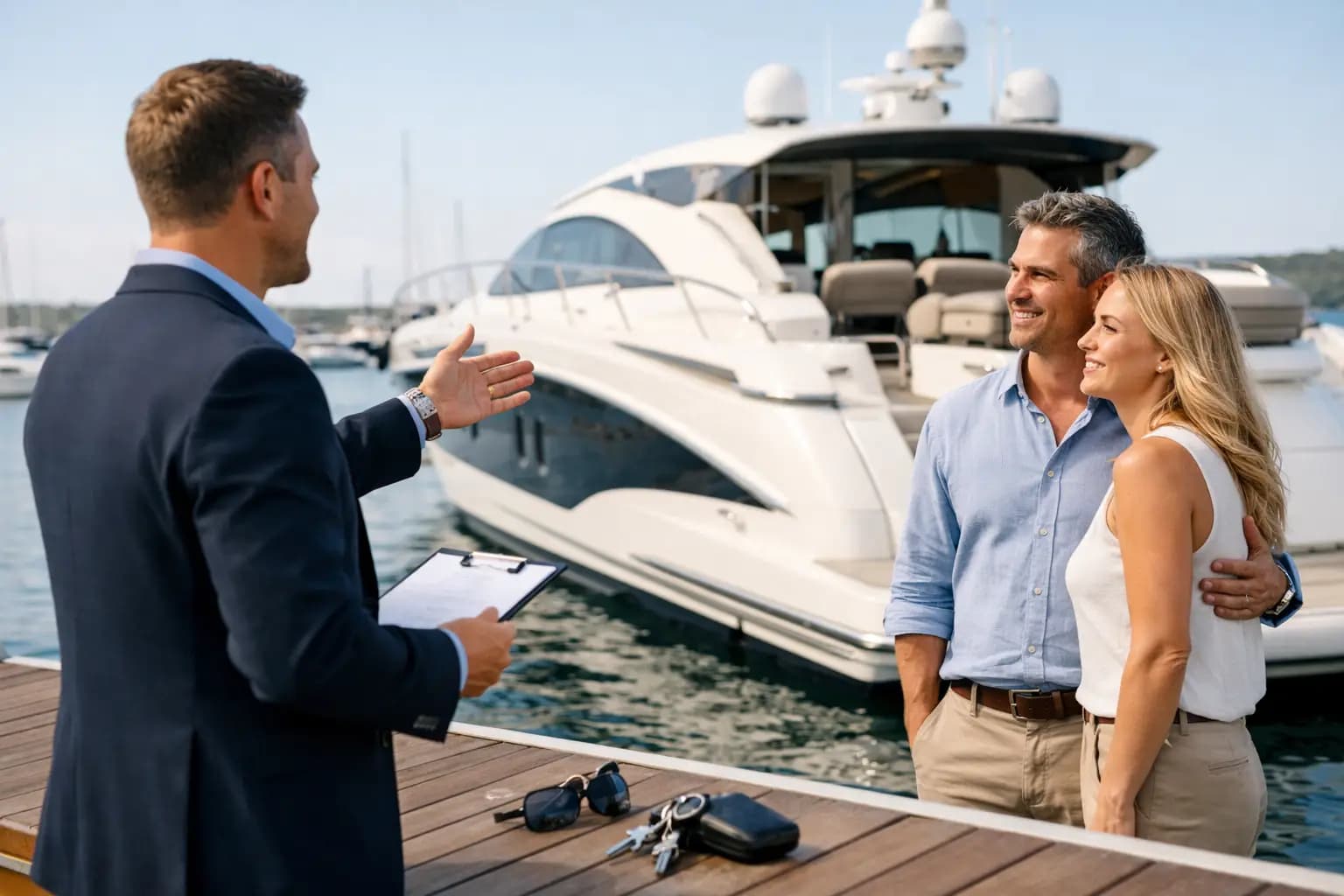
Showings should be prepared in advance, not staged in a rush. The vessel should be clean, systems ready, crew or representatives aligned, and all key records available. Sellers do not need to hover, but they do need the yacht to present smoothly. A buyer's impression is shaped as much by the process as by the boat itself.
Sea trials and surveys are where many deals tighten or fail. This is normal. Even well-maintained yachts generate findings. The issue is not whether a survey produces comments. The issue is whether the transaction has been structured realistically enough to absorb them. Sellers who have already addressed known deficiencies and disclosed material facts early usually negotiate from a stronger position.
Negotiation is where experience protects value
Every yacht seller wants a strong price, but sophisticated negotiation goes beyond the headline number. Deposit structure, timelines, included equipment, acceptance conditions, survey rights, closing location, and responsibility for pre-delivery items all affect the real value of the deal.
This is where emotion can become expensive. Sellers may react too quickly to a low opening offer or become anchored to the original asking price despite market feedback. The better approach is measured. A credible buyer with a clear path to closing is often worth more than a slightly higher offer tied to uncertainty.
It also pays to recognize when the market is speaking clearly. If multiple qualified buyers raise the same concerns, that is not random noise. It is useful pricing and positioning intelligence. Smart sellers adapt before the listing goes stale.
The sale closes best when the process feels controlled
At closing, details matter. Bills of sale, inventory confirmation, registration documents, technical records, tax or VAT evidence where relevant, and transfer logistics should all be handled with precision. The final impression should reflect the same professionalism that attracted the buyer in the first place.
For many owners, the most effective answer to how to sell yachts is simple: prepare thoroughly, price honestly, market professionally, and work with advisors who know how to manage complex transactions without drama. In a category where assets are mobile, global, and emotionally charged, calm expertise is a serious advantage.
When the yacht is positioned properly, the right buyer usually appears faster than expected. The real goal is not just to sell. It is to exit ownership with confidence, credibility, and the strongest result the market will support.