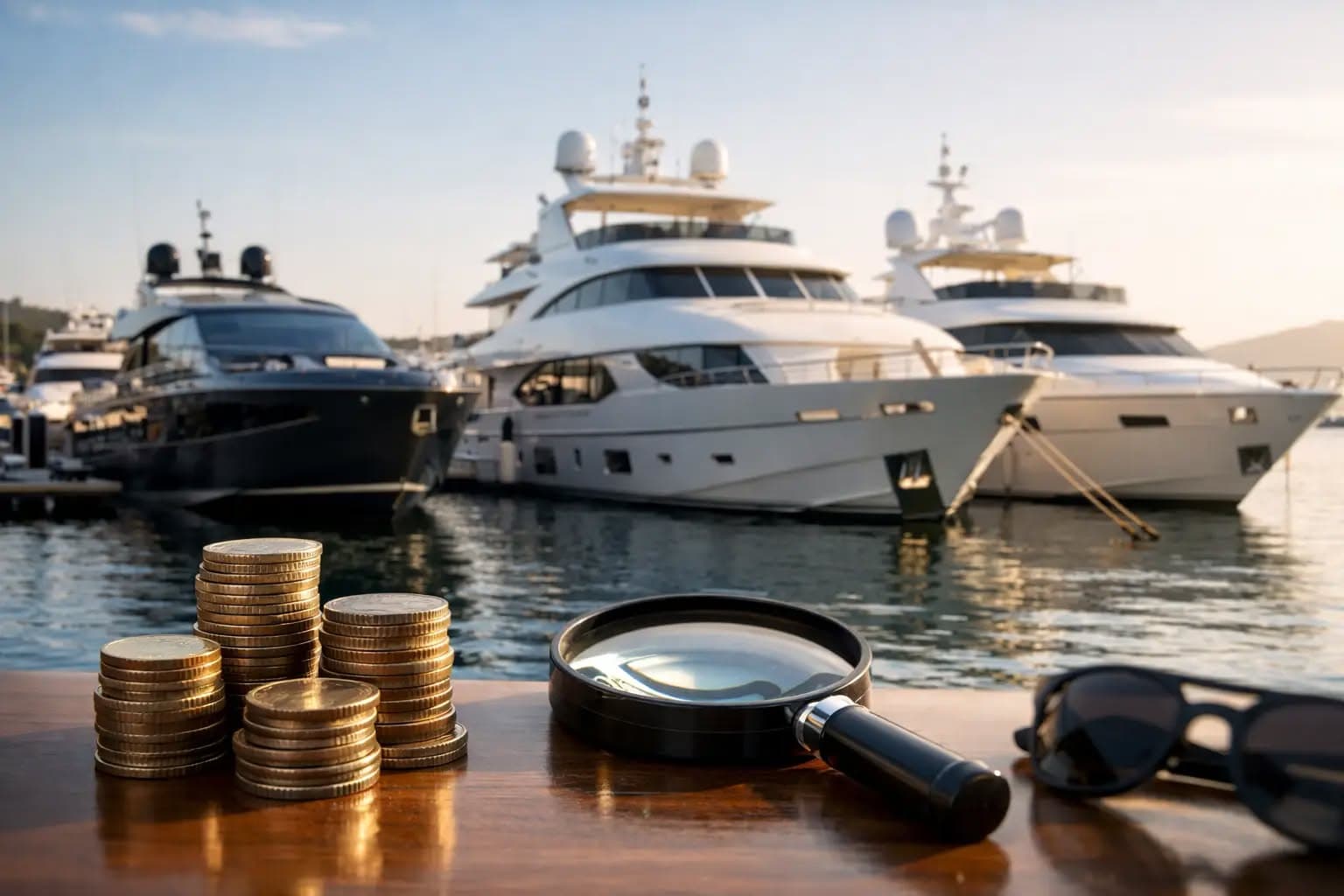
A 40-foot motor yacht listed at $450,000 and another at $1.8 million can look surprisingly similar in photos. That is why the question how much are yachts for sale rarely has a simple answer. In the global brokerage market, price is shaped by far more than length alone - builder pedigree, age, condition, equipment, layout, location, tax status, and service history all move the number.
For serious buyers, the better question is not just what a yacht costs to purchase, but what level of yacht that price actually buys. A well-priced vessel can deliver years of private cruising, charter potential, or business utility. A cheap yacht with deferred maintenance can become expensive very quickly.
How much are yachts for sale in today’s market?
Across the market, yachts for sale range from under $100,000 for smaller, older entry-level vessels to tens of millions for late-model luxury yachts and superyachts. That spread is wide because the word yacht covers everything from compact sport cruisers and sailing catamarans to long-range explorer yachts and custom-built flagship vessels.
In practical terms, buyers often encounter a few broad pricing bands. Smaller pre-owned boats marketed as yachts, usually in the 30 to 40-foot range, may start around $100,000 to $500,000 depending on age and brand. Mid-size motor yachts from respected production builders often sit between $500,000 and $3 million. Newer premium yachts in the 60 to 80-foot category can move into the $2 million to $8 million range, while superyachts commonly begin above $10 million and rise sharply from there.
Those ranges are useful for orientation, but they are not buying advice by themselves. Two yachts of the same length can have dramatically different values if one is a recent model with updated engines, modern stabilizers, premium refit work, and VAT-paid status, while the other requires major cosmetic and technical attention.
Price by yacht type
The fastest way to understand value is to separate the market by yacht category. Different hull forms, propulsion systems, and onboard expectations create very different pricing behavior.
Motor yachts
Motor yachts dominate much of the luxury resale market and usually command strong pricing because they combine speed, volume, and comfort. A pre-owned 45-foot motor yacht from a mainstream builder might cost $300,000 to $900,000. Move into a 60-foot premium flybridge or sport yacht, and pricing can rise from roughly $1.5 million to $4 million or more. Large tri-deck or semi-custom motor yachts can quickly move well beyond that.
Motor yachts often cost more to own as well, especially when fuel burn, crew, and machinery complexity are factored in. For many buyers, however, the added comfort and social space justify the premium.
Sailing yachts and catamarans
Sailing yachts can offer excellent value relative to size, especially for buyers focused on passagemaking or lifestyle cruising rather than top speed. Smaller pre-owned sailing yachts may start below $100,000, while larger luxury sailing yachts and high-performance models can easily pass $1 million.
Catamarans are a category of their own. Sailing catamarans and power catamarans have seen strong demand because they deliver wide beam, stability, and efficient layouts. Entry-level used catamarans may begin in the low six figures, but newer, well-equipped luxury catamarans often land between $700,000 and $3 million.
Superyachts and explorer yachts
At the top end, pricing becomes highly individualized. A superyacht’s value depends on shipyard reputation, guest capacity, build year, engineering platform, and charter appeal. Explorer yachts also command a premium because of their range, capability, and growing popularity among buyers seeking global cruising rather than seasonal coastal use.
In this segment, asking prices are only the opening layer of the conversation. Technical records, class compliance, flag, tax structure, and operating profile matter just as much as aesthetics.
What actually drives yacht pricing?
Length matters, but it is only one line on the valuation sheet. In brokerage, several factors consistently shape what buyers pay.
Age is the obvious one, though not always in the way first-time buyers expect. A 10-year-old yacht from a top-tier builder with excellent maintenance can be more desirable than a newer vessel from a lesser-known yard. Build quality, finish, and engineering access often show their value over time.
Condition is usually the decisive factor. Fresh paint, updated interiors, low engine hours, modern navigation systems, recent surveys, and documented maintenance all support stronger pricing. If a yacht needs a generator replacement, teak work, soft goods, electronics upgrades, or engine service, buyers will factor those costs in immediately.
Brand also matters. Established European and American builders with strong reputations tend to hold value better because buyers trust their design, resale liquidity, and support network. Limited-production or niche brands can be attractive, but they may take longer to resell.
Location affects pricing more than many assume. The same yacht may be priced differently in the Mediterranean, the US, the Middle East, or Asia based on regional demand, seasonal timing, import duties, and tax status. Delivery logistics can also change the true cost of acquisition.
New yacht vs. pre-owned yacht
Buyers often ask whether it is smarter to commission new or purchase pre-owned. The answer depends on priorities.
A new yacht offers customization, warranty protection, and the appeal of taking delivery to your exact specification. It also comes at a premium, and depreciation is usually steepest in the first years. If your focus is personalization and long-term ownership, new construction can make sense.
A pre-owned yacht typically offers more size and brand prestige for the same budget. You may also avoid the earliest depreciation curve. The trade-off is that surveys, refit planning, and technical due diligence become essential. A pre-owned purchase can be an excellent value, but only if the yacht has been properly cared for.
The costs beyond the sale price
Anyone asking how much are yachts for sale should also ask what ownership looks like after closing. The purchase price is only the entry point.
Annual operating costs often run at roughly 10 percent of the yacht’s value, though that figure can be lower for smaller private-use boats and much higher for crewed luxury yachts. Insurance, dockage, crew salaries, fuel, maintenance, management, cleaning, winterization, refit reserves, and compliance all add up.
For example, a yacht acquired for $1 million may require six figures annually depending on use and location. A larger luxury yacht may require substantially more. That does not make ownership unrealistic, but it does mean buyers should evaluate the full operating picture before committing.
What budget buys in real terms
At around $250,000, buyers are generally looking at older express cruisers, compact motor yachts, or smaller sailing yachts. There can be strong opportunities here, especially for experienced owners comfortable with upkeep.
At $500,000 to $1 million, the field opens up considerably. This is where many buyers find quality pre-owned motor yachts, larger catamarans, and refined owner-operated vessels with appealing layouts and respectable equipment.
Between $1 million and $3 million, buyers often step into premium brokerage inventory with better build quality, newer model years, stronger charter potential, and more serious cruising capability. Above that range, the market becomes increasingly specialized, with design pedigree, onboard volume, and global operational readiness playing a larger role.
How to evaluate value, not just price
The most sophisticated buyers do not chase the lowest asking price. They look for the most complete ownership proposition.
That means reviewing survey results, service records, engine history, refit timeline, and legal documentation alongside the listing price. It also means understanding whether the yacht fits your actual use case. A vessel designed for entertaining in Miami may not be ideal for long Mediterranean seasons or global cruising. A yacht that is perfect for private family use may not perform well in charter.
This is where professional brokerage support earns its place. A curated search saves time, but more importantly, it protects buyers from expensive mismatches between appearance and reality. For clients navigating international inventory, tax considerations, transportation, registration, and technical review, full-service guidance is not a luxury add-on. It is part of buying intelligently.
For buyers working across markets, a company such as Master Ocean can help align acquisition with the bigger picture - not only finding the right yacht, but also supporting survey coordination, ownership logistics, management planning, and long-term vessel strategy.
The right yacht is not defined by the highest price tag or the lowest one. It is the yacht whose price, condition, and operating profile make sense for the way you intend to use it. Ask better questions before you buy, and the market becomes far easier to read.